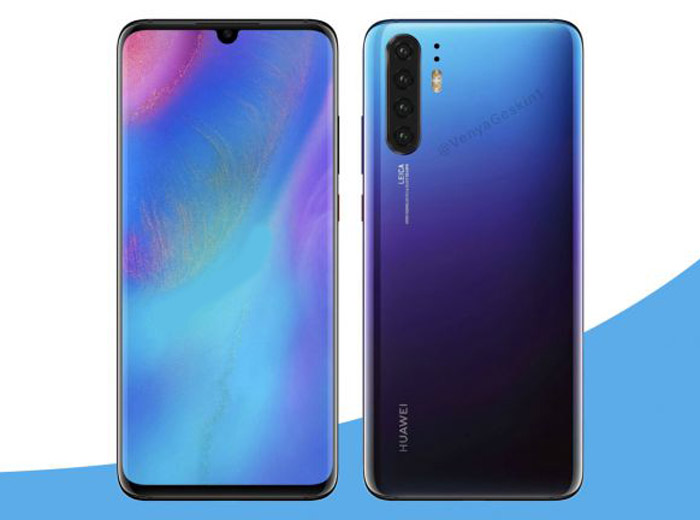
Huawei Mate 20 VS Mate 20 PRO VS Mate 20 X

Huawei Mate 20 Series Main Difference

Model Mate 20  Mate 20 Pro Mate 20 X
Colors Midnight Blue, Twilight, Black Emerald Green, Midnight Blue, Twilight, Pink Gold, Black Midnight Blue, Phantom Silver
Storage * 6GB RAM + 64GB ROM
* 6GB RAM + 128GB ROM
* 8GB RAM + 128GB ROM
* 8GB RAM + 256GB ROM
* 6GB RAM + 128GB ROM
* 8GB RAM + 256GB ROM
CPU HiSilicon Kirin 980 HiSilicon Kirin 980 HiSilicon Kirin 980
Unlock mode Fingerprint(rear-mounted) Face ID + Fingerprint(under display) Fingerprint(rear-mounted)
Front Camera 24MP 24MP 24MP
Rear Camera 12MP + 16MP + 8MP 40MP + 20MP + 8MP 40MP + 20MP + 8MP
Battery 4000mAh 4200mAh 5000mAh
SIM Hybrid Dual SIM (Nano-SIM, dual stand-by)
Water Proof IP53 dust and splash protection IP68 dust/water resistant (up to 2m for 30 mins) IP53 dust and splash protection
OS Android 9.0 (Pie), EMUI 9.0 Android 9.0 (Pie), EMUI 9.0 Android 9.0 (Pie), EMUI 9.0
Display 6.53 inches 6.39 inches 7.2 inches
Screen IPS LCD capacitive touchscreen AMOLED capacitive touchscreen AMOLED capacitive touchscreen
PPI 381 538 346
Resolution 1080 x 2244 pixels 1440 x 3120 pixels 1080 x 2244 pixels
Dimensions 158.2 x 77.2 x 8.3 mm 157.8 x 72.3 x 8.6 mm 174.6 x 85.4 x 8.2 mm

China Three Network Providers Get 5G License for Test

A few days ago, Chinese three major network providers (China Mobile, China Unicom and China Telecom) gained the 5G frequency band license for the national-wide test. China Telecom has obtained 5G test frequency resources with a total bandwidth of 100MHz from 3400MHz to 3500MHz; China Mobile has obtained 5G test frequency resources in the 2515MHz-2675MHz and 4800MHz-4900MHz frequency bands, in which the 2515-2575MHz, 2635-2675MHz and 4800-4900MHz frequency bands are new frequency bands. The 2575-2635MHz frequency band is the re-cultivation of China Mobile’s existing TD-LTE (4G) frequency band; China Unicom has obtained 5G test frequency resources with a total bandwidth of 3MHz from 3500MHz to 3600MHz.


Network Carrier 5G Frequency Band
China Mobile 2515MHz-2675MHz(N41), 4800MHz-4900MHz(N79)
China Unicom 3500MHz-3600MHz
China Telecom 3400MHz-3500MHz

This is the final test before the 5G in China will be commercially launched in 2019. As planned, the 5G will be launched for commercial trial in June 2019 and after application test, 5G network will expand the coverage more widely in larger scale at the end of 2019. And in 2020, 5G will become common and the cell phone will have 5 telecommunication modes.


Huawei 5G Router for mmWave and C-band Released

At the Global Mobile Broadband Forum, Huawei announced the first modem routers (“CPE”) for the new 5G cellular standard. The company has two devices in preparation, one for the C band (frequency range between 3.5 and 5 gigahertz) and one for the millimeter wave range between 26 and 28 gigahertz. Although the two 5G routers still have some drawbacks such as an enormous energy consumption to fight, yet it is likely to be the first commercially available 5G devices.

Huawei 5G router for C-band feature

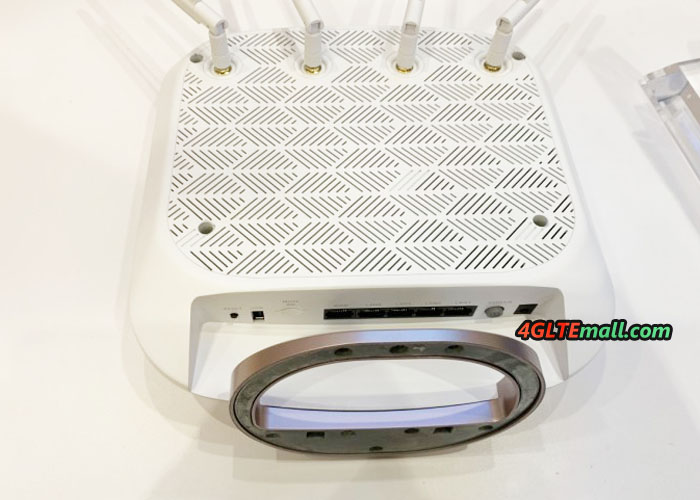
Compared to a current LTE router like Huawei B618 , the Huawei 5G WiFi router for use in the C-band between 3.5 and about 5 GHz is quite large and heavy, but the first 5G devices are safe to handle.

According to the manufacturer, the Huawei 5G router should be equipped with two RJ45 Gigabit LAN ports and WLAN 802.11ac (2.4 GHz and 5 GHz). The 5G C-Band Router is backward compatible with the 4G LTE standard and comes with a 2T4R antenna configuration, which means: data can be received on four antennas while sent via two antennas.


Huawei 5G router for mmWave feature

The Huawei 5G router for the millimeter-wave frequency range between 26 and 28 gigahertz is visually hardly distinguishable from the sister model for the C-band. But there is one important difference: millimeter waves can hardly or never enter buildings, so a line of sight to the 5G transmitter is required. This is done by an outdoor unit (ODU) integrated with the entire modem technology.

The indoor unit (IDU) features all the connections and the WLAN technology. The indoor and outdoor units are connected via LAN cable, the power supply of the outdoor unit is realized via Power over Ethernet (PoE).


High energy consumption from the Huawei 5G router

As can be seen on the data sheets shown above, both Huawei 5G devices have an enormous power consumption, at least under load. The C-band model consumes up to 120 watts, while the mmWave model even up to 146 watts. So when the 5G router working, the power consumption is more like a gaming notebook rather than a router. For comparison: common LTE routers such as the Huawei B715 LTE router consume up to 12 watts during heavy load, ie one-tenth of them.

However, Huawei emphasizes that only the first generation of the 5G modem will have such high energy consumption. It is also likely that commercially available 5G routers will have a newer chipset and thus lower power consumption.


Huawei and Three UK Release 5G Router for Home

It’s said that the 5G networks would be launched in many countries and areas, so as the next generation of 5G mobile phones. As an important application, 5G router would be also an important part for 5G connection and surfing. The UK provider Three released its first 5G home access point from the Chinese network equipment supplier Huawei. Three UK owns 100 megahertz of radio spectrum in the range around 3.7 GHz and expands its 5G net with this spectrum. Huawei can provide both the network technology and the appropriate terminals for 5G.


5G can be used for a variety of purposes, but fast Internet for the home is probably the first application that will be introduced over a large area. With the 100 MHz wide spectrum that Three UK has available for 5G, it is theoretically possible to achieve up to 2 gigabits per second – which is about twice as fast as the currently most powerful LTE connections. What is more interesting than the top speed is the average speed, which should be at 1 gigabit per second. Compared to LTE, that’s a big step forward. A 5G connector can not only easily replace a VDSL supervising connection, but even achieves speeds previously only possible with fiber optic connectors.


Although Huawei already presented the first 5G router in 2017, it is now being used in practical use for the first time. It is the 5G router model for the so-called C-band, ie the frequency range between 3.4 and 3.8 gigahertz. Externally, the router is inconspicuous therefore and does not differ from an ordinary 4G LTE router. The router would certainly not win a design prize, but the technology dominates.


The Huawei 5G C-Band Home Router can also use LTE in addition to 5G, as shown in the datasheet below. Wi-Fi is supported at 2.4 and 5 gigahertz. There are two Gigabit LAN ports on the back, plus some LEDs and a SIM card slot. Whether or not eSIM is supported, Huawei didn’t tell. The power consumption is up to 120 watts – 10 times as much as a normal LTE router!


Even the 5G available in near future, you cannot buy the Huawei 5G router, presumably, the 5G router will only be available via some specific providers in some countries. But we suppose there will be more and more 5G modem routers available as time goes.

Netgear Nighthawk M5 – World’s First 5G Mobile Hotspot Released

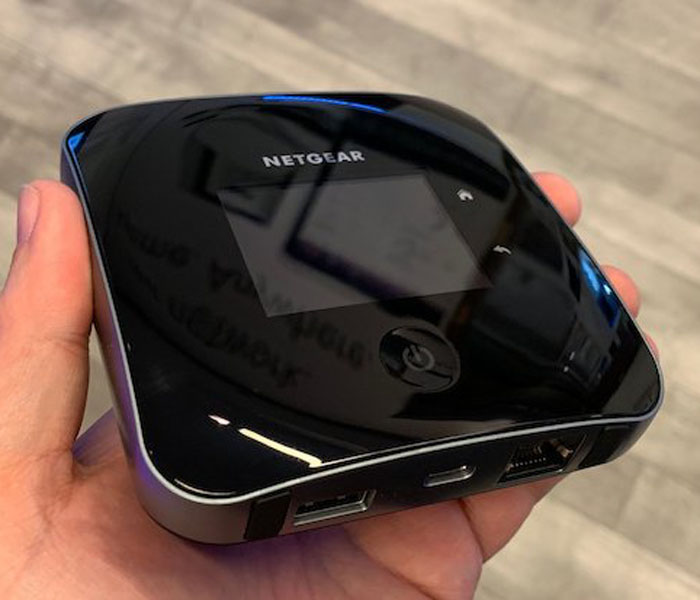
Recently, the US mobile operator AT&T launched the first mobile 5G hotspot which comes from the Netgear. The 5G device is named Netgear Nighthawk M5 Fusion, which receives and transmits data via an integrated 5G modem and then forwards the Internet connection via LAN and WLAN to other devices. The new hotspot includes a Qualcomm X50 modem, the first consumer 5G modem. 5G is supported in the millimeter-wave range by 26 GHz, in this frequency range, the provider AT&T launches the 5G expansion in the US. Whether the range between 3.5 and 3.7 GHz is supported by the modem, which is used in many other regions of the world for the launch of 5G, is currently not known.

AT&T didn’t confirm other specs for the Nighthawk M5 Fusion (we got the name from an image title on AT&T’s press site), but we think it also has a Qualcomm X20 modem for gigabit-plus speeds on LTE.


The announcement by Netgear and AT&T was made in late October 2018 as part of a 5G test in Waco, Texas. The 5G network technology gets from Ericsson. AT&T plans to launch the 5G network in at least 12 US cities by the end of 2018, and by early 2019, 5G will be available in 19 US cities.


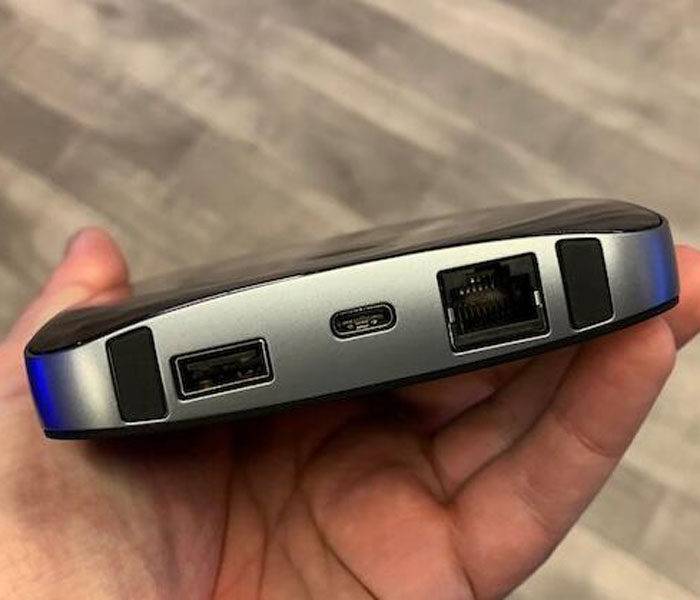
The Nighthawk M5 Fusion looks like Netgear existing Nighthawk M1, and the revealed product image of the new Netgear Nighthawk M5 5G hotspot shows the Nighthawk M5 in cuboid design and with a large display on the front. There are no other technical details yet, so it is unclear how long the battery life will be in 5G operation and what connections the device offers. Neither AT&T nor Netgear have provided information on the maximum speed.


The M5 Fusion model from the Nighthawk series will probably be among the world’s first commercially available 5G router and it’s also should be the first Netgear 5G Router & ATT 5G Router. It’s said it would be available in 2018 for the launch of the AT&T 5G network in the US. Details of the technical equipment were not released yet, but the Nighthawk M5 should be the successor of the Netgear Nighthawk M1. We will keep updating the news and detail specifications about Nighthawk M5.

OnePlus 6 4G LTE Smartphone Review

You may know Huawei 4G smartphones from China, but do you know another Chinese manufacturer OnePlus? If you are looking for a smartphone with the best performance on LTE network, you should not miss a smartphone with Qualcomm Snapdragon 845 chipset and Snapdragon X20 modem. Although HiSilicon (Huawei) and Intel (eg Apple) offer very good modems, but the Qualcomm chipset is the most widespread in any case. The OnePlus 6 is currently one of the cheapest smartphones with Snapdragon 845 and still offers excellent features, so we will take a test in the LTE network.

OnePlus 6 Features


The OnePlus 6 comes with a 6.28 inch AMOLED screen, up to 8GB of RAM and up to 256GB of internal memory. It is dual-SIM capable and has a 3,300mAh battery – a quick-charger power adapter is included. On the back, you will find a dual camera with 16 or 20 megapixels, which shoots quite good pictures. It offers two unlock options: fingerprints unlock or face unlock.


OnePlus 6 Specifications


The OnePlus 6 is also offered in the online trade by Asian dealers in a version with the model number A6000 – this supports many, but not all major LTE frequency bands. The European or North American version has the model number A6003 and supports FDD LTE on frequency band 1/2/3/4/5/7/8/12/17/18/19/20/25/26/28/29/30/32/66/71 and TDD LTE on frequency band 34/38/39/40/41. Up to 1 GBit/s are possible in the downlink with quadruple-channel bundling (4CA), up to 150 MBit/s in the uplink via 2CA. 256QAM in the downlink, 64QAM in the uplink and 4 × 4 MIMO antenna technology are also supported. This makes the OnePlus 6 well equipped for use in LTE networks worldwide.

Admittedly, the OnePlus 6 is currently still the latest OnePlus smartphone, but the successor OnePlus 6T is now available on the market. The chipset and modem of OnePlus 6 should be identical to the successor 6T, but of course, there are some changes and improvement in the newer Oneplus 6T, which you should be curious.


Qualcomm Snapdragon 845 with X20 modem

The Qualcomm Snapdragon 845 is a system-on-a-chip (SoC), bringing together diverse chips such as processor and modem on a single chipset. The integrated Snapdragon X20 modem is especially relevant for this test. It is Qualcomm’s second-fastest commercially available LTE modem, only the X24 is even faster (currently not available in any SoC).


The X20 modem offers LTE Cat18 in the downlink and LTE Cat13 in the uplink and offers manufacturers the opportunity to theoretically bundle up to 5 frequency bands via carrier aggregation in the downlink. In the uplink, the modem is 2CA capable. The 4 × 4 MIMO antenna technology is possible on up to 3 carriers simultaneously. 256QAM modulation in the downlink and 64QAM modulation in the uplink are of course included.

In total, up to 1.2 Gbit/s in the downlink and up to 150 Mbit/s in the uplink can theoretically be achieved with a Snapdragon X20 modem. However, as described in the previous section, the OnePlus 6 is slightly slower because not all features of the X20 have been implemented, for example, OnePlus has eliminated 5CA and only uses 4CA.


OnePlus 6 Test in the LTE network

At the test site, LTE was available on Band 8 (900 MHz), Band 3 (1800 MHz) and Band 7 (2600 MHz) in the Vodafone network. On band 3, 4 × 4 MIMO antenna technology was used, and two carriers were used (10 MHz and 20 MHz). The modulation was at 256QAM in the downlink and 64QAM in the uplink. Band 8 was not usable for channel bundling, so Carrier Aggregation could only be used with B7 + B3 + B3. Theoretically, the combination of the individual technologies would have made it possible to achieve well over 300 MBit/s in the downlink – in practice, however, other simultaneous users in the cell will limit the speed in practice.


Just below 300 MBit/s in the downlink and about 60 MBit/s in the uplink could be achieved with the OnePlus 6 at different times and on different days. These are very good values, but a look in the Netmonitor revealed that the device had always bundled only two bands, ie B3 + B3 or B3 + B7. 3CA with B7 + B3 + B3 apparently cannot be used in the device with the LTE network. That’s a pity because it’s probably just a software configuration – the hardware should be fine.


Conclusion


The OnePlus 6 showed in the test a very good system performance and was able to score with a very good display and very good software. In many places, it became clear that the OnePlus product designers put a lot of emphasis on details, from the packaging to the stylish accessories to the sliding switch for the volume profile.


Unfortunately, the OnePlus 6 did not live up to expectations in tests in the LTE network, so the smartphone, unfortunately, did not support the CA combination B7 + B3 + B3 available at Vodafone, which is at slightly lower maximum speeds than, for example, the Apple iPhone Xs with Intel chipset resulted. The quality of reception was better than that of the iPhone and thanks to the 4 × 4 MIMO antenna technology; the OnePlus 6 is definitely well prepared for the future.

TP-link M7450 VS Huawei E5885

Since Huawei 4G pocket WiFi router had been a great success in many countries, TP-link followed the steps of Huawei and also presented many 4G WiFi pocket routers. Though they are not as well-known as Huawei pocket WiFi routers, they have similar functions to provide reliable performance like TP-link WiFi routers. TP-Link M7450 is one of the 4G+ Cat6 routers. Some customers asked what the difference is between the TP-Link M7450 and Huawei E5885, and which one is better to buy. Today, we will compare the two pocket WiFi routers and see which one is better.

Huawei E5885 VS TP-Link M7450 Specifications

To know the detail functions of Huawei E5885 and TP-Link M7450, let’s have a look at the Huawei E5885 specifications comparison with TP-link M7450 Specs in the table below:


Model TP-Link M7450 Huawei E5885Ls-93a
Product type LTE Mobile Hotspot LTE Mobile Hotspot with Ethernet port
Category LTE Cat.6 LTE Cat.6
Chipset Qualcomm Hisilicon LTE Cat6 chipset
Data rates DL 300Mbps/UL 50Mbps DL 300Mbps/UL 50Mbps
Supported 4G LTE frequency bands B1, B3, B7, B8, B20, B38, B40, B41 * FDD-LTE Band 1/2/3/4/5/7/8/19/20
* TDD-LTE: Band 38/40/41
WLAN 802.11a/b/g/n/ac, dual-band 2.4GHz & 5GHz 802.11a/b/g/n/ac, dual-band 2.4GHz & 5GHz
Max support users 32 users 32 users
MIMO 2 x 2 MIMO 2 X 2 MIMO
Connector for external antenna No connector No connector
Buy Antenna N/A N/A
App management tpMiFi APP Huawei Hilink APP 3.0
SIM type Micro SIM Micro SIM
Battery Removable, 3000 mAh Non-removable, 6400mAh
Dimensions 112.5 x 66.5 x 16mm  112.00 x 69.20 x 23.00mm
Ethernet Port No On port for WAN/LAN port(RJ-45)
Datasheet download TP-link M7450 Datasheet Huawei E5885 Datasheet
User Manual TP-link M7450 User Manual Huawei E5885 Manual
Other features 2 band CA Power bank, CA, NFC
Firmware download TP-link M7450 Firmware Huawei E5885 Firmware
Drivers TP-link M7450 driver Huawei E5885 driver
Reviews TP-link M7450 review Huawei E5885 Review
Price 289.00USD 279.00USD

Summary

From the spec table, we can see the Huawei E5885 and TP-link M7450 are both LTE Cat6 mobile WiFi hotspot which could achieve peak download speed up to 300Mbps and upload speed to 50Mbps. They both provide WiFi 802ac on dual-bands and support up to 32 wireless devices with 2 x 2 MIMO technology. But there are many obvious differences to note:

  1. LTE Frequency Bands

Huawei E5885 and TP-link M7450 both support FDD-LTE & TDD-LTE networks, but TP-link M7450 supports mainly the frequency bands popular in Asia and Europe. Huawei E5885 supports LTE band 4, which is widely deployed in American areas, so Huawei E5885 could not only work well in Aisa and European countries, it can also work well in American countries.


  1. Battery

Like other TP-link LTE mobile WiFi, he TP-link M7450 battery is removable and has the capacity of 3000mAh, while the Huawei E5885 has a battery pack of 6400mAh and the battery is non-removable. The large battery of Huawei E5885 makes it work like a power bank to charge other devices, which is a very useful function. With the large battery, Huawei E5885 is a little bit thicker than common 4G pocket WiFi routers.

  1. Interface

TP-link M7450 has only a Mini USB port for charge, but Huawei E5885 has not only the Mini USB port to charge and the USB 2.0 port to charge other devices, but also one Ethernet port for both LAN & WAN, which is also a practical function if user travel to places where only Ethernet connection is available.


  1. Price

The TP-link M7450 price is a little bit more expensive than Huawei E5885 price, but not too much. But we don’t think the TP-link M7450 is worth this price, on this price, you can consider the higher level pocket WiFi Netgear Aircard 810s.


In conclusion, we think the Huawei E5885 is more powerful and practical for users. And we recommend Huawei E5885 if you would buy one pocket WiFi router from the two.


Huawei B612 VS Huawei B528

The Huawei B612 and B528 LTE routers are both available in European countries. But they both can work well in Asia. Since they are both Huawei latest routers, many people are not quite familiar with them. To help the end-consumers to know more about the two LTE modem routers, we will compare the Huawei B612 and B528 specs and features. If somebody would buy one router from the two, they may get some useful tips.

Huawei B612 VS Huawei B528 Specs


First, let’s have a check the Huawei B612 specs and Huawei B528 specs in the table:


Model Huawei B612 Huawei B528s-23a
Product type Huawei WiFi Router with Ethernet port LTE WiFi Cube
Category LTE Cat.6 LTE Cat.6
Chipset HiSilicon LTE Cat6 Chipset HiSilicon Balong 722
LTE Data rates DL 300Mbps/UL 50Mbps DL 300Mbps/UL 50Mbps
Supported 4G LTE frequency bands Huawei B612s-25d:  B1/B3/B7/B8/B20/B38/B40/B41/B42/B43
Huawei B612s-51d: B2/B4/B5/B7/B41
LTE B1, B3, B7, B8, B20, B32, B38
WLAN 802.11 b/g/n/ac, single-band 2.4GHz 802.11a/b/g/n/ac, dual-band 2.4GHz & 5GHz
Max supported users 32 users 64 users
MIMO 4 x 4 MIMO 2 x 2 MIMO
Antenna Connectors Two, SMA-female jacks Two, TS-9 jacks
Buy Antenna Huawei B612 external antenna Huawei B528 External Antenna
App management Huawei Hilink APP Huawei Hilink APP
SIM Size Micro SIM Micro SIM
Battery NO NO
Dimensions 240 × 155 × 78 mm 105 mm x 90mm x 181 mm
Interfaces * 3 x LAN port(RJ45)
* 1 x LAN/WAN port (RJ45)
* 1 x telephone port(RJ11)
* Two external LTE antenna ports (SMA-female)
* One micro-SIM card slot
* 1 x USB 2.0 port
* 1 x Gigabit LAN (RJ45)
* 1 x RJ11 (VoIP)
Datasheet Huawei B612 Datasheet(PDF) Huawei B528 Datasheet
User Manual Huawei B612 User Manual(PDF) Huawei B528 Manual
Other features  Firewall, CS Voice, VoIP, VoLTE, IPv6/IPv4 dual stack, NAT, DHCP, VPN, DMZ, UPnP, ALG, IPv4 /IPv6 dual stack
Firmware download Huawei B612 firmware Huawei B528 firmware
Driver Huawei B612 driver Huawei B528 Driver
Reviews Huawei B612 Review Huawei B528s-23a Review
Price/USD 199.00USD 229.00


Summary

From the specs table, we can see the Huawei B528 and B612 router are both LTE Cat6 routers which could achieve download speed up to 300Mbps and upload speed to 50Mbps. The main difference between the Huawei B612 4G router and Huawei B528 includes:


  1. Appearance

If you had seen the two routers, you will know the Huawei B612 looks like a traditional Huawei router such as Huawei B593 or E5186. But Huawei B528 LTE router looks like a humidifier in cylinder shape, which looks cool and like a furniture.


  1. Variant model

Huawei B612 Router has two variant models supports different LTE frequency bands. The Huawei B528 has only one variant model name B528s-23a, perhaps because it’s only available for Vodafone GigaCube. We are not sure whether there will be new variant model in near future.


  1. WLAN feature

Huawei B612 can provide only WiFi on single band 2.4GHz for up to 32 wirless users to connect, but Huawei B528s-23 could provide WiFi one dual-bands and support maximum up to 64 wireless users. However, Huawei B612 adopts 4 x 4 MIMO technologies for wireless connection while Huawei B528 only supports 2 x 2 MIMO.


  1. Interface

Huawei B612 has more interfaces options for users, but Huawei B528 has less interfaces. If your home or office has many devices and have to connect via Ethernet cables, the Huawei B612 may be better. They both have the external antenna connectors: Huawei B612 connector type is SMA-female while Huawei B528 antenna connector type is TS-9, like the Huawei B618 LTE Router.


  1. Price

The prices of Huawei B612 and Huawei B528 are very close. So if you would buy one of the two routers, you may focus on the wireless functions and the interface functions.

See the difference list, you may have your conclusion about the two routers and will have trouble to buy the Huawei routers.

Huawei B612 VS Huawei B310

Since 4G LTE networks are more and more popular, people usually need one or more home WiFi router for the terminals at home to access the internet. Huawei had provided many wireless router models for home usage and many of the Huawei Home WiFi routers are very well-known by the users. The Huawei B310 router is one of them. A few months ago, Huawei presented a new 4G home WiFi router named Huawei B612. For those people who are looking for a home WiFi router, they may want to know what the difference is between the Huawei B612 and Huawei B310, and which one is better to buy. You may check below the images of the two routers and specs comparisons, in the summary, we will list the key difference between them for the reference.

Huawei B612 VS Huawei B310 Specifications


Model Huawei B612 Huawei B310
Product type Huawei WiFi Router with Ethernet port LTE WiFi Router
Category LTE Cat.6 LTE Cat.4
Chipset HiSilicon LTE Cat6 Chipset Hisilicon Balong
LTE Data rates DL 300Mbps/UL 50Mbps DL 150Mbps/UL 50Mbps
Supported 4G LTE frequency bands Huawei B612s-25d:  B1/B3/B7/B8/B20/B38/B40/B41/B42/B43
Huawei B612s-51d: B2/B4/B5/B7/B41
* Huawei B310s-927:  B1/B3/B8/B40
* Huawei B310As-852: B3/B7/B8/B38/B39/B40/B41
* Huawei B310s-22: B1/B3/B7/B8/B20
* Huawei B310s-518: B1/B2/B4/B5/B7/B28
WLAN 802.11 b/g/n/ac, single-band 2.4GHz 802.11b/g/n, single-band 2.4GHz
Max supported users 32 users 32 users
MIMO 4 x 4 MIMO n/a
Antenna Two, SMA-female jacks Two, SMA-female jacks
Buy Antenna Huawei B612 external antenna Huawei B310 external antenna
App management Huawei Hilink APP Huawei Hilink APP
SIM Size Micro SIM Standard SIM
Battery NO No
Dimensions 240 × 155 × 78 mm 181.0mm x 126.0mm x 70.0mm
Interfaces * 3 x LAN port(RJ45)
* 1 x LAN/WAN port (RJ45)
* 1 x telephone port(RJ11)
* Two external LTE antenna ports (SMA-female)
* One micro-SIM card slot
* 1 x USB 2.0 port
* 1 x power adapter port
* 3 x LAN port(RJ45)(Depends)
* 1 x LAN/WAN port (RJ45)
* 1 x telephone port(RJ11)(depends)
* Two external LTE antenna ports (SMA-J1.5)
* One SIM card slot
* 1 x USB 2.0 port(depends)
Datasheet Huawei B612 Datasheet(PDF) Huawei B310 Datasheet(PDF)
User Manual Huawei B612 User Manual(PDF) Huawei B310 Manual(PDF)
Other features  Firewall, CS Voice, VoIP, VoLTE, IPv6/IPv4 dual stack, NAT, DHCP, VPN, DMZ, UPnP, ALG, Voice, DHCP, NAT, ARP, ICMP, DNS Relay, IPv6/IPv4 dual stack, VPN passthrough, Firewall, URL filter, LAN IP filter, DMZ, UPnP, ALG, Port forwarding
Firmware download Huawei B612 firmware Huawei B310 firmware
Driver Huawei B612 driver Huawei B310 driver
Reviews Huawei B612 Review Huawei B310 Review
Price/USD 199.00USD 139.00USD

Summary

From the specs table, we could see the Huawei B612 is more advanced than Huawei B310 router. The main difference between the Huawei B612 and B310 focus on below:


  1. Speeds

Huawei B612 could support peak download speed up to 300Mbps and upload speed to 50Mbps based on LTE Cat6 while Huawei B310 supports peak download speed up to 150Mbps and upload speed to 50Mbps based on LTE Cat4.


  1. Variant models

Huawei B612 Router has two variant models while Huawei B310 has more up to 4 variant models. They support different LTE frequency bands, users to check which frequency bands are available for their network providers and then select the right model to use.


  1. Wireless technology

Huawei B612 and B310 both support single mode 2.4GHz for WiFi, but Huawei B612 support 4 x 4 MIMO technology, which would improve the data transfer speeds.


  1. Interfaces

Huawei B612 has the standard configuration for Huawei 4G routers, including 3 WAN ports, one WAN/LAN port, one telephone port, two connectors for external antennas, and one USB 2.0 port. However, in the Huawei B310 variant models, some of the interfaces may be missing on specific models. If you would buy Huawei B310, you may confirm how many WAN or LAN ports are available, whether there is telephone port in case you want to use some functions but no interface to support.


  1. Price

As the newer model and better technology, Huawei B612 price is higher than Huawei B310 price, but if you don’t have much requirements for the router, Huawei B310 is a budget router for home use.


Now you could make a decision of which router to buy between the Huawei B612 and B310 router.

Quectel GNSS & GPS Module List

Quectel GNSS & GPS Module List
Model Category Price/USD Specs Images
GNSS L26 GNSS 39.00 Quectel L26 Specs
GPS L70 GPS 39.00 Quectel L70 Specs
GPS L70-R GPS 39.00 Quectel L70-R Specs
GPS L70-RL GPS 39.00 Quectel L70-RL Specs
GNSS L76 GNSS 39.00 Quectel L76 Specs
GNSS L76-L GNSS 39.00 Quectel L76-L Specs
GNSS L76B GNSS 39.00 Quectel L76B Specs
GPS L80 GPS 39.00 Quectel L80 Specs
GPS L80-R GPS 39.00 Quectel L80-R Specs
GNSS L86 GNSS 39.00 Quectel L86 Specs
GNSS L96 GNSS 39.00 Quectel L96 Specs