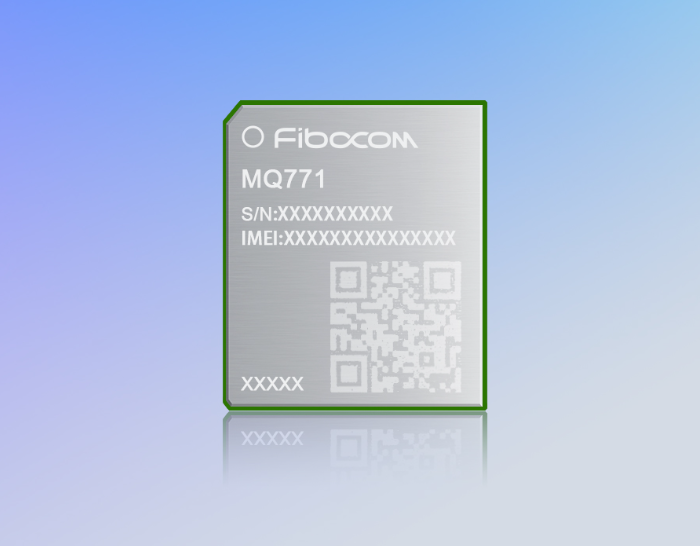
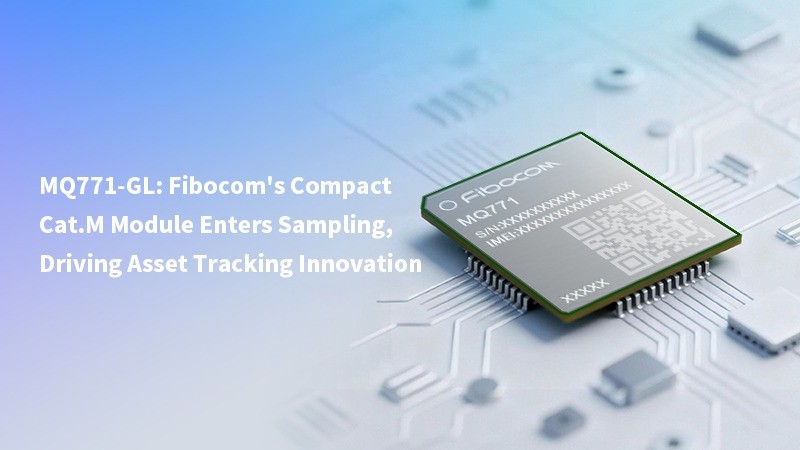
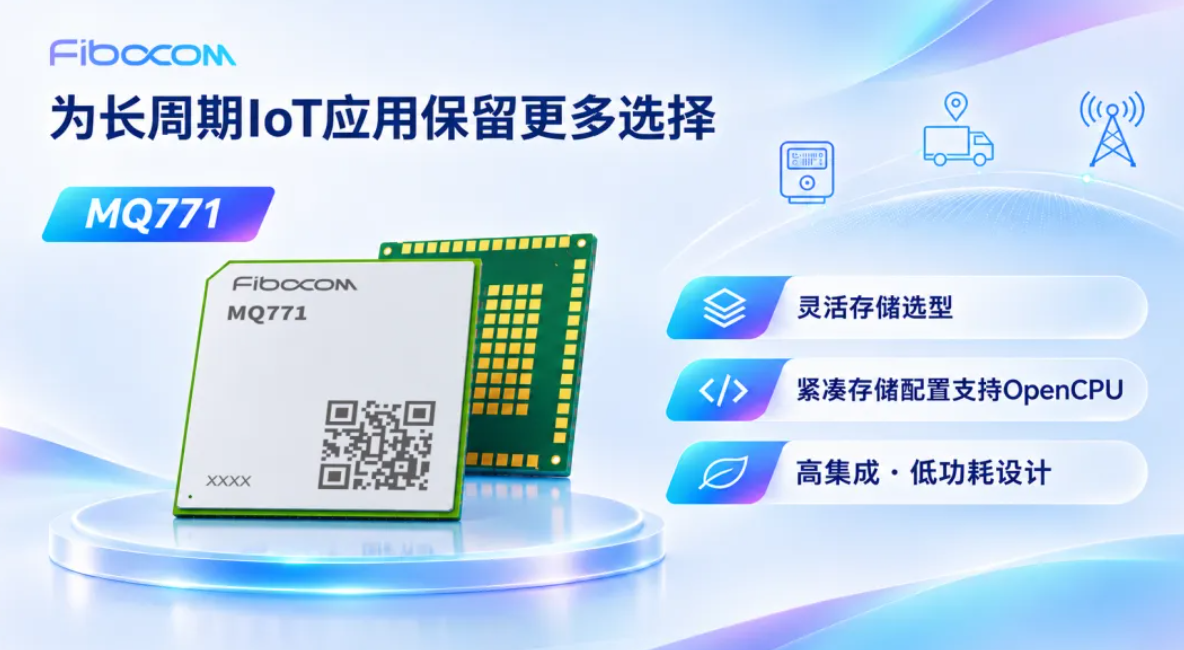
Targeting IoT projects such as smart metering and asset tracking with a lifespan of 10–15 years, Fibocom’s next-generation Cat M module, MQ771-GL, balances small size, low power consumption, and cost control. In terms of memory configuration, the product adopts a combination of an main chipset-embedded 8 MB PSRAM and a 16 MB external QSPI NOR Flash. This provides more flexibility for memory component selection and long-term supply management.
Over the past two years, supply and demand shifts for memory devices like DDR, alongside fluctuations in price and lead times, have become common challenges across the industry. For projects with a 10–15 year cycle, the true challenge is not the quote of a specific component at a given moment. Rather, it is whether the design leaves room for adjustment when original materials can no longer be supplied, or when the chipset platform enters the late stage of its lifecycle.
In some Cat M chipset platforms, memory components such as RAM and NAND are integrated with the main controller into a single package. While this approach reduces peripheral design efforts, it binds the memory and the main chipset into a single procurement unit. This makes it difficult to select, stock, or verify a second source for the memory independently. Changes in cost and lead times can impact the entire procurement unit. Furthermore, if a platform switch becomes necessary, hardware design, firmware adaptation, and existing certifications may also be affected.
Therefore, long-term projects require more than just stocking an extra batch of materials. They need to leave choices for future supply changes right at the design stage.
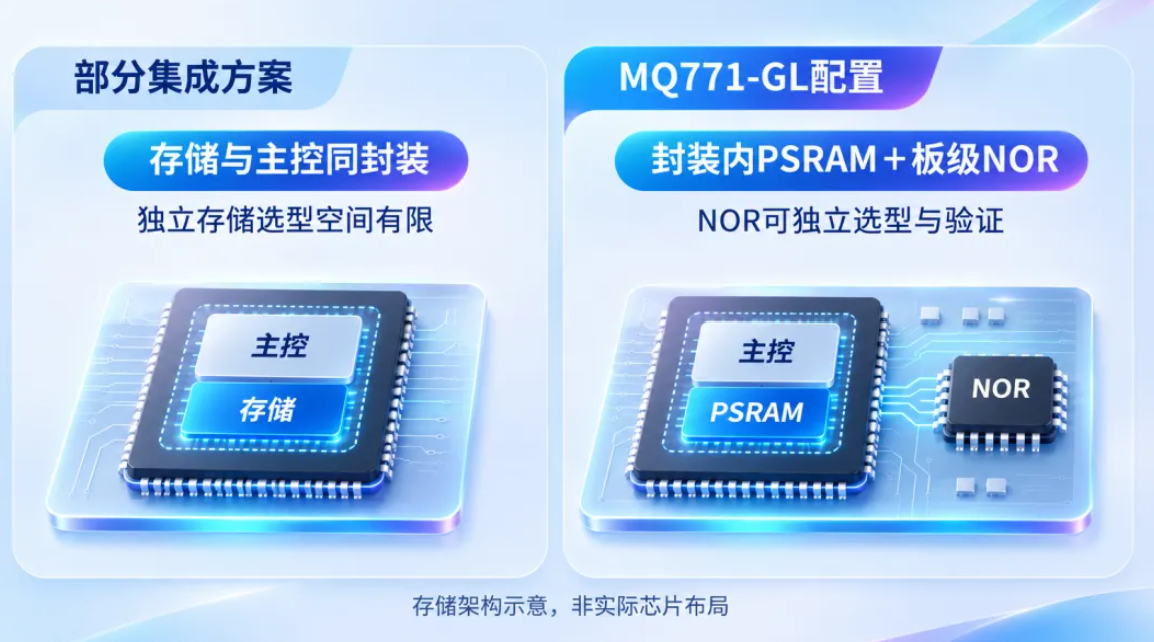
Based on the memory architecture supported by the core communication chipset platform, the Fibocom MQ771-GL manages NOR Flash as an independent, board-level component. This offers greater flexibility for memory component selection and supply source adjustments. The value of this configuration is primarily reflected in three areas:
More Flexible Memory Selection: The 16 MB QSPI NOR acts as an independent device. It can be procured and stocked separately, allowing compatibility verification across different suppliers. When fluctuations occur with one source, the supply origin can be adjusted after necessary verifications, eliminating the need to directly replace the entire communication platform.
OpenCPU Support in Compact Memory: Through XiP (eXecute-in-Place) technology, application code can be read and executed directly from the NOR Flash without being fully loaded into RAM first. This reduces the demand for high-capacity volatile memory. Even with a compact storage setup of 8 MB PSRAM and 16 MB NOR Flash, the MQ771-GL still supports OpenCPU application development. This meets customer requirements for business logic development and peripheral integration, balancing application flexibility while controlling memory resources and hardware costs.
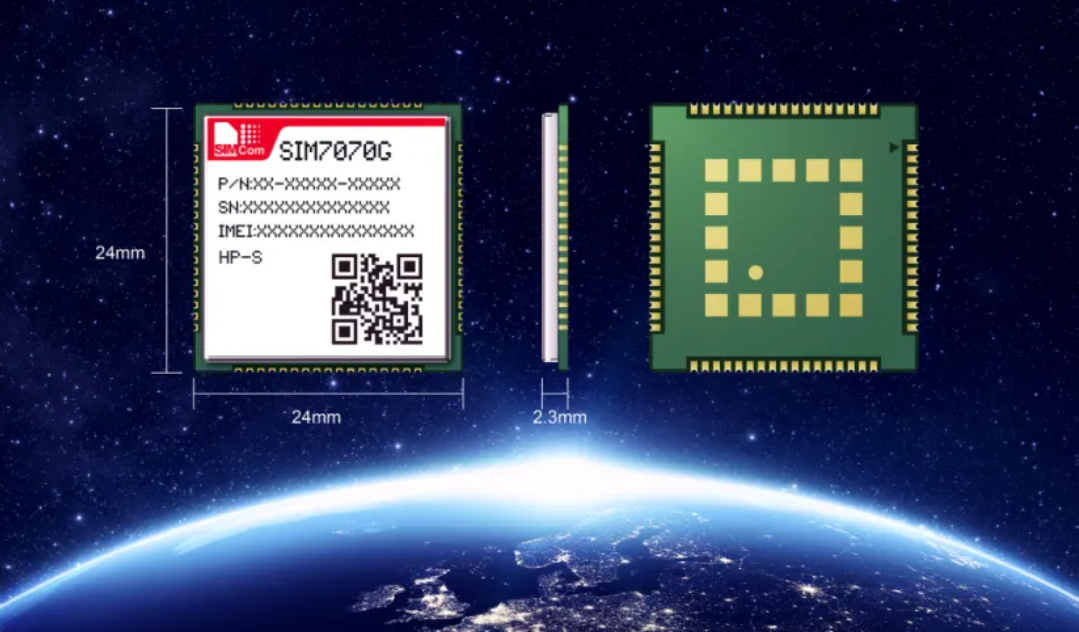
Platform Integration to Reduce Peripheral Components: Functions like the PMU and RFIC are integrated into the core communication platform, which helps reduce the BOM component count. Combined with a 17.7 × 15.8 × 2.2 mm LGA package, as well as PSM and eDRX low-power mechanisms, the MQ771-GL strikes an optimal balance between small size, low power consumption, and cost control.
The critical shift lies not in “stocking an extra batch of materials,” but in moving the selection and verification of certain memory components forward to the design phase. When a source experiences volatility, it creates an opportunity to respond by adjusting the independent memory component instead of re-evaluating the entire communication platform.
For long-cycle projects like smart metering and asset tracking, stable supply depends not only on the lifecycle of the core platform, but also closely on component selection, supply sources, and subsequent maintenance capabilities.
Through its platform-supported memory configuration, the MQ771-GL reserves space for component-level adjustments while meeting terminal demands for size, power consumption, and cost. For projects requiring 2G fallback or the 450 MHz private network frequency band, Fibocom has other corresponding product lines available.
The memory architecture cannot eliminate price volatility in upstream markets, nor does it guarantee that a specific part number will remain unchanged for 10–15 years. What it provides is an evaluable and verifiable component replacement path. This helps customers mitigate the impact of supply fluctuations from a single memory device on long-term deployments, while balancing product performance and cost.