Quectel Releases Next-Generation Flagship Smart Module SP895BD-AP

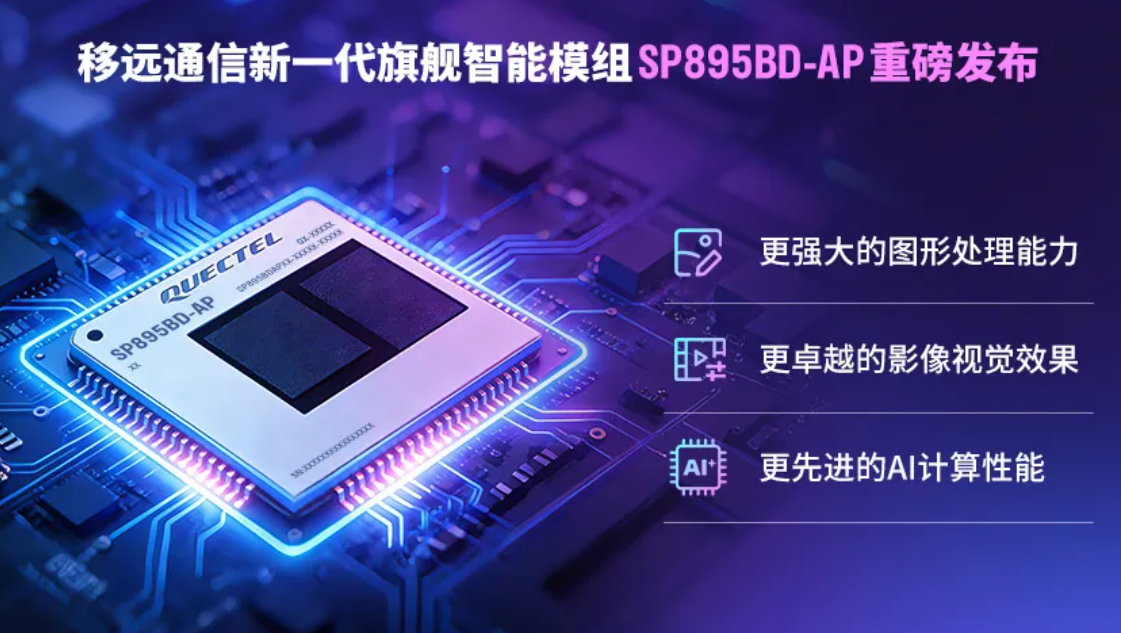
On January 6, the first day of the 2026 International Consumer Electronics Show (CES 2026), leading global IoT solutions provider Quectel announced the official launch of its next-generation flagship smart module, SP895BD-AP.

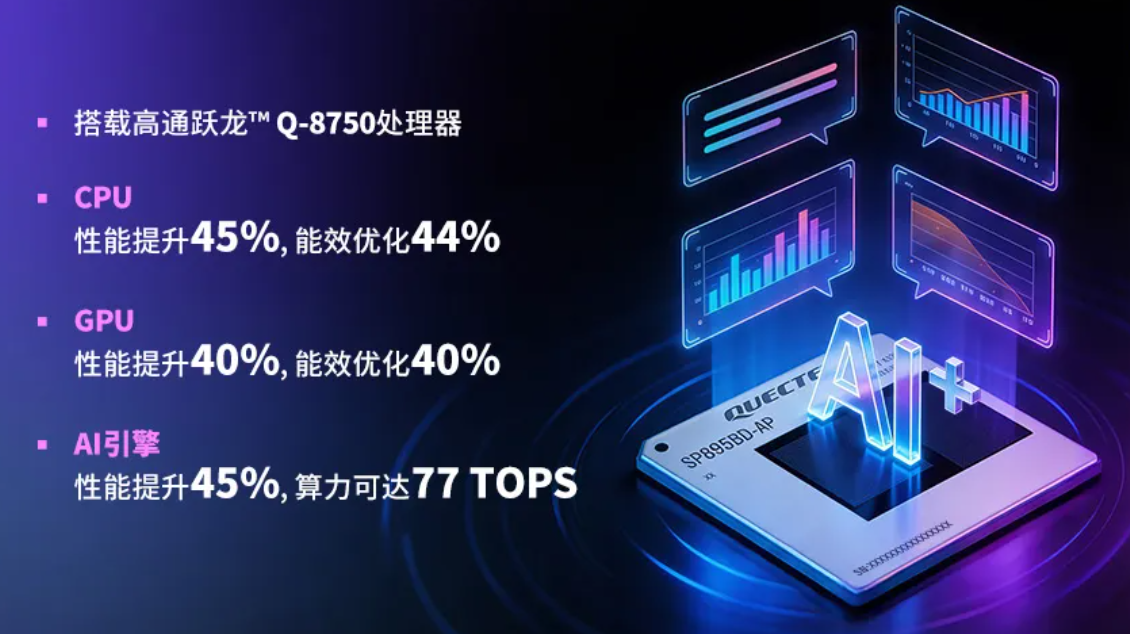
This module is powered by the Qualcomm Snapdragon™ Q-8750 processor, which offers enhanced graphics processing capabilities, superior imaging effects, and advanced AI computing performance. It is designed to meet the stringent demands of high-end devices such as video conferencing, ultra-high-definition displays, image synthesis, computation boards, smart retail, and smart home applications. It provides essential hardware support for the AIoT industry as it transitions from “basic intelligence” to “high-level smart computing.”

Quectel’s COO, Zhang Dong, stated: “At this critical juncture in the move toward ‘higher intelligence’ in AIoT, there is an explosive growth in the demand for computational power and multimedia processing capabilities in terminal devices. The newly launched flagship smart module SP895BD-AP is a key achievement for Quectel, grounded in industry needs and deepening our efforts in the edge intelligence field. Leveraging the Qualcomm Snapdragon Q-8750 processor, this module achieves significant performance enhancements in CPU, GPU, and AI engines, alongside 8K multimedia processing capabilities. It offers a solution that balances ‘computational power and energy efficiency’ for high-end AIoT scenarios, accelerating the digital transformation of the industry.”

Enhanced with 3nm Technology: A Double Leap in Performance and AI Computing Power

The SP895BD-AP redefines performance boundaries with its advanced hardware architecture. Featuring the Qualcomm Snapdragon Q-8750 processor, it employs a 3nm fabrication process and includes an octa-core high-performance Qualcomm Oryon™ CPU, with clock speeds reaching up to 2×4.32 GHz + 6×3.53 GHz. Compared to the previous generation (the 8 series chips), it achieves a 45% increase in CPU performance and a 44% improvement in energy efficiency. This allows it to maintain stable high-performance output in high-intensity scenarios such as multi-tasking and complex algorithm execution while minimizing power consumption, thereby balancing the demands for “computational power” and “energy consumption.”

The accompanying Qualcomm® Adreno™ 8 series GPU also exhibits outstanding performance, achieving a 40% increase in efficiency and energy optimization. Its unique tile-based architecture delivers stunning graphics effects and realistic environmental rendering capabilities, ensuring reliable performance for complex task handling and ultra-high-definition displays (8K Display/3D), easily meeting the high demands of graphic processing for high-end devices.

In the domain of edge AI computing, the SP895BD-AP brings groundbreaking advancements: the integrated AI engine achieves a computing power of up to 77 TOPS, marking a 45% increase over the previous generation. It supports INT4/INT8/INT16/FP16 full-precision computing modes, enabling real-time inference, and can even run large language models with up to 11 billion parameters on the edge. By integrating with multimodal perception technology, terminal devices equipped with this module can accurately recognize user contexts, facilitating multimodal interaction, and enabling generative AI assistants with real-time decision-making and personalized service capabilities, thereby establishing a “fully-covered, high-efficiency operation” foundation for edge AI development.

Multimedia Capabilities Maximized: 8K Ultra HD and Robust Imaging Input

In the field of multimedia processing, the SP895BD-AP sets a new benchmark. It supports 8K@30fps video encoding and 8K@60fps video decoding, significantly enhancing video bitrate processing and transmission efficiency. This enables “low latency transmission + high-fidelity reproduction” of ultra-high-definition videos, seamlessly aligning with the core requirements of 4K/8K ultra-high-definition displays and professional video conferencing equipment.

Its imaging input capabilities are equally robust: it features three integrated ISPs (image signal processors), capable of synchronously processing three streams of 48MP@30fps video input, and supports individual cameras with up to 108 million pixels for image capture, accurately capturing scene details to easily meet the needs of high-end imaging scenarios.

Flexible Adaptation: Hardware-Software Synergy Accelerating Scenario Implementation

To further adapt to the complex and diverse application ecosystem of AIoT, the SP895BD-AP has been fully optimized for its compatibility from “hardware flexibility” to “software compatibility.” Its hardware design utilizes LGA packaging, resulting in a compact size that can accommodate more product forms. Additionally, it is equipped with various peripheral interfaces, including MIPI DSI, CSI, PCIe, USB, I2S, UART, I2C, and SPI, to meet diverse display, audio, sensor, and communication expansion requirements, significantly enhancing scenario adaptability and deployment flexibility in AIoT applications.

On the software side, the module is designed to be compatible with a broader industry ecosystem, deeply supporting Android 15 and Linux operating systems, which greatly reduces the technological barriers for cross-field applications.

In the future, Quectel will continue to focus on the integration of edge intelligence and IoT technologies, investing and innovating to drive the deep development of industrial digital transformation with more cutting-edge products and more comprehensive solutions, injecting strong momentum into the construction of an intelligent world characterized by “everything being smart and full-domain perception.”

Quectel Releases Robot Computing Module SH602HA-AP at DDC2025

Recently, Quectel Communication officially launched the SH602HA-AP robot computing module, equipped with the Xuri®5 intelligent computing chip for sweet potato robots, which was showcased at the DDC2025 Sweet Potato Robot Developer Conference.

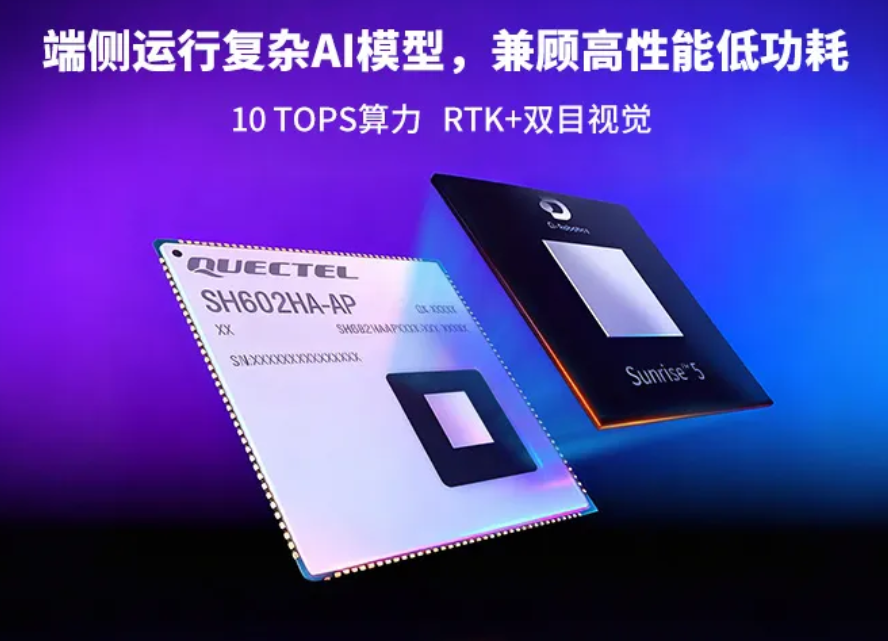
As a core computing solution for the new generation of general-purpose robots, the Quectel SH602HA-AP module boasts high computing power of 10 TOPS, an RTK + binocular vision fusion solution, and advanced on-device large model operation capabilities. These key advantages provide robots with essential technological support for precise navigation and obstacle avoidance, dynamic environmental perception, and more. This advancement aids industries in upgrading from “functional execution” to “perception and decision-making,” thus accelerating the commercialization process of robots on a larger scale.

In terms of core configuration, the Quectel SH602HA-AP module runs on the Ubuntu operating system. The embedded Xuri 5 chip is based on the advanced BPU Bayesian architecture and integrates abundant heterogeneous computing resources, offering up to 10 TOPS of AI computing power. This performance level can easily handle mainstream scenarios such as lawn mowers, cleaning robots, companion robots, and delivery robots, supporting efficient completion of full-stack computing tasks locally. It can also smoothly operate complex AI models and the latest algorithms such as Transformer, BEV, and Occupancy on the edge. Compared to traditional solutions, robots utilizing this module can not only accomplish basic object recognition and path planning but also efficiently realize advanced intelligent behaviors like scene understanding, natural language interaction, and dynamic obstacle avoidance.

More importantly, the Quectel SH602HA-AP achieves breakthroughs in low energy consumption while outputting high-performance AI computing power. In the complex field of robot terminal computing, it delivers better decision-making and task execution within limited time and computational resources, while also better aligning with the stringent requirements for heat dissipation control and lightweight design in robots.

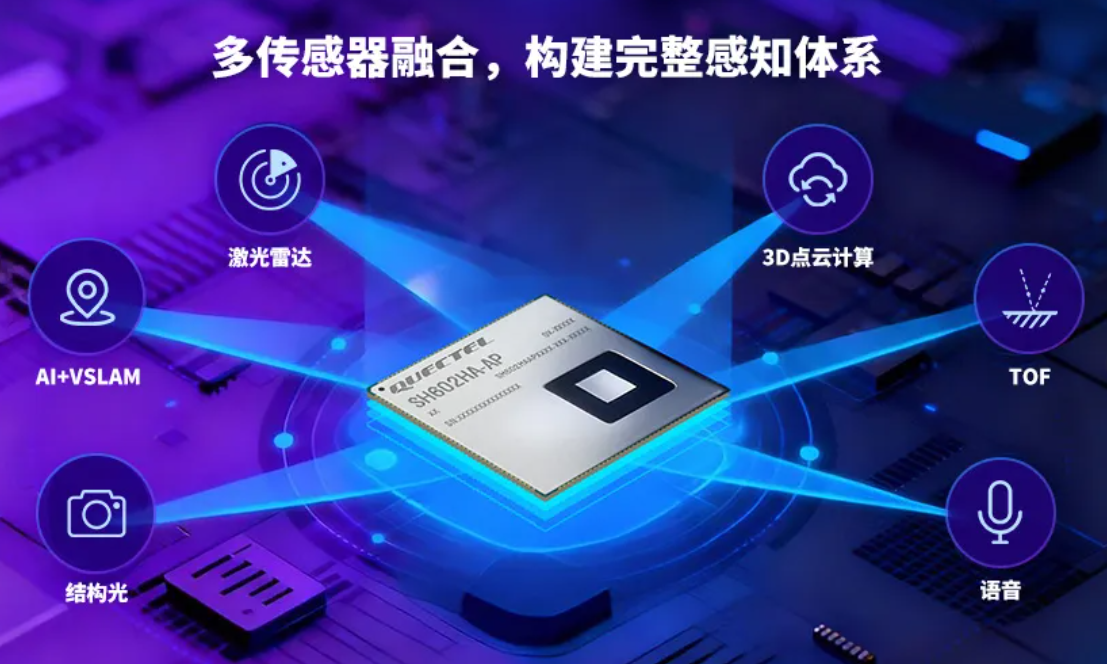
If the computing architecture serves as the “intelligence core” of a robot, then the perception system acts as its “five senses,” interacting with the surrounding world. The SH602HA-AP module creates a complete integrated perception system, realizing an edge-side closed loop of “perception-computation-decision.”

In terms of perception capability, the module fully supports various sensor signal inputs and fusion processes, including LiDAR, structured light, ToF (Time of Flight), and voice. It incorporates core robotic perception algorithms such as dual-camera depth computation, AI + VSLAM (visual simultaneous localization and mapping), and 3D point cloud computation, combined with voice recognition capabilities, endowing robots with comprehensive intelligent abilities of “seeing, hearing, computing, and judging.”

In multimedia and visual processing, the SH602HA-AP performs exceptionally well, featuring a newly designed ISP 2.0 (Image Signal Processor) optimized for robotic scenarios, enhancing both latency and quality. The module’s maximum processing capability reaches 3840×2160@60fps, supporting advanced technologies such as 3D-NR (three-dimensional noise reduction), WDR (wide dynamic range), and HDR (high dynamic range), allowing it to accurately capture high-definition visual data in complex lighting environments. Additionally, it supports 4K@60fps video encoding and decoding, meeting the core demands for real-time visual transmission and processing in robots.

The interface configuration of the SH602HA-AP is remarkably versatile, encompassing 1×BT.1120, 1×DSI, 1×RGMII, 1×USB 3.0, 1×USB 2.0, 1×SDIO, 7×UART, 7×I2C, 1×QSPI, 2×I2S, and other abundant interfaces. Moreover, the module supports flexible external communication and positioning modules such as Quectel 5G, LTE Cat 1/4, Wi-Fi 6, and GNSS, allowing for quick integration of communication and high-precision positioning capabilities across various robotic applications.

Zhang Dong, COO of Quectel Communication, stated, “From lawn mowers and sweepers to cutting-edge humanoid robots, various forms of robots are profoundly reshaping human production and lifestyle. Quectel is committed to providing a solid edge-side computing and communication foundation for intelligent robots. The launch of the SH602HA-AP module not only achieves dual upgrades in computing and perception but, more importantly, significantly lowers the development threshold for high-end intelligent robots, injecting core momentum into industry innovation.”

Quectel Launchs the Automotive-grade 5G R18 Module AR588MA

On January 4, just before the 2026 International Consumer Electronics Show (CES 2026), Quectel Communications, a global leader in IoT and V2X (Vehicle-to-Everything) solutions, announced the launch of its automotive-grade 5G-A module AR588MA, compliant with the 3GPP R18 standard.

This series of 5G modules is built on MediaTek’s world’s first 5G-A platform, MT2739, achieving four core breakthroughs: comprehensive signal coverage, high-speed data transmission, AI-based intelligent network adaptation, and automotive-grade safety assurance. These features strongly support the innovative development of the next-generation intelligent connected vehicles. Currently, the module is offering engineering samples externally, and several leading automotive companies have already initiated the implementation of the AR588MA series.

“Ground + Satellite” Full Coverage, More Reliable High-Speed Transmission

As an automotive-grade module based on MediaTek’s first 5G-A platform, the Quectel AR588MA series modules feature leading modem performance in the industry. It includes a built-in quad-core Cortex-A55 CPU with a clock speed of up to 2.3GHz, enhanced upstream transmission capabilities, and ultra-low latency, supporting a bandwidth of 400 MHz and NR 5CC, with downstream speeds reaching up to 9.0 Gbps and upstream speeds exceeding 2.5 Gbps. It also supports DSDA (Dual SIM Dual Active) functionality, enabling more efficient and stable data transmission and real-time processing while maintaining stable network connections, thereby laying a solid communication foundation for the safety and reliability of advanced driver-assistance systems.

At the same time, Quectel AR588MA has achieved significant breakthroughs in comprehensive communication capabilities. It not only supports 5G-A technology but also integrates satellite communication functions. Combined with enhanced low-frequency reception performance and adaptive network signal compensation algorithms, it significantly improves network performance while ensuring full-scenario communication coverage. Even in weak signal areas like basements and remote mountain regions, vehicles can maintain stable connectivity, effectively addressing the pain points of ground network coverage blind spots and ensuring communication continuity in complex environments.

In terms of wireless performance optimization, the AR588MA is compatible with a six-port antenna design, deeply adapting to Quectel’s high-performance intelligent antenna solutions, thus achieving deep integration of module and antenna performance, providing users with wide coverage and strong signal wireless network performance.

AI Intelligent Adaptation, Smoother Network Experience

During this critical period of advancement in intelligent connected vehicles, users have raised higher demands for the smoothness of in-vehicle network experiences.

One of AR588MA’s core competitive advantages lies in its deep integration of AI technology with in-vehicle communication, achieving an upgrade from “passive connectivity” to “active adaptation.” The module features an intelligent driving scene recognition system and an AI network optimization engine, with processing capacities of 25K DMIPS for quad-core and 13K DMIPS for dual-core. It can real-time integrate multidimensional data, including vehicle positioning, speed, and road conditions, automatically matching optimal network modes, significantly enhancing network speed and connection stability, and providing users with a smoother in-vehicle network experience.

Automotive-Grade Core Quality, Dual Assurance of Safety and Reliability

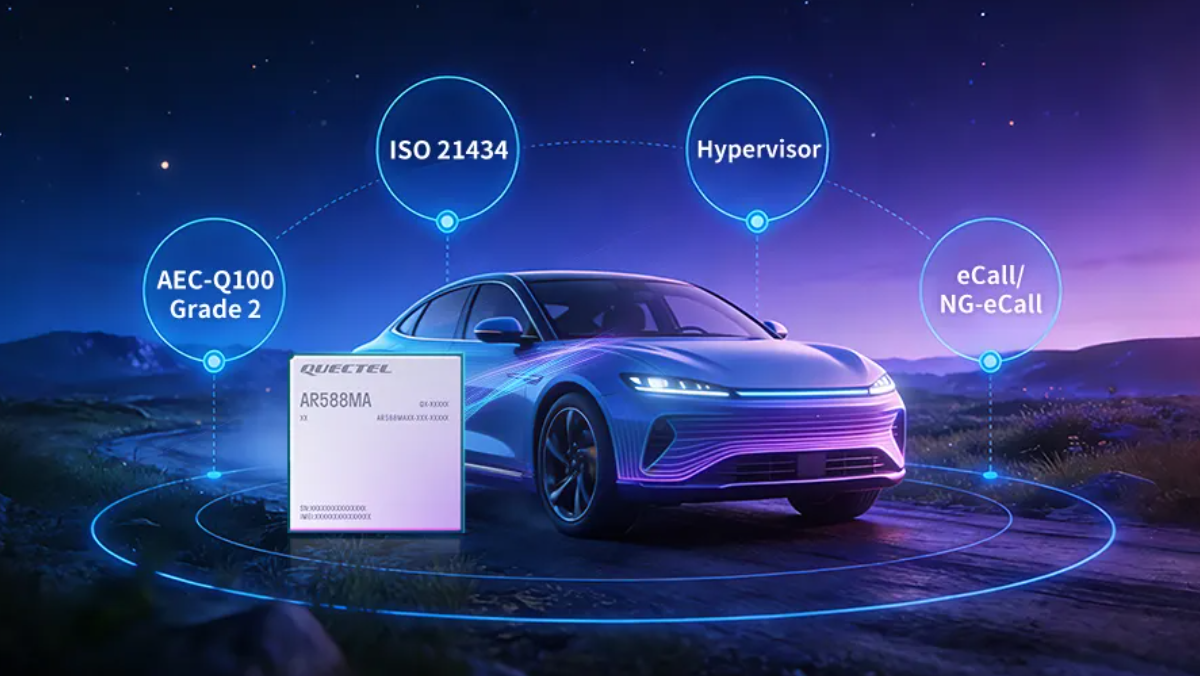
The reliability of automotive products is directly related to driving safety. The Quectel AR588MA strictly adheres to automotive-grade design standards and safety systems, fulfilling AEC-Q100 Grade 2 automotive specifications to ensure product reliability and durability in extreme environments. Additionally, it complies with ISO 21434 automotive cybersecurity management standards and supports Secure Boot and RoT (Root of Trust), combined with Hypervisor hardware isolation technology to provide a more stable connectivity experience and more reliable safety assurances for in-vehicle communication.

On the functional side, the AR588MA fully supports eCall/NG-eCall emergency calling systems, which can automatically trigger a call and transmit critical data such as vehicle location and accident type to emergency centers in the event of a collision or other emergencies, buying precious time for rescue operations. To further enhance vehicle positioning reliability, this module also integrates GNSS positioning capabilities, supporting dual-frequency positioning with L1 and L5, outputting at a frequency of up to 30Hz, providing precise location support for path planning and lane-level navigation for assisted driving.

Compatible Design for Easy Upgrades, Accelerating 5G-A Implementation in Vehicles

To reduce customer development costs and shorten product launch cycles, the AR588MA employs a highly compatible design approach at both hardware and software levels.

On the hardware front, it is pin-to-pin compatible with Quectel automotive 5G modules AG581A, AG56xN, and AG519M series, allowing customers to quickly upgrade from traditional 5G to 5G-A. On the software side, it utilizes the QuecOpen architecture, leveraging excellent cross-platform and cross-system compatibility to assist automotive enterprises in seamless system migration, significantly shortening product development and validation cycles.

Quectel Edge Computing Module Runs DeepSeek Model

Recently, the domestic large model DeepSeek has gained global popularity due to its core advantages of “open-source, efficient inference, and edge-friendly” capabilities. Quectel Communication, based on its edge computing module SG885G, has successfully implemented the stable operation of the DeepSeek model and completed targeted fine-tuning.

Currently, the model is undergoing in-depth testing and optimization on multiple smart terminals. With its outstanding engineering capabilities, Quectel will accelerate the large-scale application and popularization of edge-side AI technology across various industries.

DeepSeek: A Pioneer in AI Model Innovation

DeepSeek’s global success stems from its breakthrough innovations in model architecture, distillation technology, and reinforcement learning.

The full version of the DeepSeek-V3 model adopts an innovative MoE (Mixture of Experts) architecture with 671 billion parameters, capable of processing 60 tokens per second. It excels in handling complex tasks like long document analysis and multimodal reasoning. Each layer includes 256 routing experts and 1 shared expert, with only 8 experts activated per token, significantly improving learning efficiency and flexibility, reducing training and inference costs, and accelerating token generation.

To address the shortcomings of small inference models’ Self-play learning, DeepSeek-R1 uses efficient distillation technology to transfer the inference capabilities of large models to smaller, more efficient versions. This breakthrough allows the smaller version to maintain excellent performance while significantly reducing model size and computational resource requirements, making it an ideal choice for edge-side deployment.

Additionally, the experimental DeepSeek-R1-Zero version demonstrated that large models can possess powerful inference abilities through reinforcement learning (RL) alone, without the need for supervised fine-tuning, opening up new possibilities for AI model training.

DeepSeek’s Smaller Version: An Ideal Choice for Edge Deployment

The DeepSeek-R1 version focuses on reinforcement learning technology, offering strong inference capabilities and excellent cost-performance. The series of small-size distilled models based on this version, with parameter ranges from 1.5B to 70B, provide developers with high-performance, low-cost large model deployment and development solutions, which will strongly drive the commercialization of edge-side AI.

The simplified small models inherit powerful AI capabilities from their large counterparts. Despite a reduction in parameters, the performance remains outstanding. With significantly reduced computational load, memory, and resource consumption, these models are particularly suitable for edge devices with limited resources. Additionally, inference speed is greatly improved to meet the real-time requirements of edge devices. Furthermore, the smaller models have a more compact form and stronger adaptability, making them easier to integrate and run on various industry terminals and edge computing devices. Despite model compression, distillation technology allows the small models to maintain high precision, ensuring task performance remains unaffected.

Quectel: Accelerating Edge AI Deployment with Leading Engineering Capabilities

While many manufacturers are still exploring how to support the DeepSeek model, Quectel has already made breakthroughs. Its edge computing module SG885G, based on Qualcomm’s QCS8550 platform, has successfully achieved the stable operation of the DeepSeek-R1 distilled small model. Test data shows that its token generation speed exceeds 40 tokens per second, and with continuous optimization, the speed will improve further, bringing more powerful AI capabilities to smart terminal devices.

Moreover, Quectel has closely collaborated with industry partners to conduct in-depth testing and optimization for applications in robotics, smart cabins, and smart industries, providing users with a smoother AI experience.

Quectel’s edge computing modules and solutions, equipped with the DeepSeek model, are not only applicable to consumer and industrial robotics but also have widespread applications in smart cabins, machine vision, personalized virtual assistants, tablets, elderly care, smart homes, AI toys, and wearable devices. These diverse scenarios benefit from powerful AI empowerment, such as more natural voice interactions, more accurate image recognition, and more personalized service experiences.

Furthermore, after successfully achieving the edge-side operation of the DeepSeek model, Quectel has also completed targeted fine-tuning of the model and applied it to its own large-model solutions, offering more precise and efficient edge-side AI services to clients. This achievement not only highlights Quectel’s technical strength in the field of edge-side AI but also reflects its leading engineering capabilities, which will strongly drive the rapid development and deployment of AIoT applications.

Looking towards the wide range of vertical industries that urgently require AI capabilities, Quectel will continue to invest resources to promote more high, mid, and entry-level edge computing modules, as well as smart cabins, 5G, LTE modules, and solutions, to fully integrate advanced models like DeepSeek and large cloud models. This will help IoT devices achieve intelligent upgrades and usher in a new era of interconnected devices.

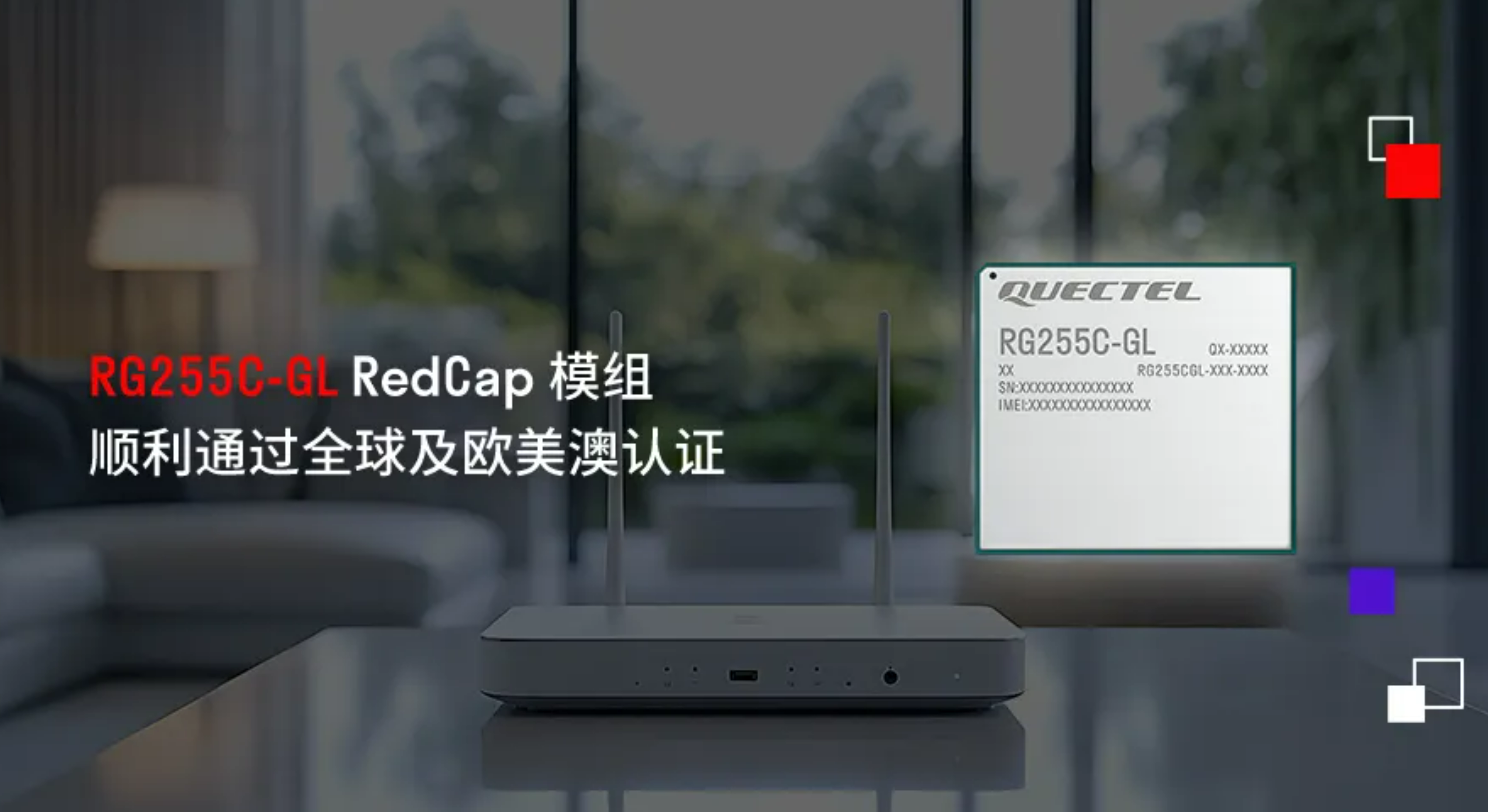
Quectel RG255C-GL 5G RedCap Module Successfully Passes Global Certifications

Recently, Quectel’s 5G RedCap module RG255C-GL has successfully passed multiple international certifications for the global market, including GCF global certification, North American FCC, IC, PTCRB certifications, European CE certification, and Australian RCM certification.

This means the Quectel RG255C-GL RedCap module is now fully commercially available and meets the stringent requirements for RedCap network connectivity in markets such as Europe, North America, and Australia. With balanced technical performance, this product provides stable and reliable connectivity support for IoT terminals like CPEs, MiFis, routers, gateways, locators, and industrial PDAs.

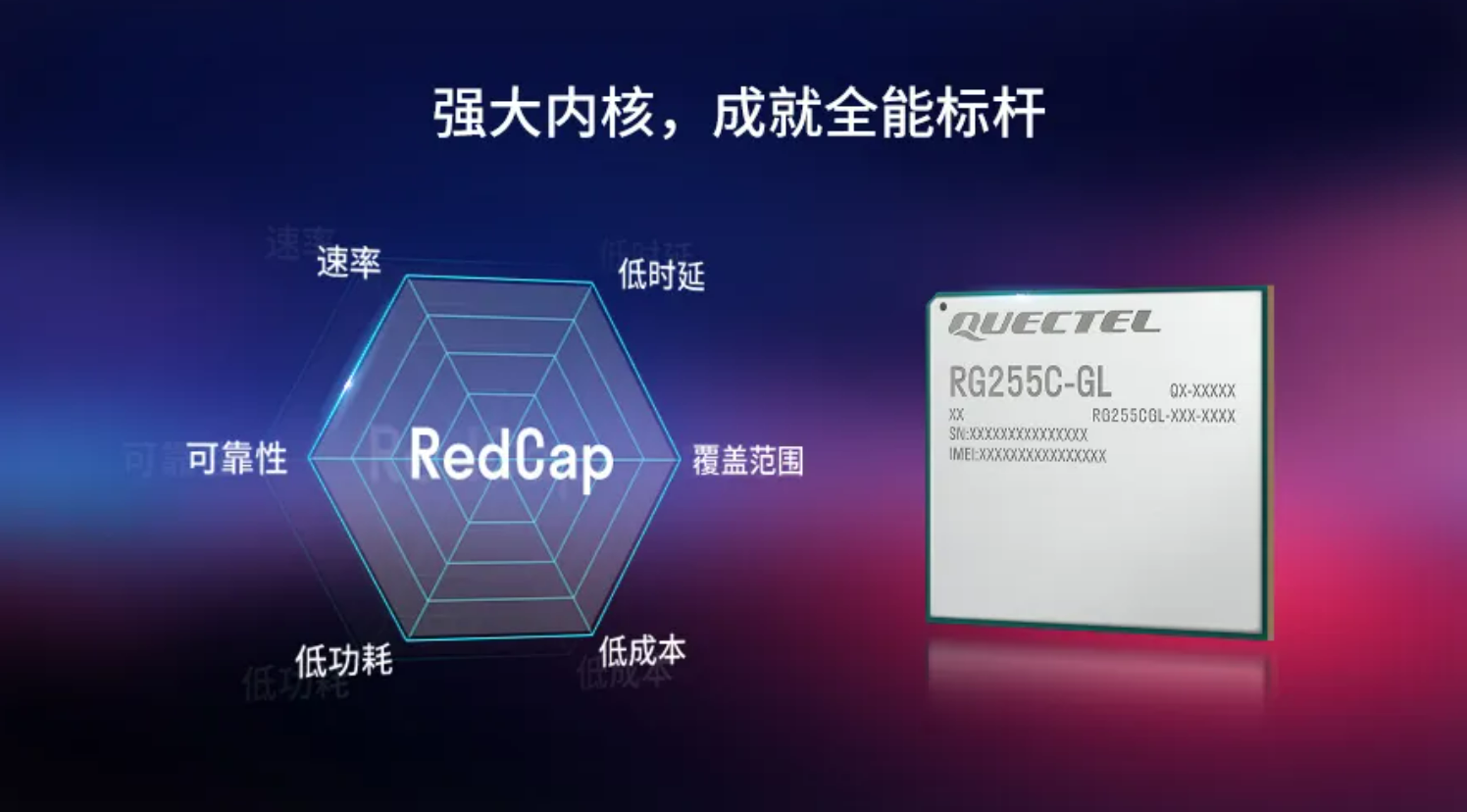
RedCap, a lightweight IoT technology derived from 5G NR, achieves cost optimization, size reduction, and lower power consumption by streamlining device capabilities and complexity. Meanwhile, RedCap retains important 5G native features, such as low latency, high reliability, and support for functions like 5G slicing and 5G LAN, making it highly suitable for the digital transformation needs of vertical industries.

Powerful Core, Achieving All-Around Excellence

The Quectel RG255C-GL module is based on the Qualcomm Snapdragon® X35 platform, designed for the global market, and widely compatible with major operators. It complies with the 3GPP R17 standard, supports 5G Sub-6 standalone (SA) mode and LTE Cat 4 networks, and is compatible with Rel-15 (SA) and Rel-16 (SA) networks, meeting the seamless integration and flexible deployment needs of terminal devices. The module also supports low-latency communication and key 5G features such as 5G LAN, uRLLC, and network slicing.

The RG255C-GL achieves a downlink speed of up to 223 Mbps and a peak uplink speed of 123 Mbps, suitable for entry-level FWA applications, video transmission, and mid-to-high-speed IoT requirements.

Additionally, the Quectel RG255C-GL supports the OpenWrt operating system, providing router customers with a wide range of flexible development options. This module also integrates Qualcomm® IZat™ positioning technology, supporting GPS, GLONASS, BDS, Galileo, and NavIC positioning technologies for faster, more precise, and reliable enhanced positioning services.

Compact Design, Demonstrating Exceptional Strength

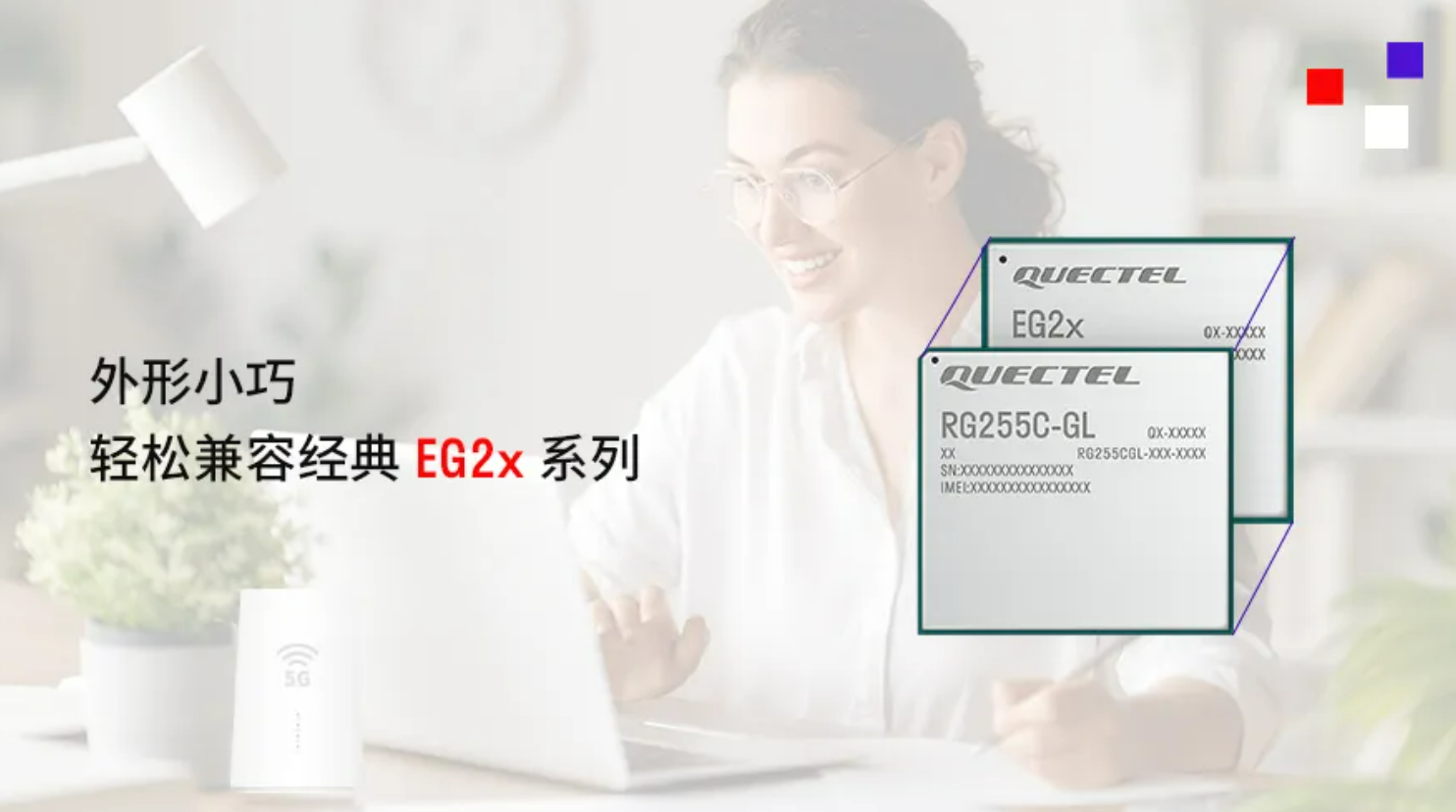
Not only is the  5G Module powerful in performance, but it also features a sleek and compact design. It uses a compact LGA package, measuring only 32.0 mm × 29.0 mm × 2.4 mm, consistent in size with Quectel’s classic LTE Cat 4 module EG2x series, significantly simplifying the upgrade process for 4G devices, effectively shortening development cycles and reducing costs.

Moreover, the RG255C-GL integrates a rich set of interfaces, including USB 2.0, PCIe 2.0, PCM, UART, SGMII, and SPI, supporting various drivers and software functionalities, expanding its wide-ranging applications in the RedCap field.

In addition, this Quectel 5G module can be paired with various antennas from Quectel, allowing terminal customers to choose compatible antennas based on actual needs, thus reducing costs and accelerating product time-to-market.

Quectel’s 5G-A RG650V Module Passes GCF/PTCRB Certification

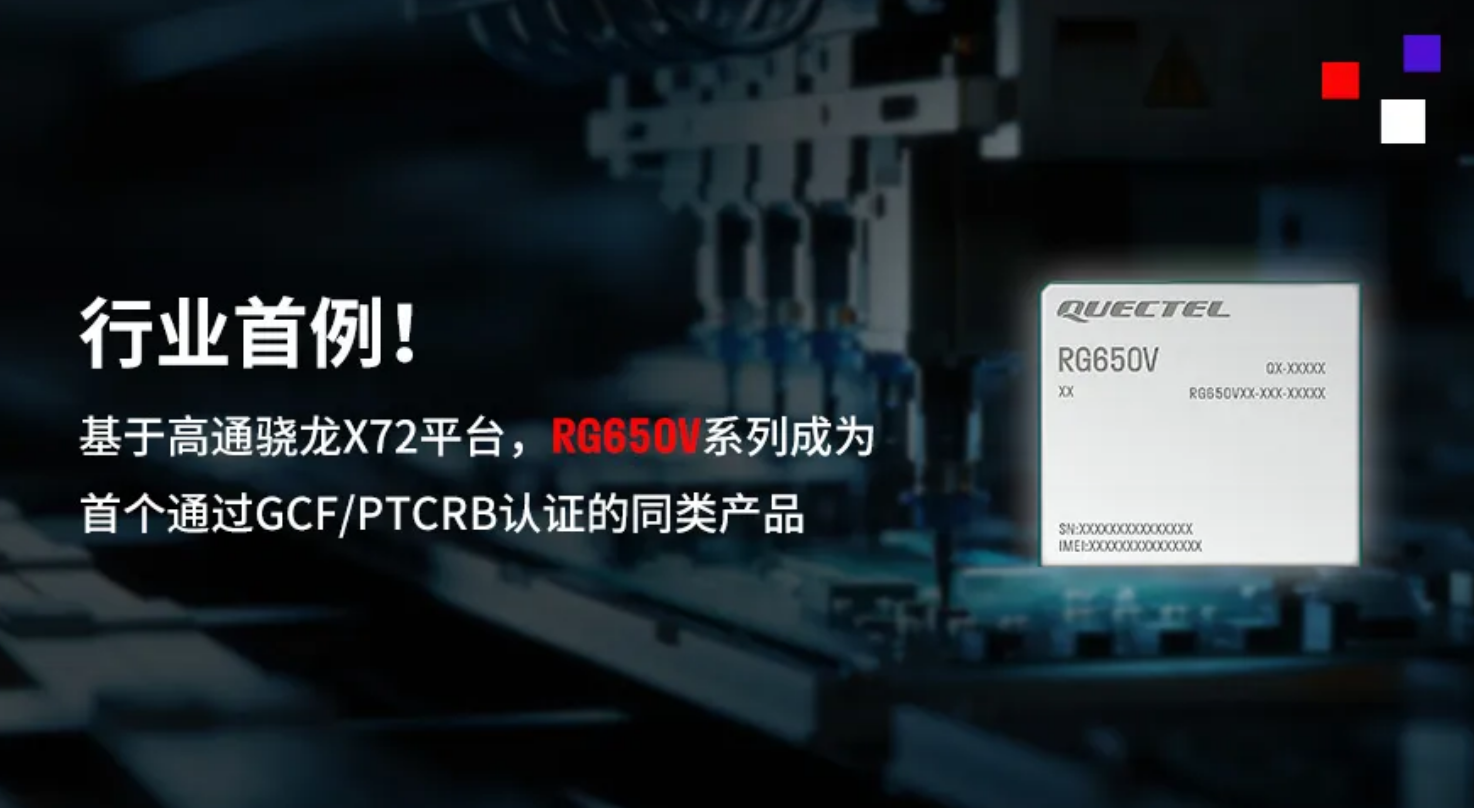
Recently, Quectel, a leading global IoT solution provider, announced that its new 5G-A series module RG650V has become the first product based on Qualcomm’s Snapdragon X72 platform to successfully pass GCF/PTCRB certification.

The passing of these two certifications indicates that the Quectel RG650V meets the relevant regulations and standards for regions such as North America, achieving a secure and stable compatibility status with major operators in those regions, providing users with efficient and reliable 5G communication services. Notably, the RG650V has also passed the US FCC certification.

Consistency certification is a key step in bringing IoT devices to market. PTCRB certification focuses on device compatibility and performance on North American operator networks, while GCF is an international product consistency certification. Together, they provide dual assurance for compliant sales of wireless communication devices in key global markets. The RG650V, as the first module based on the Snapdragon X72 platform to pass both certifications, further demonstrates the leading edge of Quectel 5G modules and the company’s overall strength.

Developed on the world’s first 5G Advanced-ready modem and RF system—the Qualcomm Snapdragon X72—the RG650V employs 3GPP Rel-17 technology, supporting 5G NSA and SA modes, as well as Option 3x, 3a, 3, and Option 2 network architectures. It also supports extended 8Rx frequency bands and DL 4 × 4 MIMO technology to enhance 5G network coverage, transmission efficiency, and user experience. Additionally, the series is backward compatible with 4G/3G and supports the latest Wi-Fi 7 technology, introducing up to 4K QAM modulation and 2.4/5/6 GHz Wi-Fi, ensuring stable operation even in areas lacking 5G deployment.

For high-precision positioning applications, the RG650V series incorporates Qualcomm’s advanced IZat™ positioning technology (Gen 9VT) and an optional multi-constellation GNSS receiver, supporting GPS, GLONASS, BDS, Galileo, and QZSS positioning technologies. This enables faster, more accurate, and reliable positioning while simplifying product design and allowing for real-time adjustments based on terminal needs.

To expand the RG650V series’ application possibilities, the module features a range of industrial-standard interfaces, including USB 2.0/3.0/3.1, PCIe 3.0, PCM, and UART. It also comes with the OpenWrt operating system, offering broad and flexible development options for router customers. The series includes RG650V-EU and RG650V-NA versions to meet different regional requirements.

In recent years, the deep integration of 5G with AR/VR, ultra-high-definition video, big data, cloud computing, and the metaverse has driven innovation in 5G applications, creating new business models and experiences. At the same time, new industries present new network connection demands, making 5G-A a timely solution. The new 5G-A module RG650V series from Quectel not only stands out in terms of timeliness and leadership but also excels in performance, supporting the comprehensive upgrade of the communications industry chain and driving rapid digitalization across various sectors.

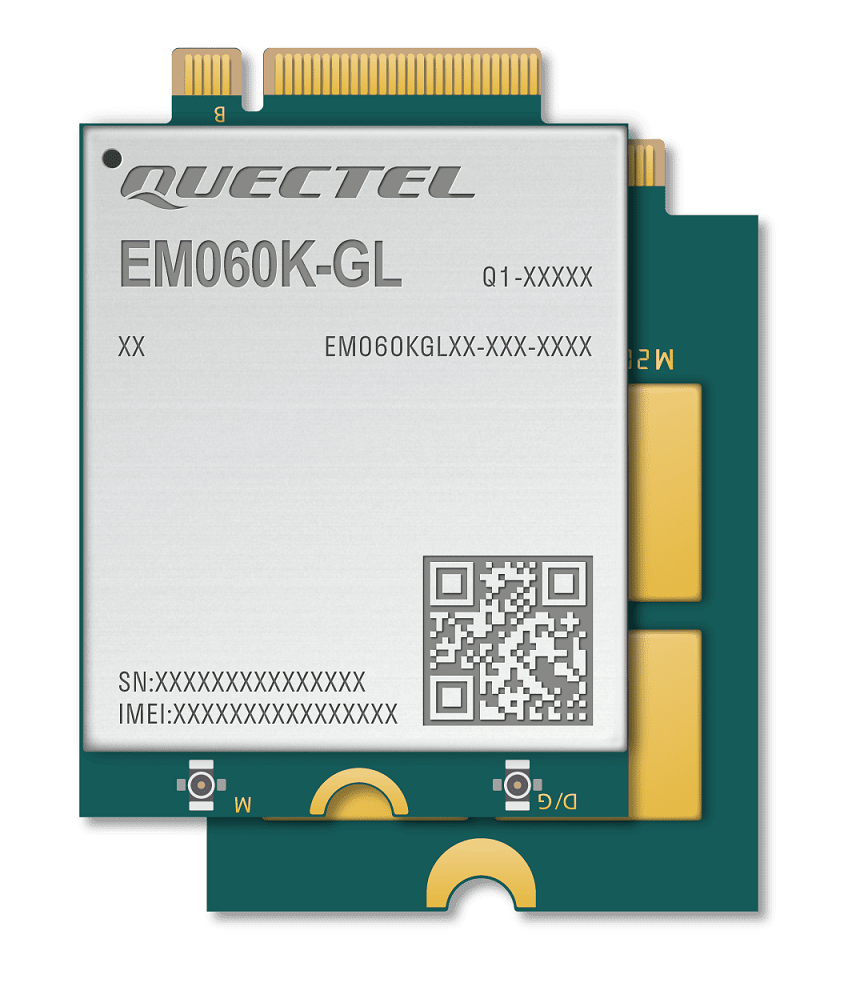
Quectel LTE-A Module EM060K-GL becomes a ChromeOS Certified Supplier

Recently, Quectel Communication, a global leader in IoT solutions, announced that its advanced LTE-A module Quectel EM060K-GL has been included in Google’s Chrome OS certified supplier list. Subsequently, it will be considered as a candidate module for integration into Chrome OS-based laptops, providing an “always connected” network experience. This significant milestone highlights Quectel Communication’s commitment to providing high-quality and highly reliable IoT products, solidifying its position as a leading innovator and preferred ecosystem partner in the IoT industry.

In the IoT ecosystem, the reliability, transmission speed, and security of connected devices such as PCs are crucial. The selection of EM060K-GL demonstrates its compliance with Google’s rigorous standards for connectivity, security, and performance. This inclusion will facilitate its application in more scenarios and collaboration with Google’s extensive business and terminal devices, opening up new opportunities.

Norbert Muhrer, President and Chief Sales Officer of Quectel Communication, expressed, “We are delighted to see EM060K-GL listed as a supplier for Google Chrome OS. This validates Quectel’s team relentless pursuit of cutting-edge technology and products, dedicated to providing more comprehensive IoT solutions to the market, enabling seamless integration with products from key ecosystem partners. We look forward to deepening our collaboration with Google and OEM manufacturers to bring innovative products to global customers and explore more comprehensive and innovative applications.”

Outstanding Performance

As a high-performance LTE-A Cat 6 module, Quectel EM060K is based on the Qualcomm Snapdragon® X12 LTE modem, utilizing 3GPP Release 12 technology. It offers peak download speeds of up to 300 Mbps and peak upload speeds of 50 Mbps, providing smooth high-speed network experiences for applications such as industrial laptops, consumer laptops, home gateways, industrial routers, CPEs, HD live broadcasting, smart grids, smart mines, and robotics.

In terms of design, the EM060K-GL module adopts an M.2 form factor with dimensions of 30.0mm x 42.0mm x 2.3mm, capable of stable operation within a wide temperature range from -25°C to +75°C. In addition, customized module models have been designed by Quectel to better meet the application needs in the EMEA region.

Quectel EM060K-GL module incorporates dedicated power-saving technologies to maximize terminal operating time. It also offers optional features such as eSIM, dual SIM single standby, and multi-constellation GNSS receivers, along with rich network protocols, integration of multiple industrial standard interfaces, and support for various drivers and software functions, meeting diverse hardware and software demands of IoT products.

Effective Compatibility

Considering the broad application scenarios and development convenience for customers, Quectel Communication provides a range of high-quality antennas tailored for EM060K-GL, ensuring seamless connectivity with the module. This “module + antenna” one-stop solution not only eliminates compatibility testing issues with third-party antennas, ensuring smoother terminal integration processes, but also enhances overall communication system reliability and effectiveness, delivering streamlined and cost-effective solutions for customers. Apart from antennas, EM060K-GL is also compatible with various other Quectel product series such as Cat 6 modules EM06, Cat 12 modules EM12 series, Cat 16 module EM160R-GL, as well as 5G modules RM500Q, RM520N, RM550V, and RM255C series, effectively reducing customers’ R&D costs and time to market during terminal upgrades.

Quectel Communication’s module products consistently prioritize security. From product architecture to firmware/software development, they adhere to industry-leading practices and standards. This includes undergoing independent testing by third-party organizations to mitigate potential vulnerabilities, as well as implementing security practices such as generating SBOM and VEX files and firmware binary analysis throughout the software development lifecycle, ensuring product security and reliability.

Quectel RM520N-GL 5G Sub-6GHz Module Review

Quectel RM520N-GL is a robust and versatile 5G IoT module designed for high-speed wireless connectivity in IoT and M2M applications. It supports global 5G NR Sub-6GHz bands, ensuring reliable performance across various regions worldwide. With its advanced features and compact form factor, the RM520N-GL module integrates seamlessly into a wide range of devices, from industrial equipment to consumer electronics, enabling rapid deployment and connectivity for IoT ecosystems.

Key features and specs of the Quectel RM520N-GL include:

  1. Global 5G NR Sub-6GHz Coverage: The module supports multiple 5G NR Sub-6GHz bands, allowing it to operate globally with broad compatibility.
  2. High-Speed Data Transfer: It delivers ultra-fast data rates, supporting downlink speeds up to 4.67Gbps and uplink speeds up to 950Mbps, ensuring efficient data transmission and low latency.
  3. Multi-Mode and Multi-Band Support: Alongside 5G connectivity, the RM520N-GL provides extensive support for LTE-FDD, LTE-TDD, WCDMA, and GSM/GPRS networks, ensuring fallback options for areas without 5G coverage.
  4. Compact Design: Designed with a compact form factor and low power consumption, the module is suitable for integration into devices with space constraints while optimizing power efficiency.
  5. Rich Interfaces and Protocols: It features multiple interfaces such as PCIe, USB 3.1, UART, and I2C, enhancing flexibility and compatibility with various host systems and applications.
  6. Enhanced Security: The module incorporates advanced security mechanisms, including secure boot, secure storage, and authentication protocols, ensuring data integrity and protection against unauthorized access.
  7. Industrial-Grade Reliability: With robust design and industrial-grade components, the RM520N-GL operates reliably in harsh environments with temperature ranges from -40°C to +85°C and is resistant to shocks and vibrations.
  8. Comprehensive Software Support: Quectel provides comprehensive software development kits (SDKs) and drivers for easy integration and customization, facilitating rapid development and deployment of IoT solutions.

Applications for the Quectel RM520N-GL span a wide range of industries, including smart manufacturing, automotive telematics, healthcare, smart cities, and consumer electronics. Its high-speed connectivity, global compatibility, and robust design make it an ideal choice for IoT deployments requiring reliable and efficient 5G connectivity.

In conclusion, the Quectel RM520N-GL sets a new standard for 5G IoT modules with its global coverage, high-speed data transfer capabilities, compact design, and industrial-grade reliability. The Quectel 5G Module empowers businesses to innovate and deploy next-generation IoT solutions with confidence, leveraging the transformative power of 5G technology.