Quectel AR588MA 5G-A Automotive-Grade Module Empowers TBox-P Platform

Recently, Jingwei Hirain’s TBox-P platform, built on Quectel’s automotive-grade 5G-A module AR588MA, has officially entered mass production. This provides full-link support for intelligent connected vehicles—from the communication core to the in-vehicle system—helping drive large-scale commercial adoption of advanced intelligent driving. The Jingwei Hirain TBox-P platform powered by Quectel’s AR588MA has already secured mass production design wins from multiple L4 autonomous driving customers.
What exactly does the powerful AR588MA “core” bring to the TBox-P platform?

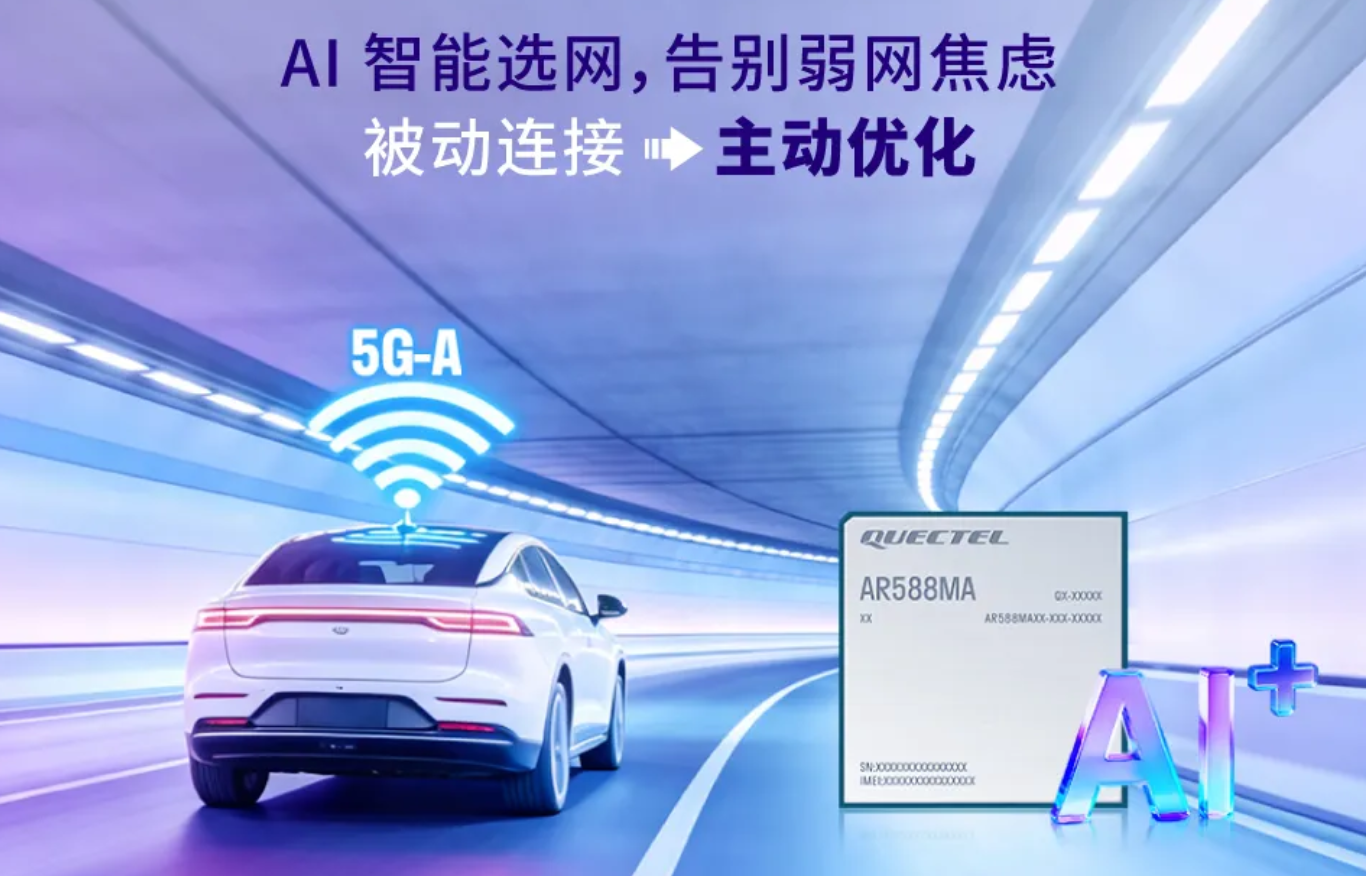
Say Goodbye to Weak Signal Anxiety: AI-Powered Intelligent Network Selection Lets Vehicles Proactively “Choose the Signal”

Underground garages, tunnels, mountainous areas, urban canyons… the in-vehicle network environment is complex and ever-changing. Traditional in-vehicle communication can only “passively wait for a signal,” leading to poor experience and insufficient stability in weak signal areas.

The Quectel AR588MA breaks this deadlock. It features an embedded AI vehicle network engine with three key capabilities: scene recognition, intelligent switching, and signal compensation. It not only senses vehicle speed, location, and environment in real time but also autonomously learns base station handover patterns. When a vehicle enters a weak signal area like an underground garage, the AI engine predicts this in advance and dynamically optimizes network selection. Combined with an adaptive antenna compensation algorithm, it significantly enhances signal penetration in weak signal areas, achieving a qualitative leap from “passive connection” to “active optimization.”
5G-A Onboard: Greater Bandwidth, Faster Response, Stronger Capabilities

The AR588MA module is built on MediaTek’s 5G-A platform MT2739 and complies with the 3GPP R18 standard. It delivers a peak downlink rate of up to 9.0 Gbps and a peak uplink rate of over 2.5 Gbps. Compared to traditional 5G, this is not just a doubling of numbers—it’s a leap in experience.

Simply put, under ideal network conditions, downloading an HD movie in the cabin takes just a few seconds, and communication between the vehicle, the cloud, and roadside units happens with near-zero latency. This combination of ultra-high bandwidth and ultra-low latency paves the way for high-speed data pathways for advanced driver assistance and vehicle-to-everything (V2X) applications, making intelligent driving systems faster and safer.
No Single Point of Failure: DSDA Dual SIM Dual Active Creates “Double Insurance”

Advanced intelligent driving cannot rely on a single network. If the communication link is interrupted, the consequences could be disastrous. Ordinary “dual SIM dual standby” only supports both SIMs in standby simultaneously—when one card is on a call, data on the other card is interrupted. The DSDA (Dual SIM Dual Active) supported by the AR588MA allows both SIM cards to operate independently and concurrently without interfering with each other, truly enabling simultaneous network connectivity.

Even if one carrier’s network is congested or a base station fails, the other network seamlessly takes over, ensuring core services such as remote monitoring, NG-eCall emergency calling, and vehicle dispatching remain uninterrupted. This true dual-network redundancy builds an unbreakable communication safety foundation for L4 autonomous driving.

High Reliability & Easy Compatibility: Fast Upgrades, Global Availability

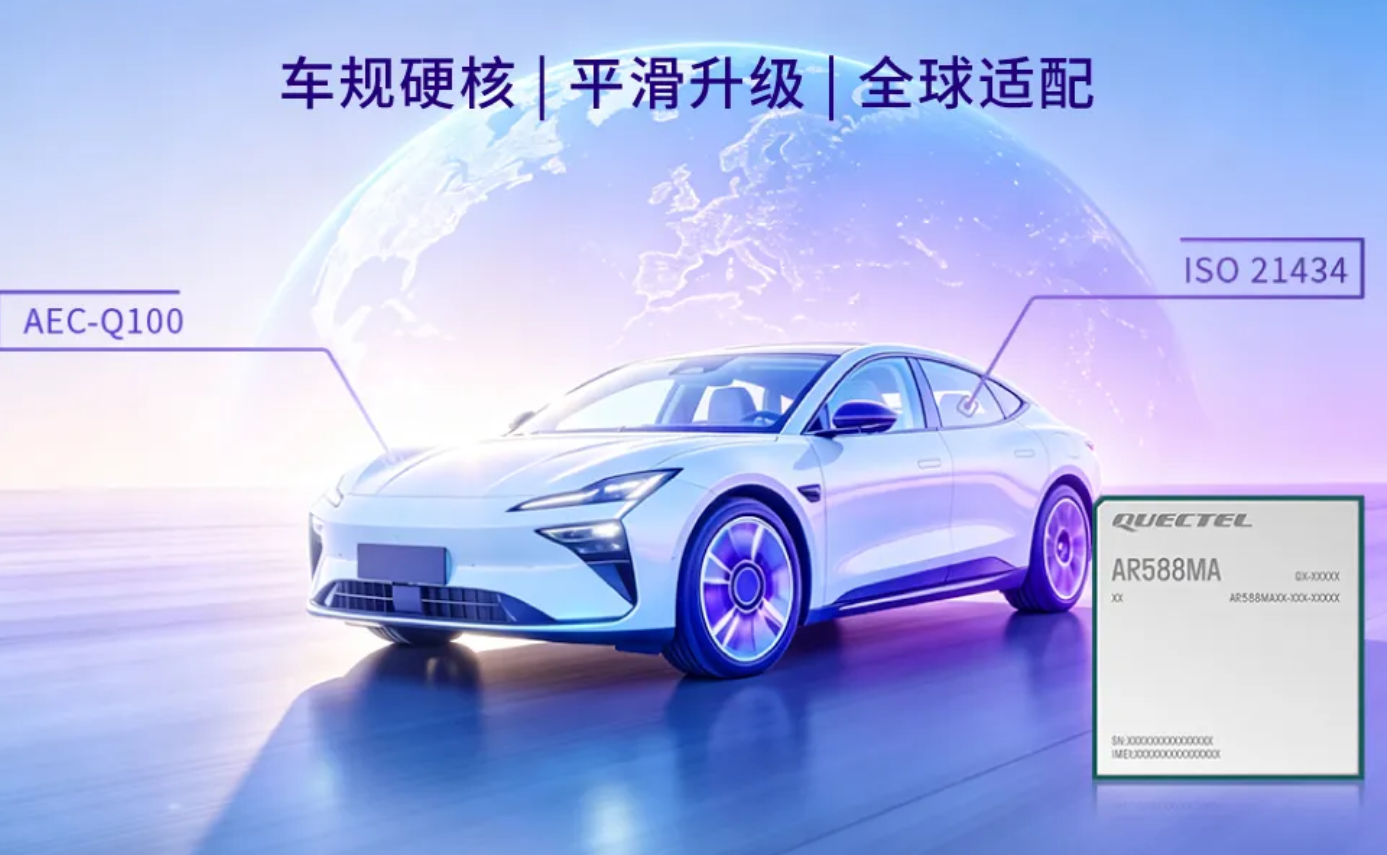
The reliability of in-vehicle products directly affects driving safety. The Quectel 5G Module strictly follows automotive-grade design standards, meets AEC-Q100 Grade 2 requirements and ISO 21434 cybersecurity standards, and operates stably under extreme temperatures (-40°C to +105°C) and vibrations. It also supports NG‑eCall emergency calling and L1+L5 dual-band GNSS high-precision positioning, providing dual benefits for vehicle safety and precise navigation.

In terms of upgrades and adaptation, the AR588MA features a highly compatible design. It is pin-to-pin compatible with Quectel’s existing automotive 5G series modules on the hardware side, and uses the QuecOpen architecture on the software side. Traditional 5G projects can smoothly upgrade to 5G-A without starting from scratch, greatly shortening development cycles and reducing costs. Additionally, the module supports global frequency bands, meeting the mass production needs of automakers in different regions and accelerating global deployment.
Quectel Launchs the Automotive-grade 5G R18 Module AR588MA

On January 4, just before the 2026 International Consumer Electronics Show (CES 2026), Quectel Communications, a global leader in IoT and V2X (Vehicle-to-Everything) solutions, announced the launch of its automotive-grade 5G-A module AR588MA, compliant with the 3GPP R18 standard.

This series of 5G modules is built on MediaTek’s world’s first 5G-A platform, MT2739, achieving four core breakthroughs: comprehensive signal coverage, high-speed data transmission, AI-based intelligent network adaptation, and automotive-grade safety assurance. These features strongly support the innovative development of the next-generation intelligent connected vehicles. Currently, the module is offering engineering samples externally, and several leading automotive companies have already initiated the implementation of the AR588MA series.

“Ground + Satellite” Full Coverage, More Reliable High-Speed Transmission

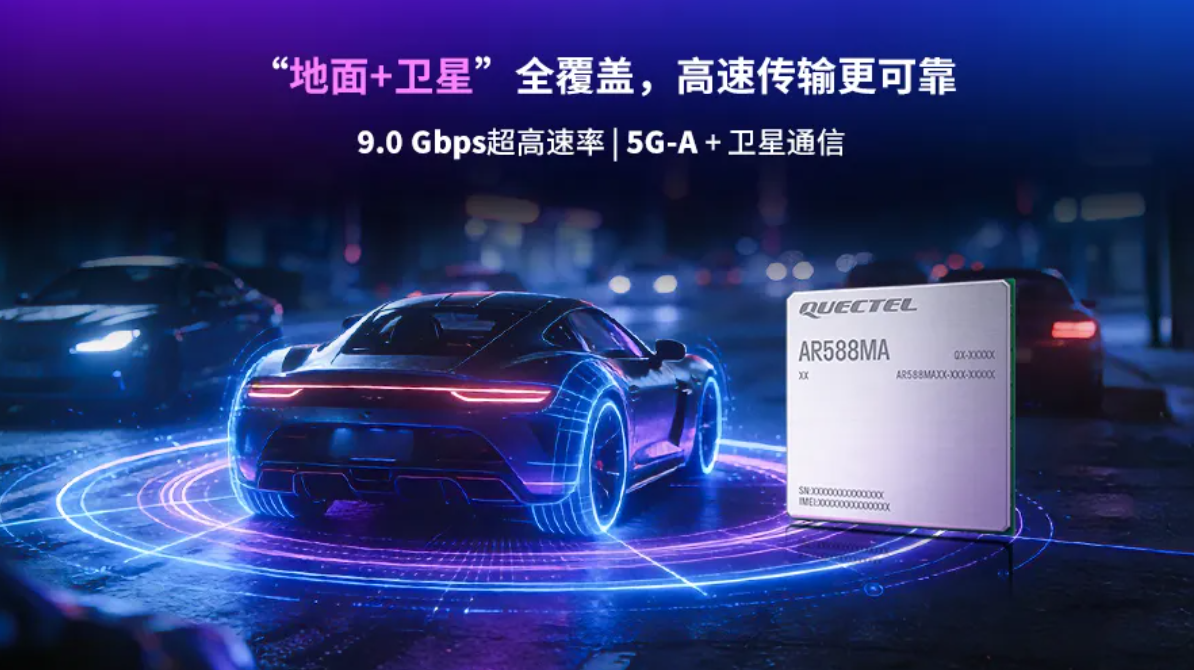
As an automotive-grade module based on MediaTek’s first 5G-A platform, the Quectel AR588MA series modules feature leading modem performance in the industry. It includes a built-in quad-core Cortex-A55 CPU with a clock speed of up to 2.3GHz, enhanced upstream transmission capabilities, and ultra-low latency, supporting a bandwidth of 400 MHz and NR 5CC, with downstream speeds reaching up to 9.0 Gbps and upstream speeds exceeding 2.5 Gbps. It also supports DSDA (Dual SIM Dual Active) functionality, enabling more efficient and stable data transmission and real-time processing while maintaining stable network connections, thereby laying a solid communication foundation for the safety and reliability of advanced driver-assistance systems.

At the same time, Quectel AR588MA has achieved significant breakthroughs in comprehensive communication capabilities. It not only supports 5G-A technology but also integrates satellite communication functions. Combined with enhanced low-frequency reception performance and adaptive network signal compensation algorithms, it significantly improves network performance while ensuring full-scenario communication coverage. Even in weak signal areas like basements and remote mountain regions, vehicles can maintain stable connectivity, effectively addressing the pain points of ground network coverage blind spots and ensuring communication continuity in complex environments.

In terms of wireless performance optimization, the AR588MA is compatible with a six-port antenna design, deeply adapting to Quectel’s high-performance intelligent antenna solutions, thus achieving deep integration of module and antenna performance, providing users with wide coverage and strong signal wireless network performance.

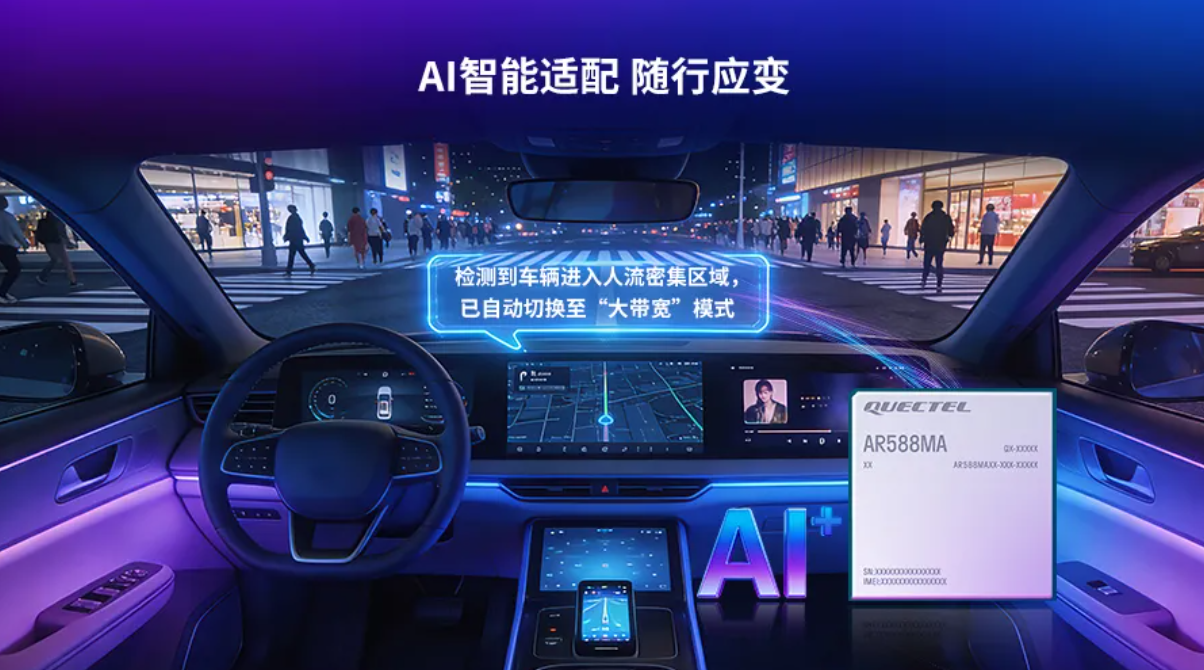
AI Intelligent Adaptation, Smoother Network Experience

During this critical period of advancement in intelligent connected vehicles, users have raised higher demands for the smoothness of in-vehicle network experiences.

One of AR588MA’s core competitive advantages lies in its deep integration of AI technology with in-vehicle communication, achieving an upgrade from “passive connectivity” to “active adaptation.” The module features an intelligent driving scene recognition system and an AI network optimization engine, with processing capacities of 25K DMIPS for quad-core and 13K DMIPS for dual-core. It can real-time integrate multidimensional data, including vehicle positioning, speed, and road conditions, automatically matching optimal network modes, significantly enhancing network speed and connection stability, and providing users with a smoother in-vehicle network experience.

Automotive-Grade Core Quality, Dual Assurance of Safety and Reliability

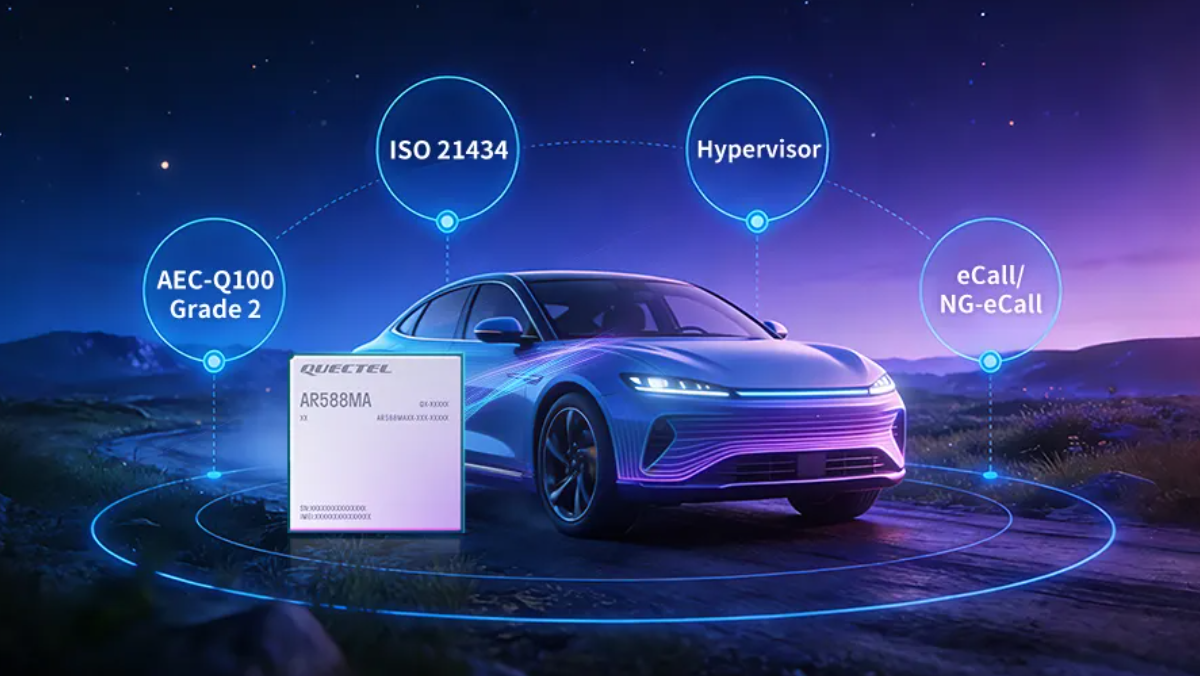
The reliability of automotive products is directly related to driving safety. The Quectel AR588MA strictly adheres to automotive-grade design standards and safety systems, fulfilling AEC-Q100 Grade 2 automotive specifications to ensure product reliability and durability in extreme environments. Additionally, it complies with ISO 21434 automotive cybersecurity management standards and supports Secure Boot and RoT (Root of Trust), combined with Hypervisor hardware isolation technology to provide a more stable connectivity experience and more reliable safety assurances for in-vehicle communication.

On the functional side, the AR588MA fully supports eCall/NG-eCall emergency calling systems, which can automatically trigger a call and transmit critical data such as vehicle location and accident type to emergency centers in the event of a collision or other emergencies, buying precious time for rescue operations. To further enhance vehicle positioning reliability, this module also integrates GNSS positioning capabilities, supporting dual-frequency positioning with L1 and L5, outputting at a frequency of up to 30Hz, providing precise location support for path planning and lane-level navigation for assisted driving.

Compatible Design for Easy Upgrades, Accelerating 5G-A Implementation in Vehicles

To reduce customer development costs and shorten product launch cycles, the AR588MA employs a highly compatible design approach at both hardware and software levels.

On the hardware front, it is pin-to-pin compatible with Quectel automotive 5G modules AG581A, AG56xN, and AG519M series, allowing customers to quickly upgrade from traditional 5G to 5G-A. On the software side, it utilizes the QuecOpen architecture, leveraging excellent cross-platform and cross-system compatibility to assist automotive enterprises in seamless system migration, significantly shortening product development and validation cycles.