You have no items in your shopping cart.

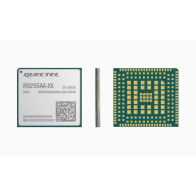
Quectel RG258UB-CN 5G Module
Quectel RG258UB-CN 5G Module Specifications, Price, Chipset, Applications
Availability: Out of stock
$299.00

Details
Details
Quectel RG258UB-CN is the China-market specific version of the "Global Light-eMBB" 5G module series unveiled at MWC 2026. While it shares the same core DNA as the Global (-GL) version, it is specifically optimized for Chinese carrier frequency bands (China Mobile, China Unicom, China Telecom, and China Broadnet) and regulatory requirements.
Built on the UNISOC V610 platform, this module is designed to bring 5G to smaller, more power-constrained devices that still require high-speed data.
Quectel RG258UB-CN 5G Module Specifications:
* Network Standard: 5G NR (SA/NSA) / LTE-A / WCDMA
* Region: China (Optimized for N1/N3/N28/N41/N77/N78/N79)
* Form Factor: LGA (Extreme compactness; ~33% smaller than standard 5G modules)
* Chipset: UNISOC V610
* 3GPP Release: Release 16/17 (Industrial features like 5G LAN, URLLC)
* Data Rates: DL: ~2.4 Gbps / UL: ~0.9 Gbps (Optimized for consistent throughput)
* Interfaces: USB 3.0, PCIe 2.0, UART, I2C, SPI, GPIO
Core Advantages
------------------------------------------
* Miniaturization Champion: The biggest breakthrough of the RG258UB series is its size. By using a highly integrated packaging process, Quectel reduced the module's volume by roughly one-third. This allows 5G to be integrated into devices that previously only had room for 4G or NB-IoT.
* The "Light-eMBB" Strategy: It targets applications that need more than the ~220 Mbps provided by 5G RedCap (RG255C series) but don't need the expensive, power-hungry 10Gbps speeds of flagship modules. It is the "perfect middle ground" for 5G performance.
* Carrier Optimized for China: The -CN variant ensures peak performance on Chinese networks, including support for the 700MHz (N28) band used for deep indoor and rural coverage, as well as the 4.9GHz (N79) band for industrial private networks.
* Enhanced Power Savings: It is designed to improve terminal battery life by over 20% compared to first-generation 5G modules, making it viable for battery-powered industrial handhelds and portable hotspots.
Primary Use Cases in China
------------------------------------------
* Industrial Handhelds & PDAs: Used by logistics workers in JD.com or SF Express warehouses for real-time inventory tracking with high-speed 5G.
* Smart Grid & Power Terminals: China’s massive "Smart Power" initiative uses these for remote monitoring of power lines and substations where space is tight and reliability is non-negotiable.
* Domestic Portable Hotspots: Ultra-slim "pocket Wi-Fi" devices for travelers and remote workers within China.
* Security & Body-Worn Cameras: Allowing Chinese security personnel to stream high-definition 4K video back to command centers in real-time without bulky hardware.
Reviews
Write Your Own Review
Tags
You may also be interested in the following product(s)