SIMCom has officially announced its collaboration with Skylo, a pioneer in non-terrestrial network (NTN) communications, to commence the NTN certification process for its SIM7070G-HP-S module.
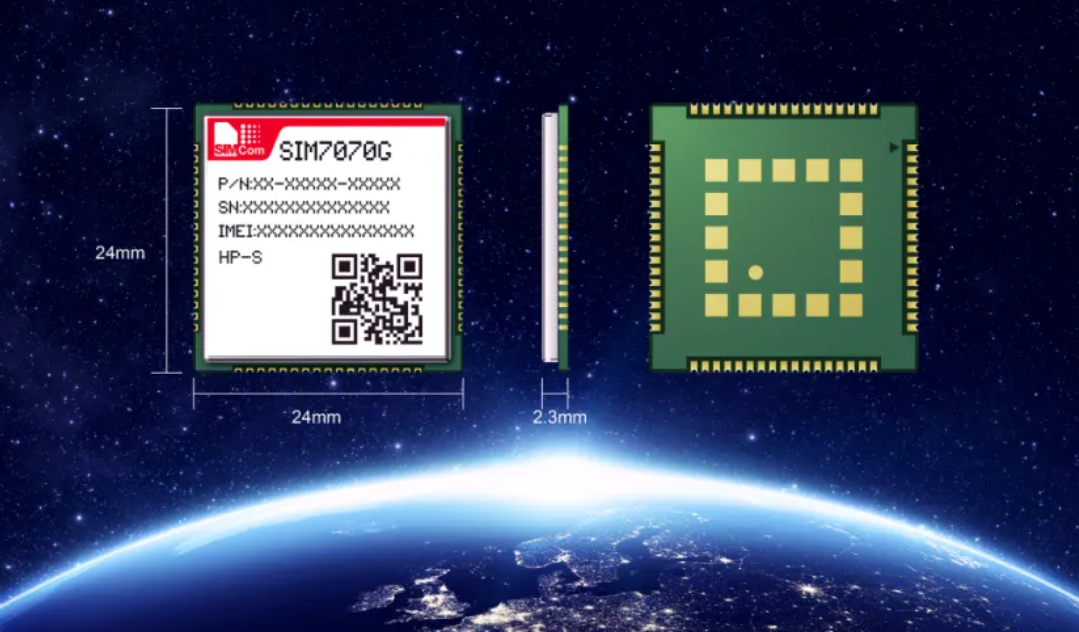
The SIMCOM SIM7070G-HP-S module, which is now undergoing certification, is an NTN module independently developed by SIMCom specifically for satellite IoT scenarios. It supports the 3GPP Release 17 5G IoT-NTN standard and is compatible with global satellite networks. Featuring an LCC+LGA package, the SIMCOM 5G module offers extensive interfaces and strong scalability. Its compact dimensions of 24×24×2.3mm allow for flexible integration into the design of various miniaturized IoT devices.
Leveraging SIMCom’s mature low-power technology, the SIM7070G-HP-S can extend device battery life to up to 10 years through Power Saving Mode (PSM) and extended Discontinuous Reception (eDRX) technologies. It offers coverage superior to GSM and is well-suited for satellite IoT communication scenarios that require low latency and low throughput.
The initiation of the NTN certification for the SIM7070G-HP-S module marks a deepening of the existing partnership between SIMCom and Skylo and represents a significant step in SIMCom’s strategic expansion into the satellite IoT sector. By combining its strengths in module R&D, manufacturing, and global presence with Skylo’s satellite network resources, SIMCom aims to transcend the limitations of traditional terrestrial networks and provide seamless, reliable connectivity for customers worldwide.
The SIM7070G-HP-S is suitable for a wide range of applications, including asset tracking, smart metering, and remote monitoring. It effectively fills connectivity gaps in remote areas, further expanding the application scope of SIMCom’s product portfolio. Moving forward, SIMCom will work with Skylo to accelerate the certification process, promote the global deployment of their solutions, achieve ubiquitous IoT coverage, and foster the high-quality development of the satellite IoT industry.
As the Japanese IoT market experiences a surge in innovation, three key sectors—Automotive Companion Robots, AI Toys, and Health Monitoring—are rising as powerful new engines for market growth.
As consumer demand for smart devices becomes increasingly sophisticated, the key to successfully launching these emerging products lies in stable, well-adapted connectivity modules. Designed specifically for the Japanese market, the SIMCom Cat.1 bis module SIM7672JP offers multi-certification, low power consumption, and ease of integration. It is precisely tailored to these three scenarios, making it the preferred partner for Japan’s emerging IoT devices.
Automotive Companion Robots
Matching Emotional Interaction Needs with Core Features
The Japanese automotive accessories market is shifting from “functional” to “emotional.” Automotive Companion Robots have become a new hotspot in the automotive intelligence sector. Focusing on “warm driving companionship,” they alleviate driving loneliness and road rage, adapting to various vehicle types and driving scenarios. These devices have strict requirements for connection stability, battery life, and integration difficulty.
The features of the SIM7672JP align perfectly with these product needs:
Network Compatibility: The SIM7672JP supports all applicable LTE-FDD bands (B1 / B3 / B8 / B18 / B19 / B26 / B28). Combined with TELEC, JATE, and major Japanese carrier certifications, it ensures stable access to local networks without additional adaptation, guaranteeing real-time connectivity in automotive scenarios.
Performance & Power: With uplink speeds of up to 5Mbps and downlink speeds of up to 10Mbps, it enables rapid transmission of interaction data. Its low-power design effectively extends device battery life, reducing excessive reliance on the vehicle’s power supply.
Integration: The module uses a compact LCC+LGA package, making it small and easy to embed into compact robot bodies. With rich interfaces like UART and USB, integration is seamless. It also integrates multi-system GNSS positioning to accurately sense vehicle location and status, supporting scenario-based interactions.
AI Toys
Supporting All-Age Intelligent Experiences with Functional Advantages
The Japanese AI toy market is growing rapidly, breaking the limits of being exclusive to young children and now covering all age groups. Focusing on core needs like healing and intelligent interaction, these products often feature portable, wireless designs. They have high requirements for battery life, interaction smoothness, and development cycles, where the module’s performance directly dictates the user experience.
Built on the Qualcomm QCX216 platform, the SIM7672JP precisely matches the core demands of AI toys:
Efficiency: Its high-efficiency, low-power characteristics balance data transmission rates with device battery life, avoiding frequent charging and supporting long-duration intelligent networking and interaction.
Design: The compact package design allows for easy embedding into various small AI toy bodies. Rich interfaces and multi-system driver compatibility help manufacturers quickly complete product development and debugging, shortening the time-to-market.
Market Readiness: Optimized for the Japanese network environment, the SIM7672JP offers stable connections. Backed by multiple certifications, it allows for rapid entry into the Japanese market without extra adaptation, reducing development and entry costs.
Health Monitoring
Guarding Health and Safety in All Scenarios with Robust Performance
Driven by an aging population, the demand for health monitoring in Japan is booming. Devices such as fall detection sensors and health monitoring wristbands have become essential. These products focus on simplicity and practicality, with core needs centering on real-time health data transmission, long-term battery life, precise positioning, and compliance. Consequently, they have strict requirements for module stability and low power consumption.
The robust performance of the SIM7672JP is perfectly suited for health monitoring scenarios:
Longevity: The low-power design, paired with power-saving optimizations, supports long-term stable operation without frequent battery replacements, adapting to monitoring scenarios in homes or outdoors where external power is unavailable.
Reliability: Stable transmission capabilities ensure that health data (heart rate, blood pressure) and abnormal fall signals are uploaded accurately and in real-time, preventing signal interruptions.
Safety & Compliance: Multi-system GNSS positioning quickly locks onto device locations to support emergency rescue. The SIM7672JP complies with industry standards such as RoHS and REACH and is compatible with major Japanese carrier networks, achieving stable nationwide coverage.
Broader Applications
Beyond emerging applications, the SIM7672JP is equally suitable for various traditional IoT scenarios, including:
Smart metering
Cashless payment terminals
Vending machines
Industrial monitoring
Security equipment
Smart city infrastructure
Energy management systems
Whether for intelligent upgrades in emerging tracks or stable deployment in traditional scenarios, the SIMCOM SIM7672JP provides reliable connectivity support for all types of IoT devices in the Japanese market with its tailored features. As one of SIMCom’s key modules for the Japanese market, it helps manufacturers shorten deployment cycles, reduce development costs, and comprehensively empower the upgrade of Japan’s IoT industry.
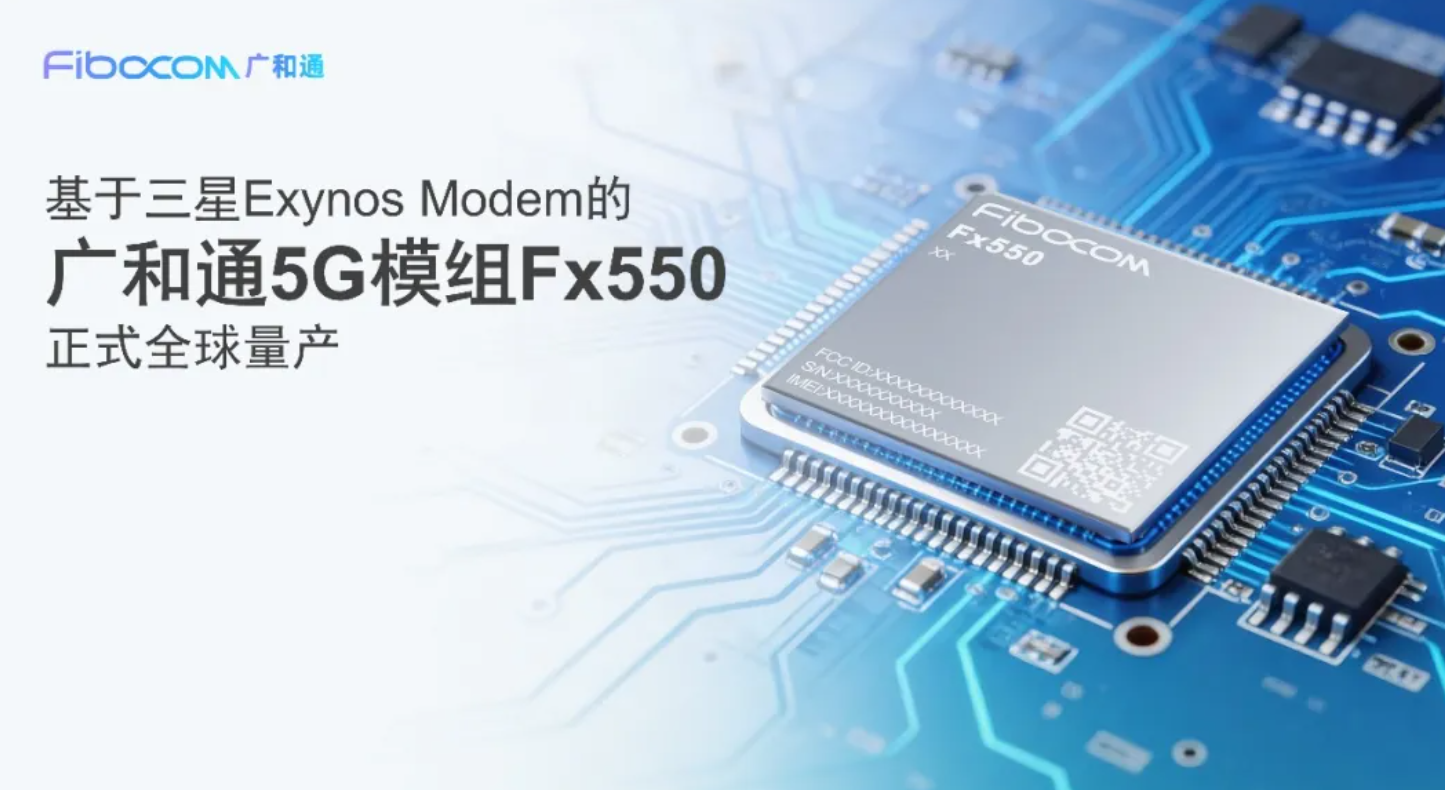
On March 31, Fibocom announced that its 5G module Fx550, developed based on Samsung’s Exynos Modem platform (including the LGA-packaged FG550 and M.2-packaged FM550), has officially entered mass production. The launch and mass production of this product not only mark the in-depth implementation of the strategic cooperation between Fibocom and Samsung but will also provide connection solutions with ultimate performance and excellent reliability for global 5G FWA (Fixed Wireless Access) and the broader IoT fields, such as wireless landlines, MiFi, and industry gateways.
A Powerful Alliance: Building New Heights in 5G Connectivity
This mass production is a core achievement of the deep strategic cooperation between Fibocom and Samsung. Samsung’s 5G chip solutions have been verified by massive shipments in the global market and are known for their high stability, excellent RF performance, and extensive global compatibility. Through technical integration, both parties aim to leverage their respective advantages in underlying chip architecture and industry application accumulation to jointly promote the deep penetration and popularization of 5G technology in vertical industries worldwide.
Jungwon Lee, Executive Vice President of Samsung Electronics and Head of the System LSI Modem R&D Team, stated, “Samsung is pleased to deepen its strategic cooperation with Fibocom to jointly advance next-generation 5G connectivity solutions for the global market. The successful mass production of the Fibocom 5G module confirms our shared commitment to innovation, performance, and reliability in providing cutting-edge connectivity for Fixed Wireless Access (FWA) and broadband IoT applications. In the AI era, we are jointly building the cornerstone of a smarter, more interconnected industry.”
Tao Xi, Vice President of Fibocom’s Wireless Solutions Business Group and General Manager of the MBB Business Unit, said, “We are very honored to have reached an exclusive cooperation agreement with Samsung Electronics, to be the first to achieve large-scale mass production, and to have our product validated by the market in the broader IoT sector. With the simultaneous advancement of multiple regional versions of the Fx550, including EAU, JP, and MEA, Fibocom will help global enterprises achieve ‘acceleration’ in the high-speed connectivity race.”
Core Advantages: Fx550 Empowering Digital Transformation
The Fx550 module leverages the Samsung Exynos Modem platform to set a new industry benchmark in advanced processing, transmission standards, and networking flexibility.
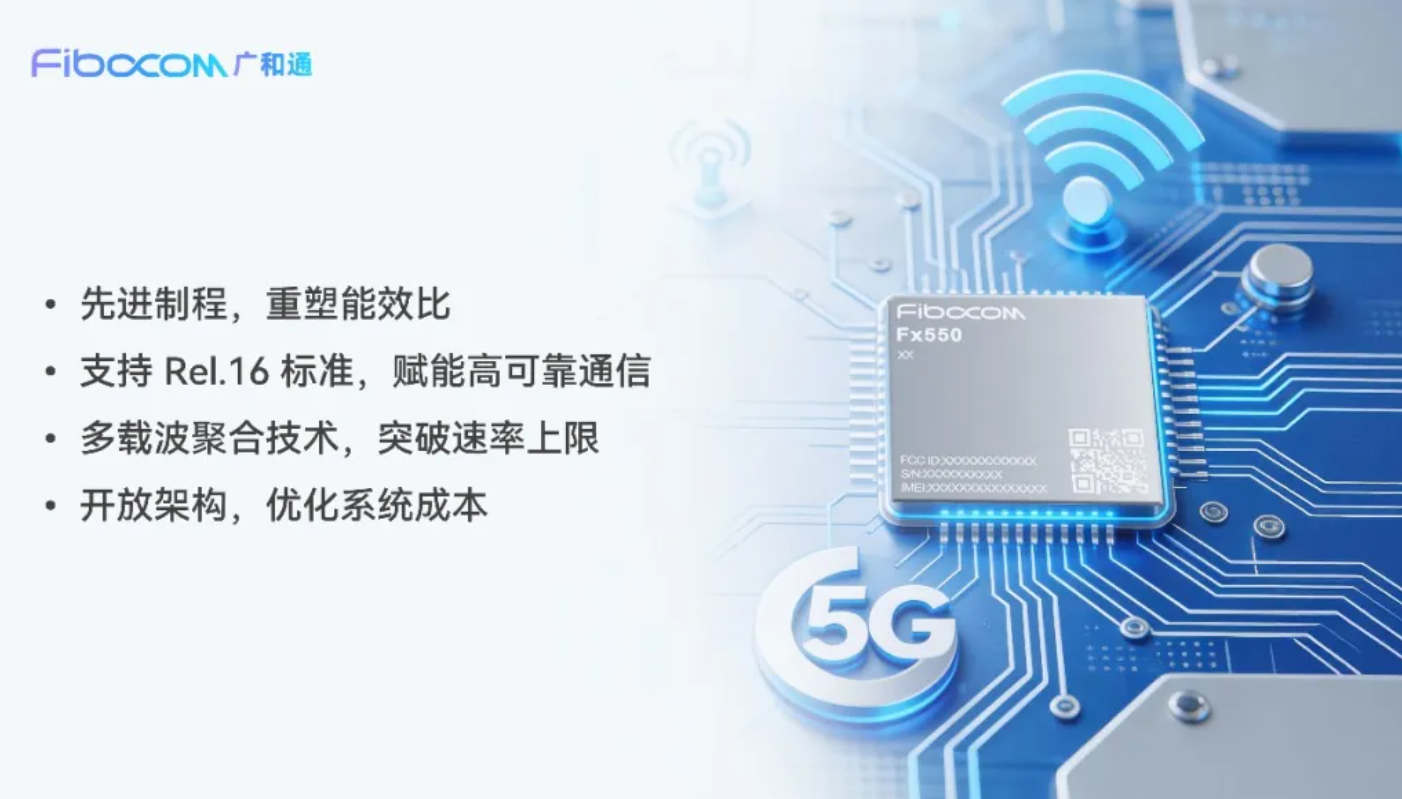
Supports Rel.16 Standard, Empowering High-Reliability Communication The Fx550 is fully compatible with the 3GPP Rel.16 standard. With its low latency and high bandwidth characteristics, it precisely meets the demands of the FWA and broader IoT fields for real-time data interaction and large-capacity transmission.
Multi-Carrier Aggregation Technology, Breaking Through Speed Limits In SA mode, the Fx550 supports up to NR 5CC carrier aggregation (200MHz bandwidth), with a peak downlink speed of 4.67Gbps. Its differential capability to flexibly and efficiently aggregate discrete spectrum within a narrow RF bandwidth provides unique commercial value for global operators to enhance user experience, ultimately empowering industry and home customers. In NSA mode, the Fx550 supports up to NR 2CC + LTE 5CC aggregation, with downlink speeds reaching as high as 6.47Gbps. In LTE networks, the Fx550 supports up to Cat.20, perfectly covering global 4G network capabilities. Breakthroughs in multi-carrier aggregation technology can effectively help operators improve spectrum utilization and ensure ultra-fast connections in complex network environments.
Open Architecture, Optimizing System Costs The Fx550 adopts a high-performance Modem architecture and has completed in-depth adaptation with mainstream industry AP (Application Processor) solutions, such as Broadcom and Realtek. This deep compatibility gives developers more flexible design choices, allowing for optimal control of development costs while ensuring overall device performance. It also provides global ODMs with diversified product choices, helping end customers create product differentiation. In addition, the Fx550 is compatible with operating systems such as Linux, OpenWRT, RDK-B, and PrpIOS, which facilitates the rapid development of FWA devices, reuse of software assets, and quick upgrades to the latest Wi-Fi Mesh versions, improving the Wi-Fi compatibility of CPE devices.
Global Layout: Multiple Versions Covering Mainstream Markets
To meet the network access standards of different regions, the Fx550 has simultaneously launched multiple regional versions, including FG550-EAU(Europe/Asia/Australia), FM550-EAU (Europe/Asia/Australia), FG550-JP (Japan), FG550-NA (North America), and FG550-MEA (Middle East/Africa). Currently, the Fx550 can provide product services and technical support for multiple regions around the world.
The mass production of the Fx550 is a key step for Fibocom in building a global 5G ecosystem. In the future, Fibocom will continue to work with global industry partners like Samsung to delve deeper into 5G technology innovation. Through continuously iterated connectivity solutions, it will accelerate the prosperity and popularization of 5G FWA and IoT applications worldwide.
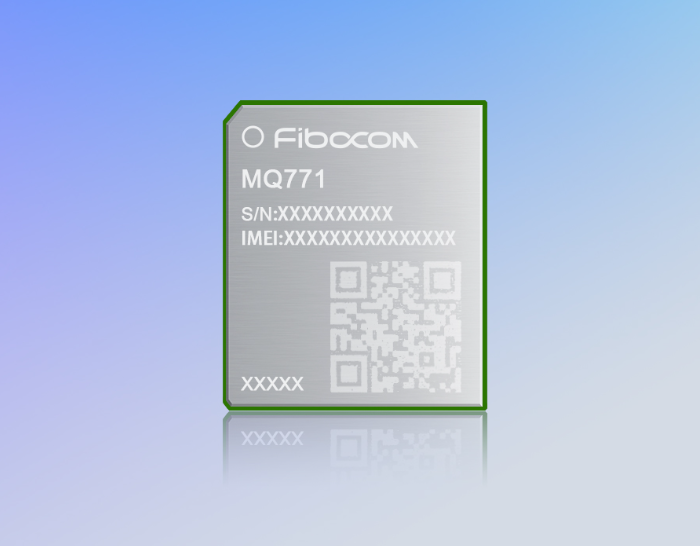
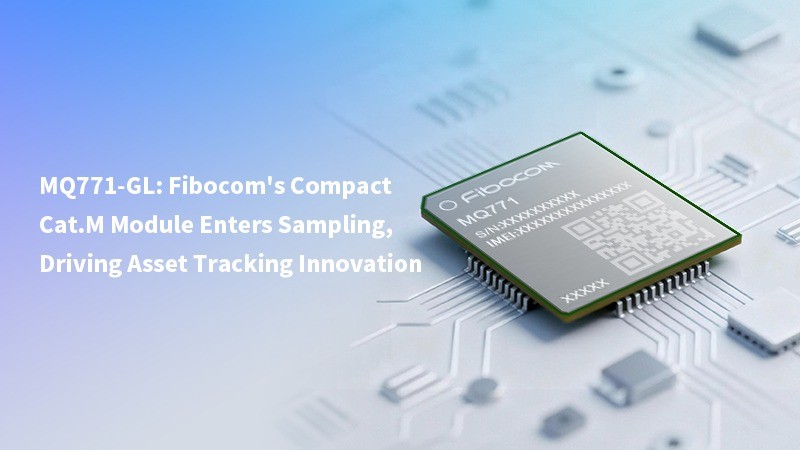
As pet owners’ demand for “scientific pet care” continues to evolve, pet collars are no longer just identification tags but have become intelligent terminals integrating positioning, health monitoring, and behavior analysis. With several core advantages, the Fibocom MQ771-GL perfectly meets the stringent requirements of this vertical market.
Ultra-Low Power Consumption in a Compact Size: Say Goodbye to “Battery Anxiety”
For pet owners, size and power consumption are the biggest pain points for smart collars. The MQ771-GL has been deeply optimized in both aspects.
MQ771-GL features an ultra-compact package (17.7mm × 15.8mm), helping customers optimize terminal space.
PSM mode as low as 1uA: Reduces power consumption in deep sleep mode, achieving a 70%-90% improvement compared to the previous generation.
eDRX technology: Significantly reduces standby current, ensuring the collar maintains ultra-low energy consumption when not in motion. Tests show that the battery life of pet devices can be extended from days to months, making long-term companionship possible.
Global Connectivity: Your Pet, Wherever You Are
Fibocom MQ771-GL supports mainstream global frequency bands for Cat.M / NB-IoT networks.
Multi-mode switching: Whether your pet is in a bustling city, a remote suburb, or even traveling abroad, the module automatically selects the optimal network.
Comprehensive Health Monitoring and Behavior Sensing
Fibocom MQ771-GL’s powerful processing capabilities support the integration of multi-sensor data, enabling developers to implement complex monitoring functions.
Behavior sensing: Precisely captures barking detection and activity frequency.
Physiological indicators: Supports efficient transmission of heart rate and respiratory rate monitoring data, enabling sleep quality analysis through data models and providing early warnings for potential health issues.
Sunzhi Liu, the general manager of Fibocom MTC business unit, said:
“The MQ771-GL is a milestone product in our deep commitment to the LPWA market. It combines Qualcomm’s advanced chip capabilities with Fibocom’s extensive communication expertise, aiming to provide the pet technology market with a highly integrated, cost-effective, and performance-advantaged platform. We look forward to collaborating with more customers to jointly expand the pet technology market.”
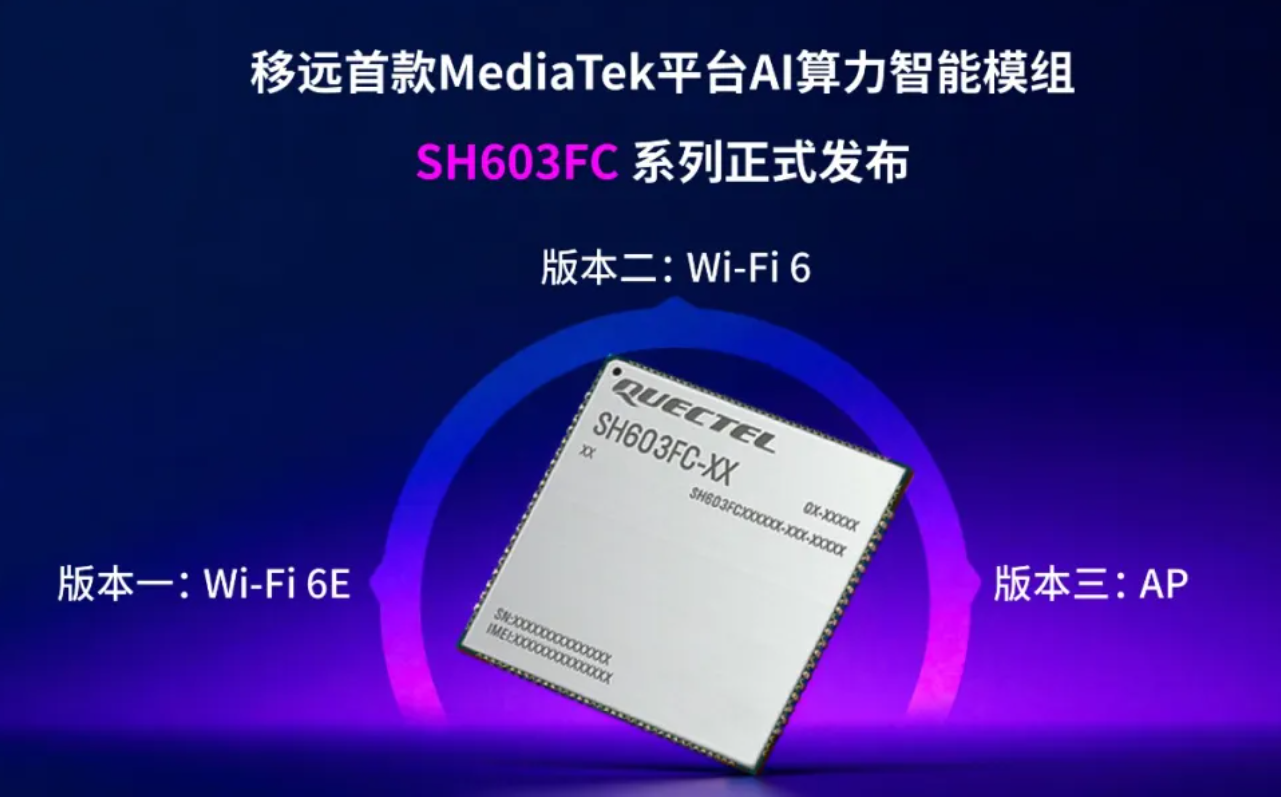
On March 11, during embedded world 2026, Quectel announced the official launch of its new-generation SH603FC series, an AI computing smart module based on MediaTek’s G520 chip platform.
As Quectel’s first high-performance module to feature this platform, the SH603FC series offers three variants: Wi-Fi 6, Wi-Fi 6E, and AP. It is designed to create an integrated intelligent hardware foundation for diverse scenarios such as industrial applications, robotics, smart retail, in-vehicle aftermarket entertainment devices, and edge computing, empowering various industries to achieve digital transformation and intelligent upgrades.
Robust Performance: Building the Cornerstone of Universal Intelligence
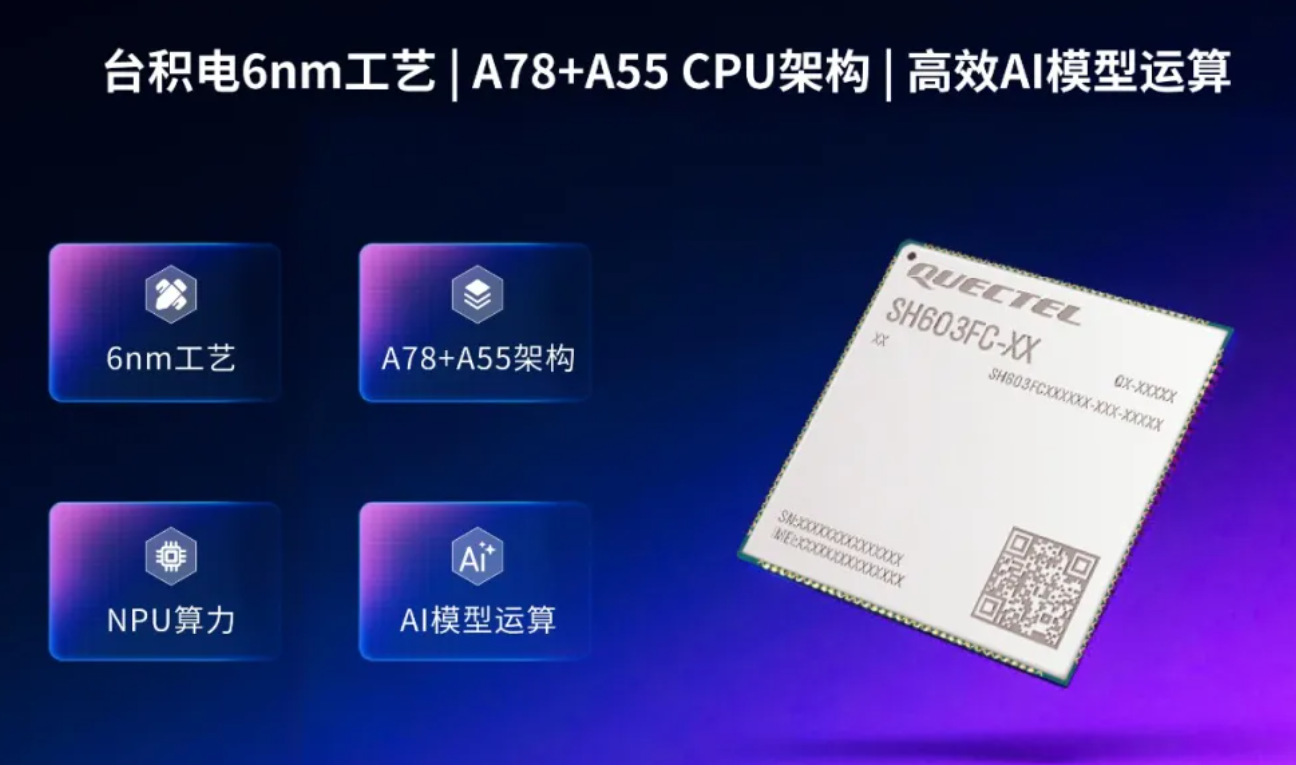
Quectel SH603FC series incorporates a CPU architecture featuring A78 + A55 cores, manufactured using TSMC’s 6nm process. It integrates a high-performance AI processing unit, enabling efficient on-device execution of complex AI model operations like facial recognition, product detection, and behavior analysis. This essentially equips terminal devices with a “smart brain,” facilitating a leap from passive response to proactive thinking.
This capability for “proactive thinking” is reshaping operational processes across industries:
On industrial production lines, real-time defect detection can immediately identify faulty products, significantly improving yield rates and efficiency.
For delivery robots, intelligent environmental perception allows for rapid identification of obstacles and path changes, enabling smoother and safer autonomous operation.
In smart stores, local analysis of foot traffic and customer behavior not only reduces reliance on cloud bandwidth but also ensures the privacy and security of commercial data from the source.
The Quectel AI module is not only equipped with a “smart brain” capable of handling complex AI computations but also possesses “sharp eyes” for capturing high-definition visuals. Its multimedia processing capabilities are particularly impressive, with the dual-screen display function precisely addressing the “one-device, multiple-screens” demands in sectors like commercial displays, in-vehicle aftermarket entertainment, and self-service kiosks. Through interface multiplexing solutions such as MIPI, eDP, and DP, the series supports dual-screen display at resolutions up to 2560×1600 at 60fps. This not only reduces hardware BOM costs but also expands the dimensions of interaction.
The flexible “one-chip, dual-screen” architecture elevates device interaction experiences to a new level.
On a vending machine, the main screen can loop 4K product advertisements, while the secondary screen displays real-time transaction QR codes and inventory information, achieving efficient synergy between advertising and transactions.
For smart payment terminals, the staff screen handles checkout operations, while the customer screen clearly shows the purchase details and promotional offers, enhancing transaction transparency and the consumer experience.
In in-vehicle aftermarket systems, the central control screen provides the driver with real-time information like navigation and vehicle status, while a screen for the passenger or a roof-mounted display can be used freely for entertainment, balancing driving safety with passenger experience.
Versatile Adaptability: Excelling in Diverse Application Environments
Leveraging its robust comprehensive performance and rich interface resources (such as PCIe, USB, RGMII, etc.), the SH603FC series has become a core driver for intelligent upgrades across multiple fields, injecting powerful momentum into the digital transformation of various industries.
In the industrial sector, it supports a wide operating temperature range from -35°C to +75°C, providing robust AI computing power and stable operation for industrial tablets and control equipment, facilitating real-time production data collection and analysis, and advancing the implementation of Industry 4.0.
In the smart retail sector, it empowers smart vending machines and self-checkout systems with intelligent payment processing and real-time inventory monitoring, making store operations more efficient and services more attentive.
In the commercial display sector, its high-definition display capabilities make content dissemination on advertising players and large-screen terminals more engaging, effectively enhancing brand presentation and communication efficiency.
Furthermore, the module features a compact LGA+LCC form factor and fully supports multiple operating systems, including Android 15, Yocto, and Ubuntu. It can be flexibly adapted to various devices such as robots, in-vehicle aftermarket entertainment systems, smart intercom recorders, and smart home appliances. It provides a one-stop hardware solution to meet the intelligent upgrade needs of different industries and scenarios.
Currently, samples for the SH603FC series are available for testing. Customers are welcome to inquire and collaborate to unlock the boundless possibilities of edge intelligence together.
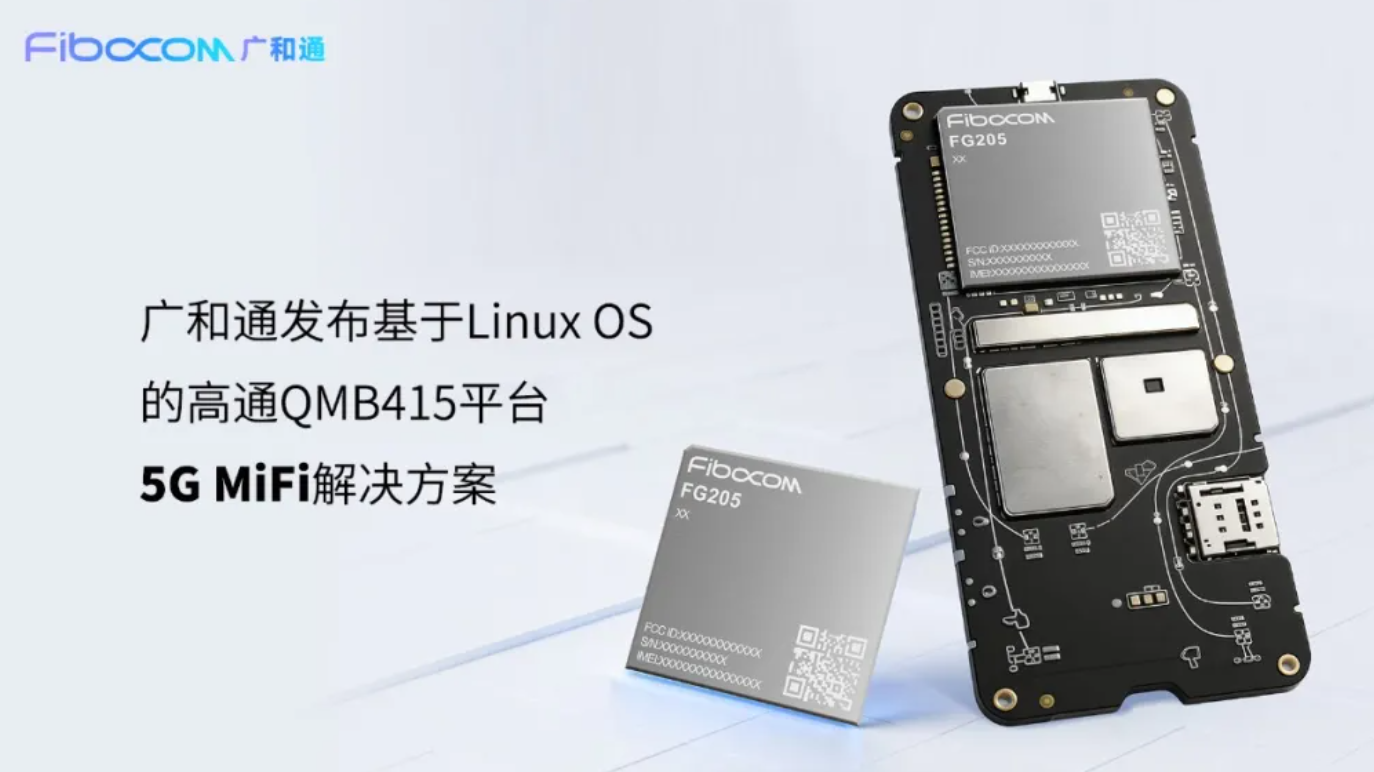
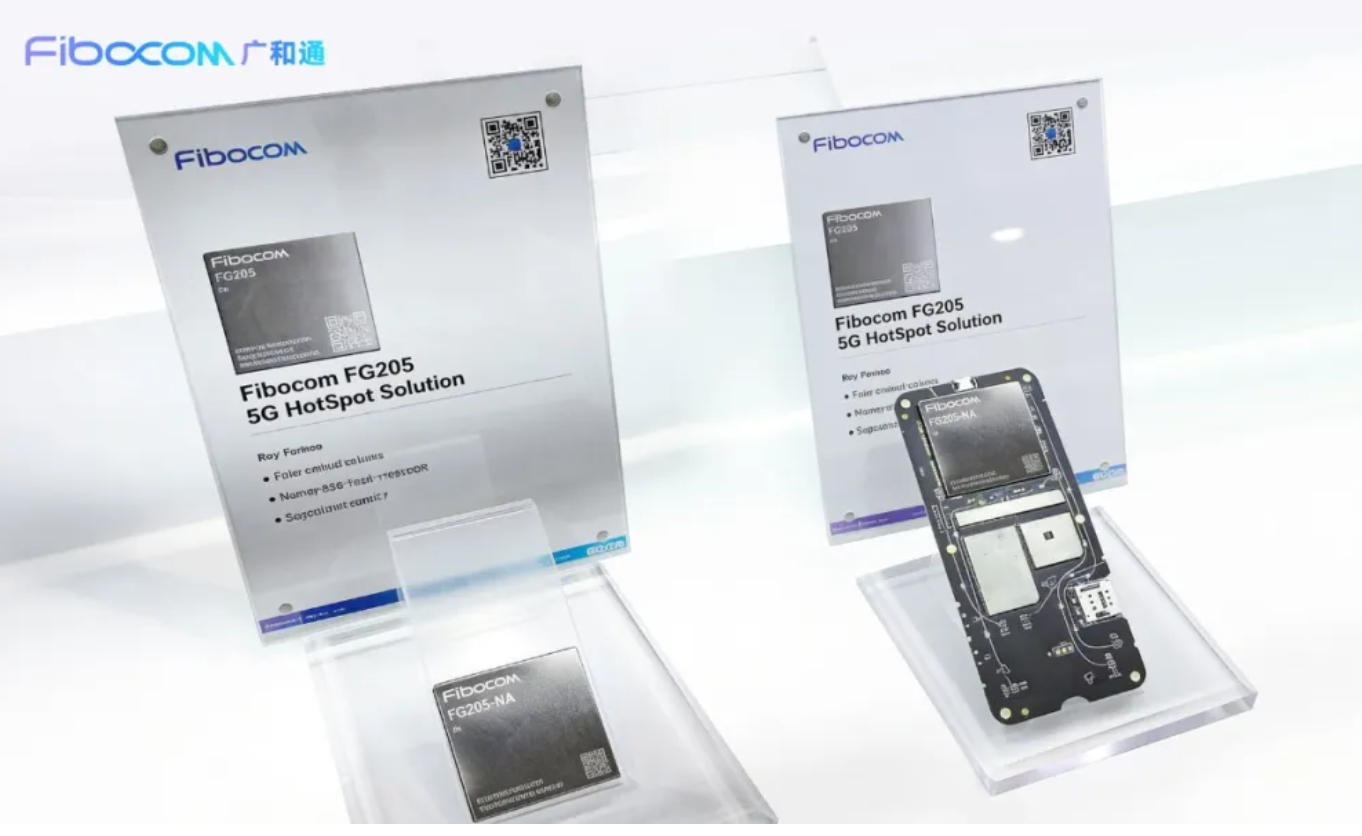
On March 5th, Fibocom officially launched the FG205 module and a 5G MiFi solution based on the Qualcomm QMB415 platform. The QMB415 platform has been adapted for the Linux operating system. Leveraging a deeply customized hardware architecture and reduced storage requirements, it provides an optimized solution and more reliable supply stability for wireless broadband applications.
Deep Hardware Customization: Streamlined Design Directly Targeting Core MiFi Needs
Built upon the Qualcomm SM4450, the QMB415 platform has been highly customized for wireless broadband application scenarios. Unlike the redundant design of traditional smartphone chip platforms, this solution achieves “precision tailoring” in its architecture: it reduces redundant CPU processing power and eliminates the GPU, focusing specifically on network connection efficiency.
Software System: Linux OS Ends “Memory Anxiety”
The most significant highlight of the MiFi solution released by Fibocom is its support for the Linux operating system. Previously, most 5G SoC platforms utilized the Android operating system, which requires substantial memory capacity, typically ≥3GB. After adapting this solution to the Linux OS, the maximum memory requirement is only 1GB. This solution lowers the storage configuration, achieving cost-effectiveness while also significantly mitigating the supply and price risks associated with storage, an often “uncontrollable” factor.
Platform Evolution: Pin-Pin Compatibility for Rapid Iteration
To help customers shorten product time-to-market, this solution fully considers the continuity of hardware design. The Fibocom 5G module, based on the QMB415 platform, maintains the same dimensional layout as Fibocom’s FG180/190 series modules based on the Snapdragon X72/X75. Through pin-pin compatible design, device manufacturers can quickly switch between and iterate products with different performance levels on the same hardware platform without the need for redesigning the circuit board.
Regarding Wi-Fi adaptation for the Fibocom FG205, Fibocom will launch a series of solutions supporting Wi-Fi 5/6/6E/7. This will further enrich Fibocom’s MBB product portfolio, comprehensively meet the full range of customer requirements across different tiers, and provide the wireless broadband industry with solutions offering better cost optimization and more reliable supply.
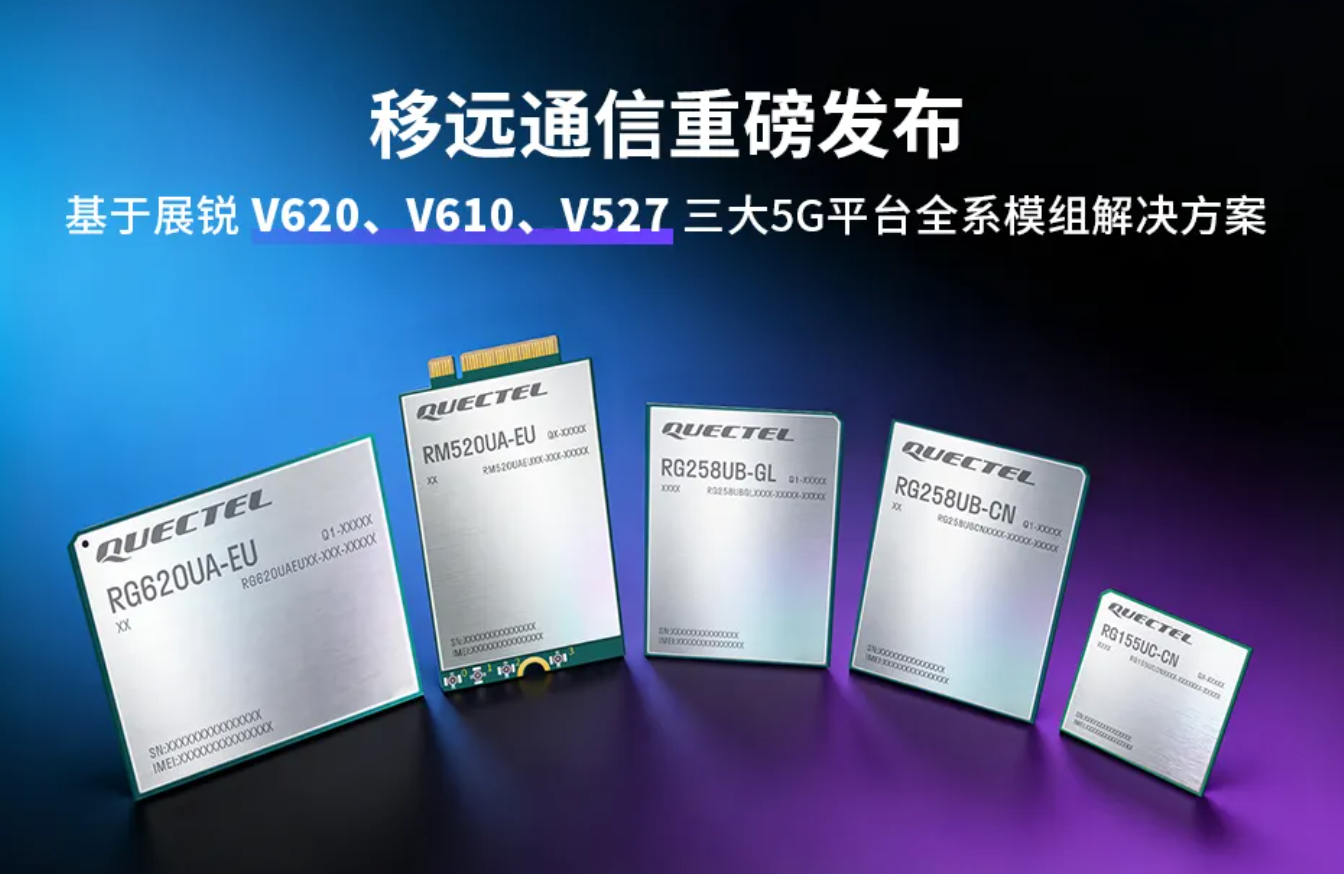
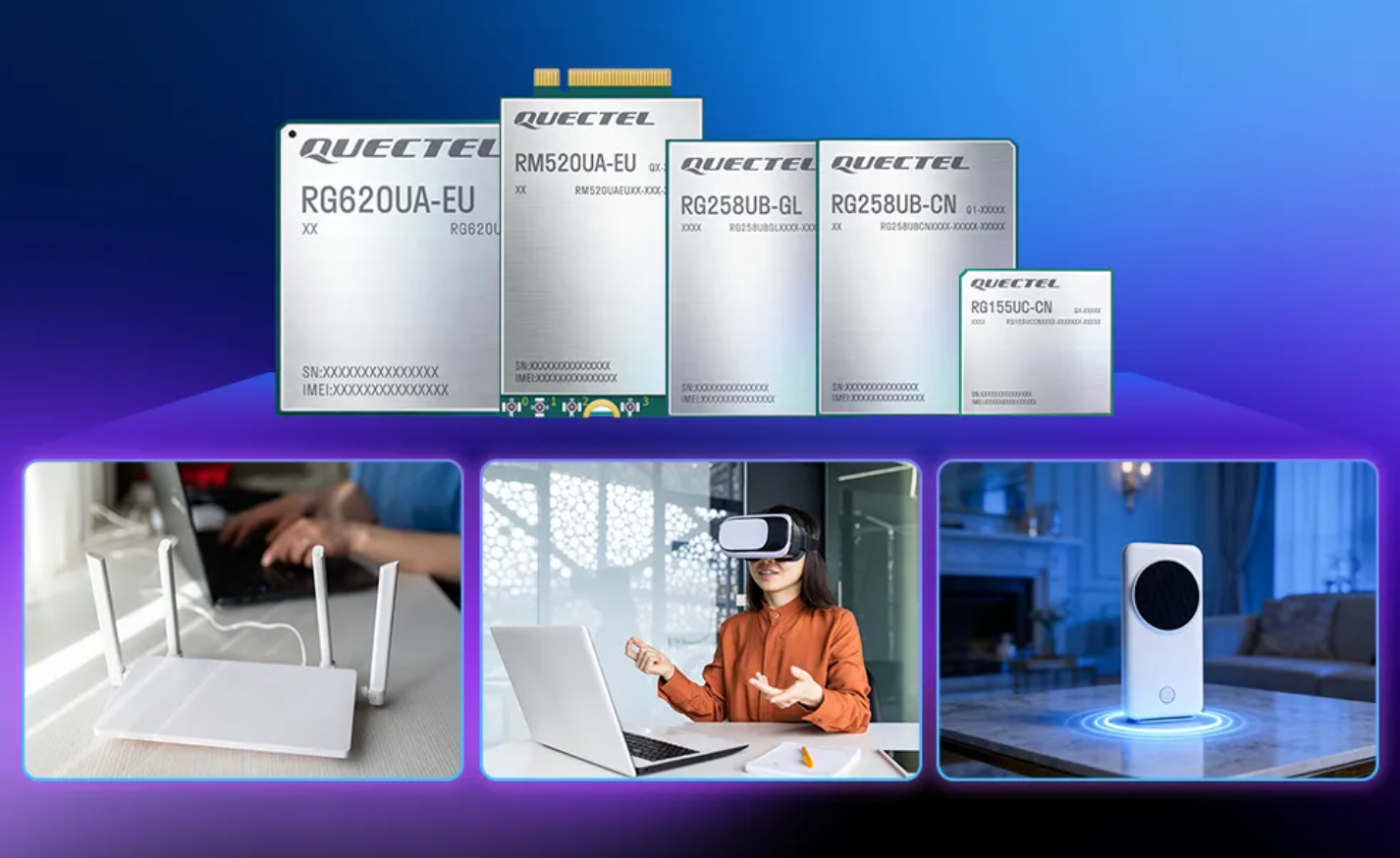
On March 5th, during the Mobile World Congress (MWC) 2026 in Barcelona, Quectel, a global supplier of IoT total solutions, in collaboration with UNISOC, unveiled a new series of 5G modules based on UNISOC’s three major platforms: the 5G eMBB V620, V610, and the 5G RedCap V527. This new product matrix, characterized by high-end performance, compact design, and lightweight features, marks a new journey towards the large-scale application of the 5G Internet of Things.
Flagship Performance, Redefining the 5G Experience
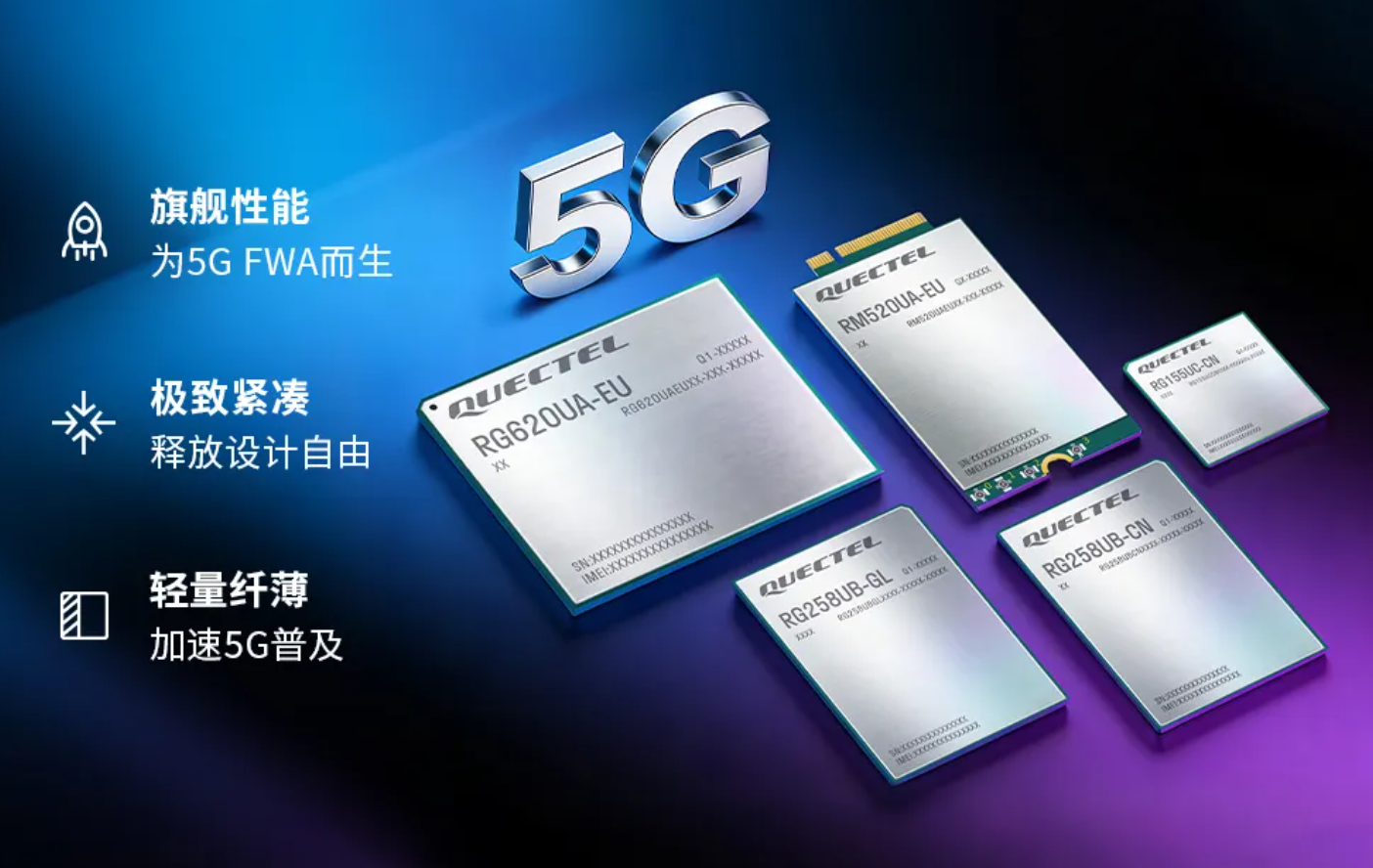
The RG620UA/RM520UA series 5G modules, built on the UNISOC V620 platform, deliver robust 5G data rates, a quad-core A55 processor, rich Ethernet configurations, and Wi-Fi 7/Wi-Fi 6 connectivity. Simultaneously, they continue to optimize and innovate in areas such as ENDC combinations, RAM+ROM solutions, and adaptation for QuecOpen and OpenWRT/PrplOS. This precisely meets the urgent market demand for high-performance, highly flexible terminals in the 5G FWA sector.
Extreme Compactness, Unlocking New Possibilities for Portability
Targeting space-constrained scenarios like global portable terminals and power IoT applications, Quectel has launched the compact 5G modules RG258UB-GL/RG258UB-CN based on the UNISOC V610 platform. This series employs a highly integrated packaging process, reducing the volume by approximately one-third compared to traditional 5G LGA modules. This frees up more design flexibility for devices like portable mobile hotspots (MHS) and compact power terminals. They also deliver robust performance, fully supporting 5G SA/NSA dual modes and global full network compatibility, with an optimized RF solution to ensure signal stability. By selecting core domestic components, they effectively mitigate supply chain risks while achieving a better balance between performance and cost, helping customers quickly respond to the growing demand for consumer electronics and IoT portable devices in global markets.
Lightweight and Slim, Accelerating the Popularization of 5G
Based on UNISOC’s new generation high-performance 5G RedCap IoT communication chip, the V527, Quectel has introduced the RG155UC-CN lightweight module targeting the IoT market where cost and performance are both critical. This module features an ultra-small, ultra-thin design, reducing volume by 46% and thickness by 17% compared to traditional packaging. It supports a rich software ecosystem, significantly lowering the barrier to upgrading lightweight 5G terminals, and is widely adaptable to consumer and industrial terminals such as smart wearables, tablets, and industrial sensors.
Furthermore, the UniHALO solution, developed by Quectel based on UNISOC’s full range of 5G IoT platforms, has now been successfully adapted to the OpenWRT 24.10 version. This solution aims to provide developers with a more stable and efficient software development environment by simplifying the design process, improving system performance, and effectively reducing DDR and Flash resource overhead. It fully leverages hardware potential, further lowering the development threshold for 5G terminals.
Anchored by Customer Value, Building a Global Digital Future Together
Currently, Quectel 5G modules based on the three UNISOC platforms are widely deployed across various fields including smart industry, smart grid, smart logistics, and consumer electronics. The entire product series adopts low-power design, helping to improve terminal battery life by over 20%, deeply aligning with the “Dual Carbon” goals. The V527 and V610 platforms, with their high cost-performance ratio, lower the barrier to 5G access, injecting momentum into the digital development of emerging markets. The V620 platform, with its outstanding performance, provides a high-speed, low-latency network experience that is truly both “affordable and high-quality.”
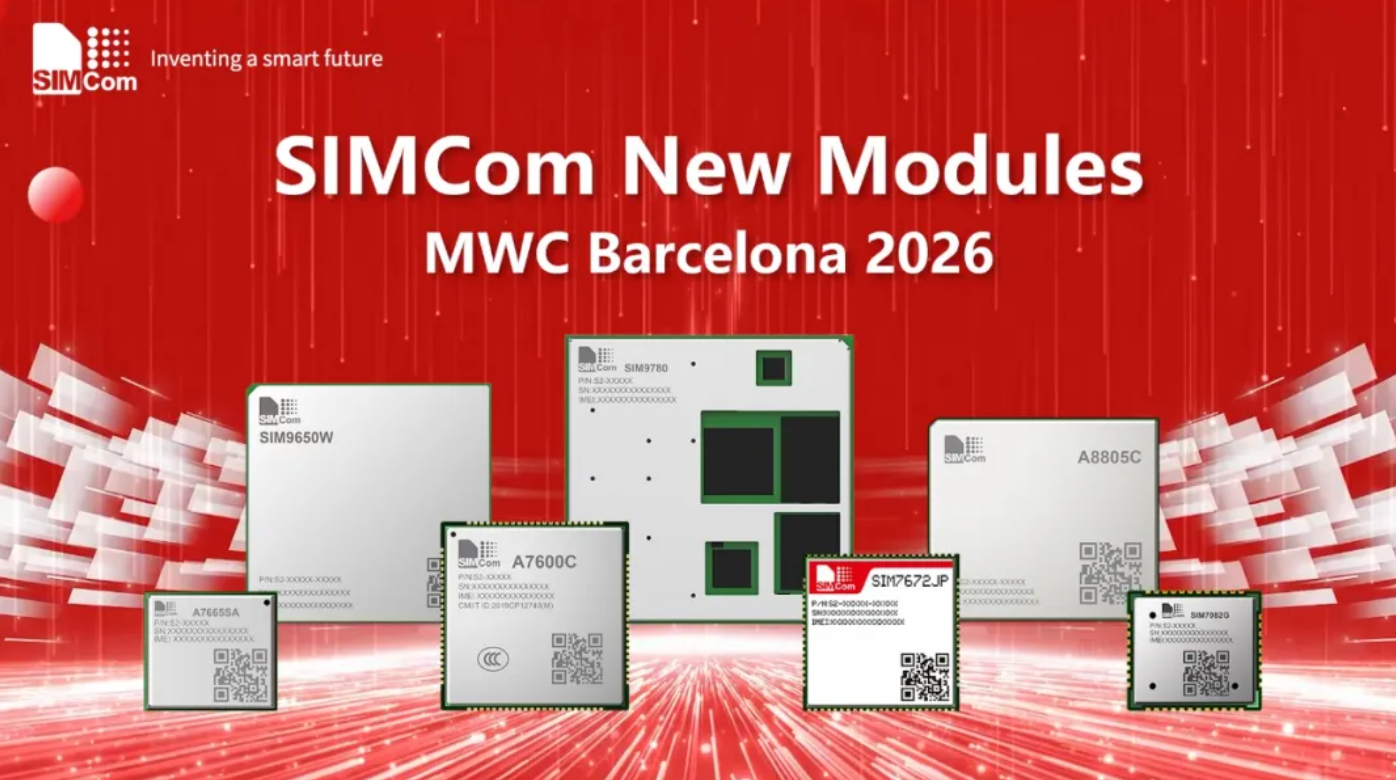
In addition to the two previously unveiled AI modules SIM9650W and SIM9780, SIMCom also launched five new IoT modules at MWC 2026: the A8805X, SIM7672JP, A7665SA, A7600C, and SIM7082G. Covering 5G, 4G, and LPWA categories, these modules focus on practical connectivity and balanced performance, catering to diverse fields such as automotive, industrial, and civil applications, providing stable and cost-effective hardware support for global IoT deployment.
The A8805X has obtained the IATF16949:2016 automotive-grade certification. With dimensions of 37.5 × 33.0 × 3.0 mm and an LGA package, it supports a wide operating temperature range from -40°C to +85°C, making it suitable for harsh automotive environments. It also features excellent EMC protection capabilities to handle challenging electromagnetic conditions.
Leveraging 5G RedCap lightweight technology, the SIMCOM 5G Module balances 5G low latency and low power consumption, achieving downlink speeds of up to 226Mbps and uplink speeds of 120Mbps on 5G NR. It is ideal for automotive T-Box and industrial AGV applications, particularly in scenarios with frequent interference and demanding transmission requirements, such as factory workshops. The 5G Redcap module is available in European (A8805E) and Chinese (A8805C) versions, each tailored to regional frequency bands, providing reliable 5G connectivity for automotive and industrial intelligence.
Three 4G Modules Launched Simultaneously Compact and practical, suitable for a wide range of scenarios.
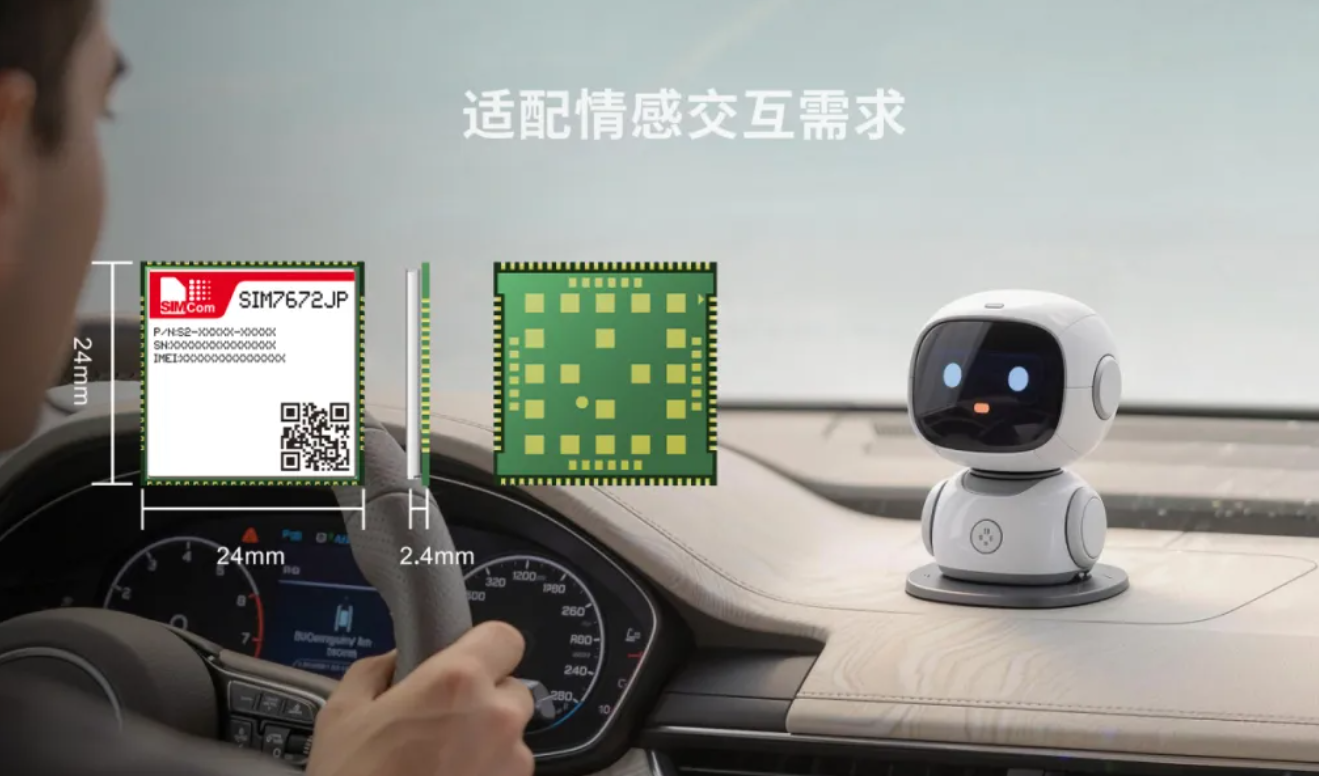
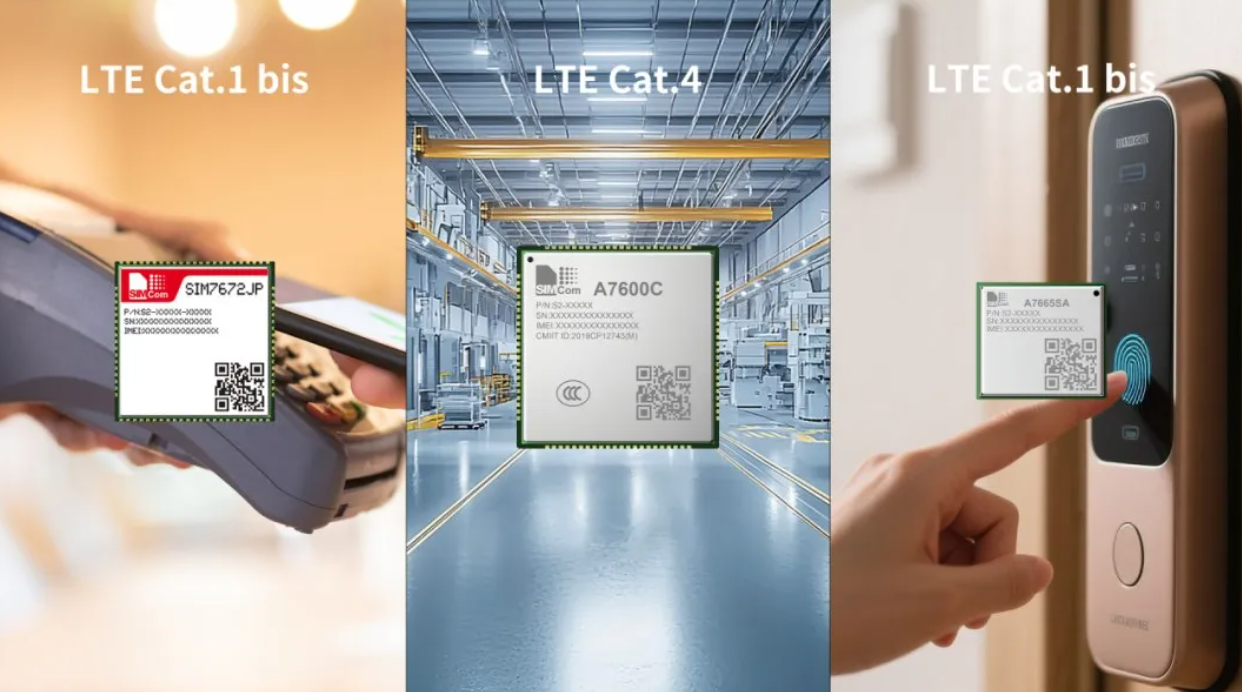
SIM7672JP: Measuring 24.0 × 24.0 × 2.4 mm with an LCC + LGA package, this module offers a rich set of interfaces and integrates a multi-GNSS receiver. It supports software features such as FOTA, SSL, and LBS, and is package-compatible with the A7672 and SIM7000 series. Tailored for Japan’s regional frequency bands, it is ideal for shared devices and smart POS terminals, enabling rapid deployment.
A7665SA: With dimensions of 17.6 × 15.7 × 2.1 mm and a compact LGA package, this Cat.1 bis module delivers downlink speeds of 10Mbps and uplink speeds of 5Mbps. It supports FOTA, LBS, MQTT, and other functions, and is package-compatible with the SIM800C and SIM7080G series. Designed for South America’s regional frequency bands, it solves integration challenges for small terminals and is suitable for high-volume production scenarios such as e-bikes and smart locks, offering excellent cost performance.
A7600C: A high-performance LTE Cat.4 module with dimensions of 30.0 × 30.0 × 2.5 mm and an LCC + LGA package. It supports FOTA, LBS, SSL, and other features, and is package-compatible with previous generations, enabling a smooth transition from 3G to LTE. It supports seamless fallback to multiple networks, is tailored for China’s regional frequency bands, and can connect to external Wi-Fi modules. It is suitable for various fields such as automotive and industrial routers, combining broad coverage with high reliability.
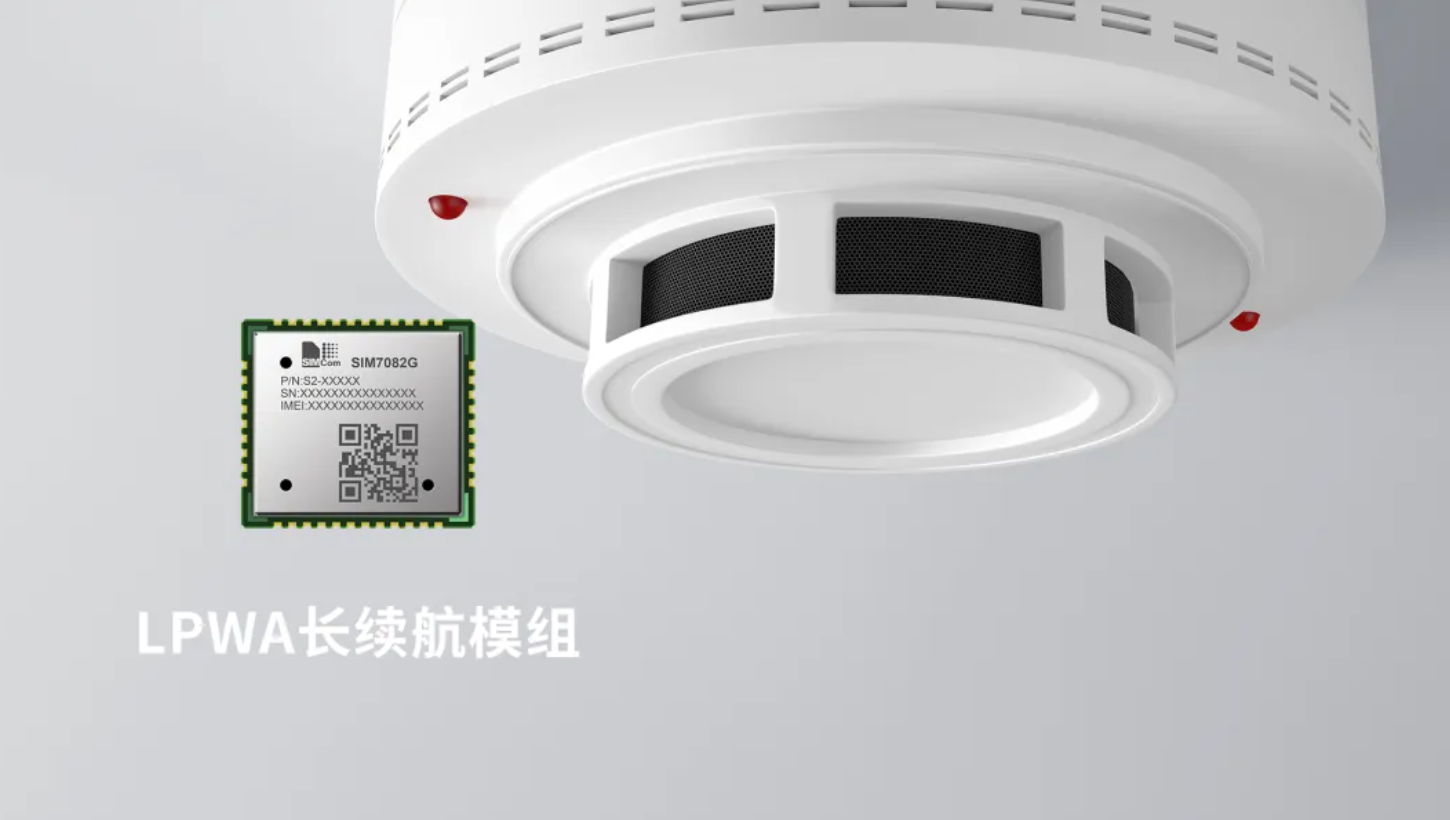
SIM7082G An LPWA long-endurance module designed to meet the low-power requirements of massive IoT deployments.
Addressing the need for low power consumption and long endurance in IoT, the SIM7082G features a compact LCC + LGA package with dimensions of 17.6 × 15.7 × 2.3 mm. Equipped with PSM and eDRX power-saving technologies, it supports battery life of up to 10 years, eliminating the need for frequent battery replacements. Additionally, it supports full-band Cat-M and NB-IoT, covering global frequency ranges. With AT command compatibility with the SIM7080G series and extensive certifications, it is ideal for long-term operation scenarios such as smart meters and remote smoke detectors, providing sustained connectivity for smart energy and environmental monitoring.
From 5G RedCap automotive-grade connectivity to precise 4G regional deployment and LPWA long-endurance scenarios, the five new IoT modules prioritize practicality, avoid redundancy, and balance performance with cost, aligning with the deployment needs of various industries. The simultaneous launch of these five new products further enriches SIMCom’s IoT product portfolio. With core advantages of stability, reliability, and cost-effectiveness, they provide global partners with more precise IoT connectivity hardware options.
MWC 2026 is in full swing, and the deep integration of AI and mobile communications has become one of the most-watched core trends on the exhibition floor!
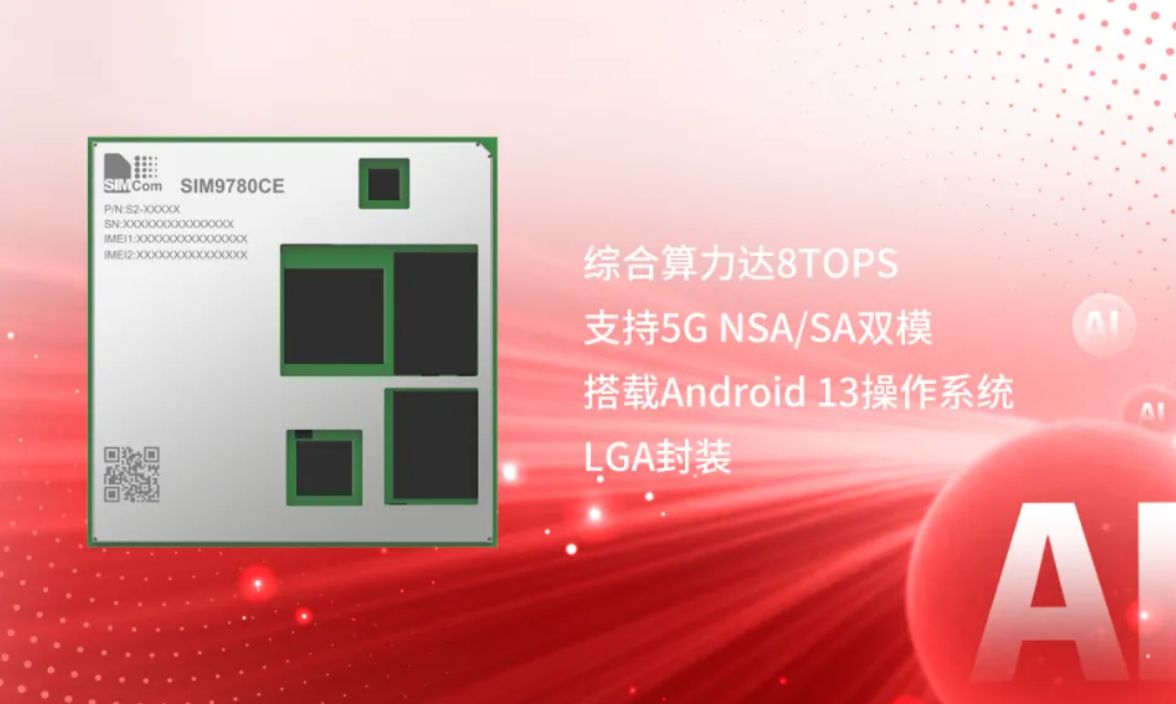
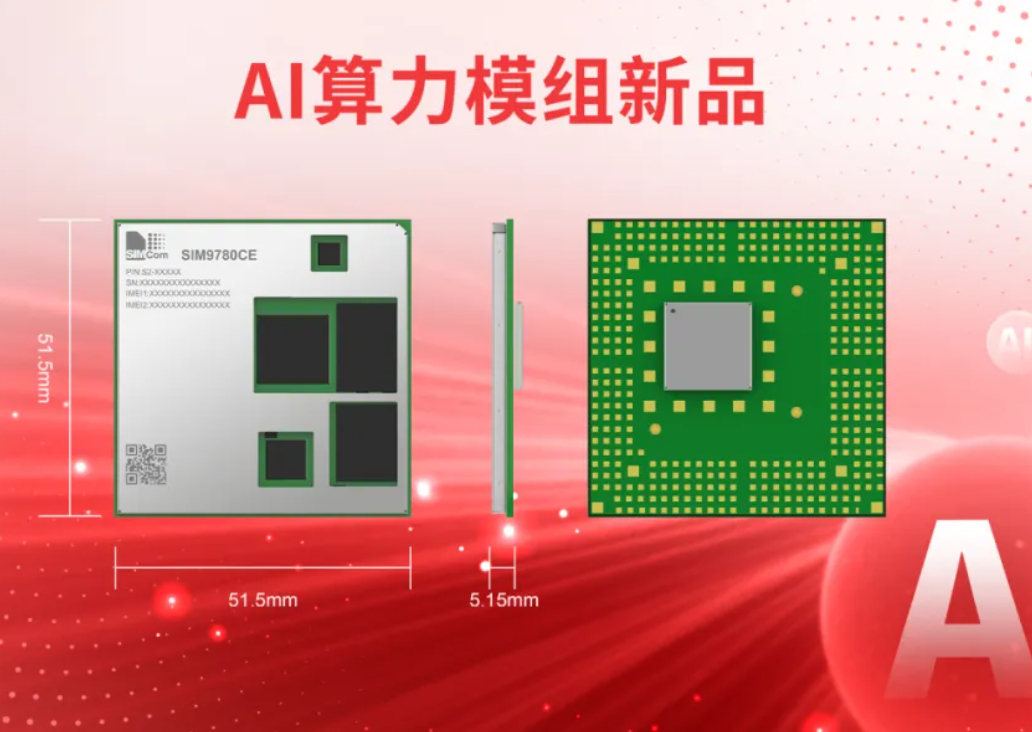
Seizing the moment with a dual-product launch, SIMCom unveiled its second new 5G AI module, the SIM9780, following the debut of the AI computing module SIM9650W. Precisely targeting the intelligent automotive industry, this SIMCOM 5G AI module centers on a combination of 5G and 8 TOPS of practical computing power. It is tailored for core scenarios such as in-car navigation, integrated cockpit and parking systems, and intelligent in-car robots, delivering a “essential needs” solution for the transformation towards smarter vehicles.
Partners familiar with SIMCom know that we consistently adhere to the principle of “practical technology, implementation is paramount.” The SIMCOM SIM9780 precisely addresses the pain points of the automotive industry with three core highlights that clearly demonstrate its capabilities:
The Golden Combination of 5G + 8 TOPS: More Practical
The 8 TOPS computing power of the SIM9780 is perfectly suited for core requirements like in-car voice interaction, local data inference, and image recognition – avoiding wasted calculating while effectively controlling hardware costs. Paired with optional 5G NSA/SA dual-mode support, it is compatible with all major network standards and covers the frequency bands of over 200 global operators. With a downlink speed of up to 2.4Gbps, tasks like HD map updates, remote data interaction, and online video streaming are smooth and lag-free, achieving both sufficient computing power and guaranteed transmission speed.
Automotive Quality: Stability is Paramount
For automotive products, stability is always the top priority! The SIM9780 meets the demands of complex in-vehicle environments, supporting an ultra-wide operating temperature range from -40°C to +85°C. Whether in the cold north or the hot south, it operates stably. The LGA package design and multiple storage configuration options cater to the hardware requirements of different in-vehicle devices. Running on the Android 13 operating system and supporting multiple firmware upgrade methods, it simplifies development and maintenance, allowing partners to avoid unnecessary complications.
More Than Just Automotive: “Cross-Border” Versatility
Featuring a built-in Mali-G57 quad-core GPU supporting 4K@60fps video encoding/decoding and asynchronous multi-screen display, it can easily handle tasks like environmental perception and data computation for integrated cockpit/parking systems, and voice interaction and intelligent response for in-car robots. Rich interfaces including USB3.0 and MIPI allow flexible connection to external sensors, cameras, and central control screens for expanded smart functions. It is also adaptable to scenarios like in-car navigation, remote vehicle security monitoring, and in-vehicle infotainment systems.
Beyond its core automotive applications, the SIM9780 truly “shines across borders”! In addition to covering application scenarios such as integrated cockpit/parking, intelligent in-car robots, in-car navigation, remote vehicle security, and in-car audio/video, it can also easily empower devices like industrial PDAs and smart POS terminals – one module addressing diverse needs across multiple fields.
The debut of the SIM9780 marks another precise strategic move by SIMCom in the intelligent automotive arena. On the future path of smart mobility, SIMCom will continue to advance with global partners, leveraging more practical technology combinations to make the implementation of in-car intelligence simpler and more efficient, ensuring that every technological innovation genuinely empowers thousands of industries.
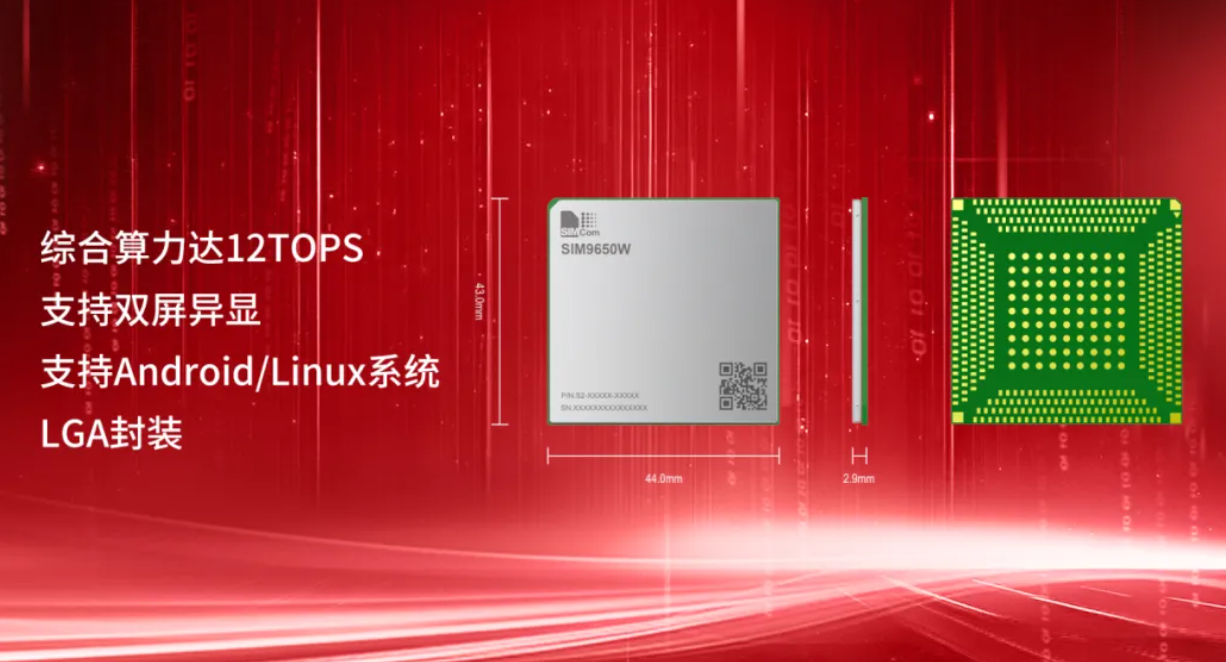
With the core theme of “The IQ Era,” MWC 2026 focuses on the deep integration of AI and mobile communications, serving as a vital platform for global technology companies to showcase core technologies and strategize for future. On the first day of the exhibition, SIMCom officially launched its new AI computing module, the SIM9650W. Eschewing the hype of extreme computing power, this 5G AI module centers on practical 12 TOPS computing power combined with full-scenario adaptability. Echoing the conference’s theme of AI implementation, it provides a cost-effective, implementable core solution for the intelligent transformation of diverse industries.
The SIMCOM SIM9650W breaks away from the misconception that “higher computing power is always better.” It focuses on actual industry needs, balancing performance and cost to precisely address the challenge of computing power during AI implementation across various sectors, truly enabling AI technology to enter practical application scenarios.
Key Specification Highlights
12 TOPS Practical Computing Power Core
Stable AI computing power reaching 12 TOPS. This can easily handle real-time analysis of multiple high-definition video streams and abnormal behavior recognition in security scenarios, as well as local data inference and device linkage control in industrial edge computing. It is also suitable for small to medium-scale AI applications in retail, government affairs, etc., covering diverse needs from basic intelligence to mid-to-high-end computing power, avoiding waste and maximizing cost-effectiveness.
Powerful Multimedia and Interaction Capabilities
Integrates an Adreno™ 643 GPU, supports 4K video encoding/decoding and dual-screen display with different content. It can smoothly support immersive graphics rendering for VR/AR devices and high-definition display with multitasking in smart cockpits, making multimedia interaction experiences smoother and more stable.
High-Speed, Stable Full-Scenario Connectivity
The SIMCOM 5G AI Module integrates 2×2 MIMO Wi-Fi 6E, supporting the 2.4GHz, 5GHz, and 6GHz bands with throughput up to 3.6Gbps. It also integrates Bluetooth 5.2, ensuring stable, high-speed data transmission for devices in dense wireless environments. Whether it’s real-time data synchronization between devices and the cloud in a smart factory or the immediate upload of customer traffic analysis data in a mall, reliable connectivity is guaranteed.
Industrial-Grade Reliability and Expandability
Features a wide operating temperature range from -35°C to +75°C, confidently handling challenges in complex environments like outdoor vehicles, unattended retail kiosks, and industrial sites. It offers rich hardware interfaces including multiple MIPI-CSI camera interfaces and PCIe Gen3, allowing flexible connection to various peripherals and adapting to complex environments like automotive, industrial, and outdoor retail.
What Can 12 TOPS Do?
12 TOPS of AI computing power means terminal devices can handle more complex, real-time AI tasks, moving from simple “seeing” to “understanding” and reacting quickly.
More Accurate Real-Time Visual Recognition
In smart retail scenarios, an intelligent weighing scale or self-checkout terminal equipped with the SIM9650W can process multiple camera streams simultaneously, instantly and accurately identifying hundreds of types of vegetables, fruits, or bakery items with similar shapes and colors, multiplying checkout efficiency.
More Complex Multimodal Analysis
In industrial quality inspection, devices can run multiple AI models concurrently, such as appearance detection, OCR reading, and abnormal sound analysis, performing comprehensive automated product inspection to enhance production quality and efficiency.
Smoother Immersive Interaction
For devices like helmets or service robots, 12 TOPS of computing power is sufficient to support real-time SLAM (Simultaneous Localization and Mapping), gesture recognition, and object interaction, providing users with a smooth and natural immersive experience.
Rich Scenarios: Empowering Intelligent Upgrades Across Industries
The SIM9650W can be widely applied in cutting-edge fields such as smart retail, smart industry, intelligent automotive, public safety, and emerging consumer electronics, delivering core value to customers:
Cost Reduction, Faster Time-to-Market
The practical computing power configuration avoids redundant investment. Combined with mature technical support, it effectively shortens customer product R&D cycles and reduces overall costs.
Enhanced Product Competitiveness
Balances performance, cost, and reliability, enabling customers to create more differentiated, competitive, and cost-effective terminal products.
Ensuring Stability and Ease of Implementation
Industrial-grade design ensures stable operation in complex environments. The validated computing platform significantly lowers the threshold and risk of AI project implementation.
Leading a New Direction for On-Device AI Implementation
Looking ahead, SIMCom will continue to iterate its AI module products guided by real-world industry demands, collaborating with global partners to drive deep integration of AI technology across thousands of industries. The goal is to make practical computing power a reliable support for enterprise intelligent upgrades and empower more partners to achieve efficient AI implementation.