LTE Advanced- beyond the next Step

The evolution of LTE (Long Term Evolution) is already developed. LTE Advanced is to say the new technology.


The Third-Generation Partnership Project (3GPP) specifies in its Release 10, the objectives of LTE-Advanced. The mobile technology corresponds to the 3GPP LTE Release 8 LTE Advanced is to be backward compatible. Not only are the transfer rates expected to rise with LTE Advanced. The use of multiple antennas and the incorporation of relay stations are to be carried forward.


More bandwidth

The bandwidth is LTE-Advanced is significantly higher than the LTE in Release 8. Instead of 20 megahertz, LTE-Advanced can bundle multiple carriers and thus use up to 100 MHz simultaneously. Here may also be combined in different frequency bands, frequency ranges – important because no carrier has been on a continuous frequency range of 100 MHz. Currently these 100 MHz are only in theory, in practice more spectra are assigned. This can happen only in 2015 at the World Radio Conference (WRC). Until then, the bandwidth will probably be limited to 40 MHz.

Another innovation that will keep up with LTE-Advanced collection is called “relay nodes”, i.e. relay stations. This will allow, even outside the range of a base station to receive the signal. In the edge region the signal reinforces relay stations. Connected the relay stations means connected to the base station. Thus, the signal strength inside buildings can be improved.

Interference use

Another method that could be introduced with LTE Advanced is CoMP (Coordinated Multi-Point). This is a problem to be addressed, which often occurs, especially in densely populated areas. There where many transmission towers are in a confined space, to their ranges and signals often overlap. This interference occurring far as disorder should be used wisely with the CoMP process. If interference is likely, future base stations preprocess messages for multiple users together prior to transmission. By preprocessing, signals are superimposed on the desired user device design, but are eliminated at the antennas of other users.
 

LTE and WLAN Trend in 2013

Mobile Internet will dominate the future. Per current data, it indicates the increasing number of data flat rates and the proportion of mobile Internet users. In this case, mobile internet is becoming increasingly attractive, which is mainly due to the speed of data transmission over wireless connections.


Rural Users Benefit from LTE


Especially the development of networks for the operation of the 4G Wireless standard Long Term Evolution (LTE) will accentuate the trend towards the mobile Internet. The mobile Internet operation via Smartphone or tablet makes 4G internet more attractive. For private providers or enterprises in rural areas, LTE is an affordable alternative to a fixed line, which can often provide in depressed areas where no broadband Internet.


WiFi is Faster


However, the WLAN radio network will achieve in the future faster data transfer rates. The conventional network via Ethernet is therefore increasingly interchangeable and WiFi make interesting reading for more public institutions. For a broadband Internet connection is thus save much cost.


In data centers, data will continue to be converged to server-storage network systems. The modular connection allows a flexible adaptation of the hardware utilization to each customer.


The trend of “ALL IP” still continues. With “all IP”, the use of all telecommunications services is meant by a supplier. It is worth taking this method for medium to large businesses.


LTE in Release 10—Ten Faster than LTE

The 3rd Generation Partnership Project (3GPP) standardized wireless technology Long Term Evolution (LTE). 3GPP is a consortium of several institutes.


The project also defines standards for other mobile technologies such as HSPA. In Release 10, LTE advanced is outlined, 9 expansion of LTE in Release 8 and Release 10 was introduced in 2009 as a proposal and completed in 2011.


100 Megahertz needed


The first 4th generation wireless technology, LTE advanced theoretically reaches up to 1 gigabit per second (GB/S) for receiving data (download) and up to 500 megabit per second (Mbit/S) for sending data.


Just like LTE in Release 8 and 9 uses LTE advanced is a 16-fold quadrature amplitude modulation (QAM), a technology that allows more data to be transported on a wave.


In contrast to the previous technologies, LTE advanced 100 Megahertz is used to frequency bandwidth, which can be summarized from independent frequency bands. This is necessary, because no operator called integrated 100 MHz of LTE frequencies into his own. This frequency bandwidth is shared by eight independent antennas, which must be installed at the transmitter as at the receiver. This technology is referred to 8 x 8 MIMO (Multiple Input Multiple Output).


What’s the Difference between HUAWEI E5331 and HUAWEI E5332?

Following the mobile WiFi HUAWEI E5331, HUAWEI had released another sister model HUAWEI E5332 HSPA+ 21Mbps mobile WiFi Hotspot. So what’s the difference from the two WiFi hotspots?

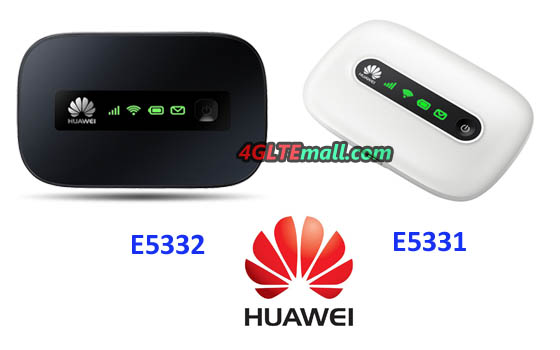
Huawei-E5331 VS HUAWEI E5332


There is no doubt that HUAWEI E5331 is the best seller in HUAWEI E5 Mobile WiFi family. Based on good performance, cool appearance and good price, HUAWEI E5331 becomes the most popular pocket WiFi since its release from HUAWEI.


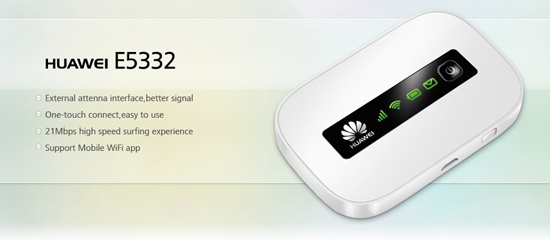
HUAWEI E5332 comes out to compensate some functions that HUAWEI E5331 can’t finish. For example, if the users use E5331 in rural area where the network signal strength is weak, the internet link speed may be too slow to bear. At this time, you may think find some ways to enhance the signal. To add an external antenna is the usual way to solute it, however, HUAWEI E5331 don’t have the port for external antenna, then HUAWEI E5332 comes out.


So the main difference between HUAWEI E5332 and E5331 is that HUAWEI 5332 has external connector for antenna, which is to give solution for users living in areas with weak signal. With the connector, HUAWEI E5332 is a little bit thicker than HUAWEI E5331. In this case, it looks like HUAWEI E5151 WLAN Mobile 3G Router.


But for most users, HUAWEI E5331 is enough because actually, there is built-in antenna in the two mobile WiFi Hotspot. And if you choose HUAWEI E5331, it proves the coverage of network in your area is good enough; users don’t need any more external antenna. And with external antenna port, the cost of HUAWEI E5332 is a little bit expensive than E5331. But you still need spare antenna for HUAWEI E5332, you could buy it from 4gltemall.com .

LTE – Up to 300 Mbit/s Per Second for Release 9

The 3rd Generation Partnership Project (3GPP) standardized wireless technology Long Term Evolution (LTE). 3GPP is a consortium of several institutes.


The project also defines standards for other mobile technologies such as HSPA. In December 2009, the Release 9 followed as the second standard, which contained LTE after the year before the release had 8 defines first LTE.


Four independent antennas


LTE Release 9 help you reach computationally up to 326.4 Mbit/s for receiving data (download) and up to 86.4 Mbit/s for sending data (upload).


Compared to 172.8Mbit/s download, which can be reached with Release 8, the theoretical speed was almost doubled. These Technologies make it more possible. As with Release 8, a 16-fold quadrature amplitude modulation (QAM) is used, a technology that enables more data to be carried on a shaft.


In addition, up to 20 MHz frequency bandwidth used. However, Release 9 is used in contrast to its predecessor up to four independent antennas at the transmitter as the receiver; the same send or receive data. This technology is called MIMO (Multiple Input Multiple Output).

LTE – Up to 172.6Mbit/s

The 3rd Generation Partnership Project (3GPP) standardized wireless technology Long Term Evolution (LTE). 3GPP is a consortium of several institutes.


The project also defines standards for other mobile technologies such as HSPA. In Release 8 of the 3GPP LTE in 2008 for the first time defined. Here, speed and technology used were committed.


Different Technologies for Increasing the Data Rate


With Release 8, the theoretical top speed with LTE on 172.8 Mbit/s when receiving data (download) and up to 57.6 Mbit/s is limited to send data.


The speeds are made possible by a number of technical parameters. First, a 16 fold quadrature amplitude modulation (QAM) is used, a technology that enables more data to be carried on a shaft.


By a plurality of antennas at both transmitters on the receiver side as the speed is increased in both directions as well. This technology is called MIMO (Multiple Input Multiple Output). On LTE Release 8, two independent antennas are used (2 x 2 MIMO). Essential for the increase in speed is also the frequency bandwidth of the connection. In this case, up to 20 MHz, in order to transmit data.


In reality, the network operators are indeed technology such as MIMO and QAM are available, but there is a lack of sufficient bandwidth. This is spread across multiple network operators, so that in practice 50 to 75Mbit/s are technically feasible in the download.


LTE Standardization

3GPP is initiative responsible for the standardization of LTE mobile technology. 3GPP Stands for Third Generation Partnership project.


The initiative focuses on the standardization of LTE and third generation wireless technologies such as UMTS.


Technical specifications of LTE


In various releases since 1999, the 3GPP initiative has published technical specifications for different areas of mobile communications technology. The release 8 focuses on the standardization of LTE technology and is the most recently completed. In releases 9 AND 10 further standardization of LTE technology are made.


Release 9 is concerned with improvements and enhancements of HSPA and LTE Release 10 defines the technical specifications of LTE-Advanced. For Release 9, the development of the remaining issues to be completed in March 2011. Release 10 is still under development, a completion data is unknown.


About 3GPP


3GPP was created in 1988 with the goal of creating a global mobile applicable third generation system. Practically to the standardization by 3GPP to enable the users to get in as many networks worldwide with the same equipment, the same services as in his home network. The detailed technical specifications are intended to describe all aspects of mobile technology so precise that the mobile devices of all manufacturers without errors on all cellular functions.


The initiative consists of 3GPP Organizational Partners (OPs) and Market Representation Partner (MRP). OP’s are the world’s defining standards bodies in the IT industry: the Association of Radio Industries and Business, Japan (ARIB), the European Telecommunications Standards Institute (ETSI), the Alliance for Telecommunications Industry Solutions, USA (ATIS), the Telecommunications Technology Associations Korea (TTA), the Telecommunications Technology Committee, Japan (TTC) and the China Communications Standards Association (CCSA). About this Organizational Partners worldwide a majority of all mobile operators, manufacturers and regulators is organized in the 3GPP initiative.

HUAWEI E5151 Mobile WAN LAN 3G WiFI Router Review

HUAWEI E5151 3G Mobile WiFi Hotspot (also named HUAWEI E5151s-2) is one of the new mobile 3G router from HUAWEI. Focus on the application of businessmen, HUAWEI design this new model with one Ethernet port to input HUAWEI E5151 and transfer data to WiFi signal so that users could access internet. This is the special and key features of HUAWEI E5151 Pocket WiFi Hotspot.

HUAWEI E5151 face

Today, let us have a look at HUAWEI E5151 mobile WiFi and it’s specifications.


HUAWEI E5151 is in pocket size, like other HUAWEI E5 pocket WiFi models, which makes it very easy to take in hand or pocket. For most of users, it could be taken outdoors or with a trip, however it would not take much space in luggage. To meet the Ethernet connector, HUAWEI E5151 is thicker than other HUAWEI E5 mobile WiFi hotspots.


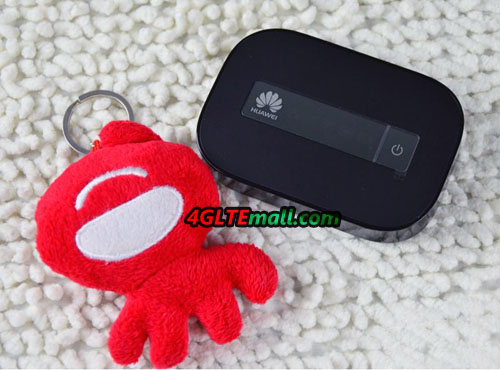
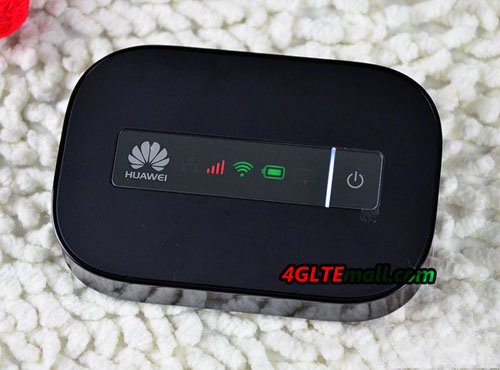
On the face, there is a LED screen which is to indicate the working status of this mobile WiFi. At the left side, it’s the HUAWEI logo. When it’s working, it will show the connection users, signal strength of 3G, battery status and SMS. At the right side, it’s the power button.


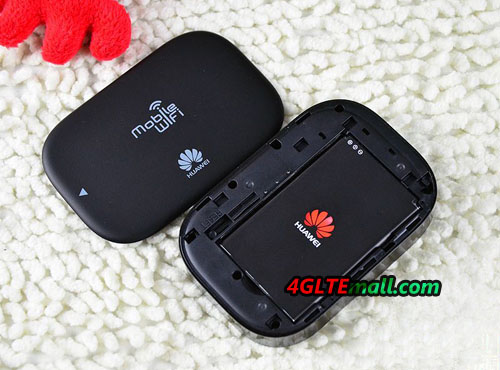
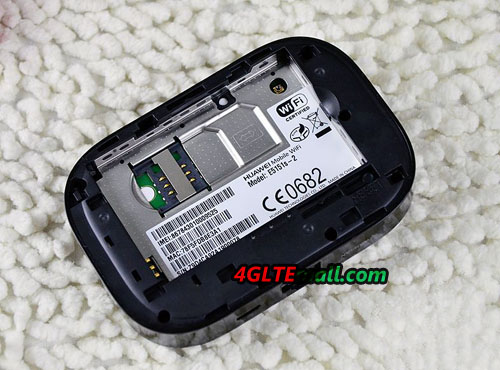
On the back, it’s a logo of HUAWEI mobile WiFi. With changeable battery, it could keep working 4 -5 hours and almost one week standby time. Below the battery, it’s the slot for 3G SIM card.


The SSID and WiFi key is on the back cover of HUAWEI E5151. Through this, you will connect the WiFi and surf internet.

HUAWEI E5151 mobile wifi hotspot


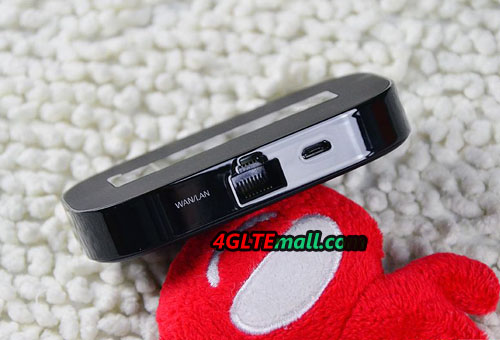
At the below side of HUAWEI E5151, it’s the Ethernet port to connect the cable. This is the most attractive features of HUAWEI E5151. For most users who usually go to different countries or areas, if they buy a mobile WiFi, there may be the compatibility problem, because the 3G network bands vary in different areas. But if there is Ethernet cable, this problem would be easily solved.


HUAWEI E5151 Ethernet port


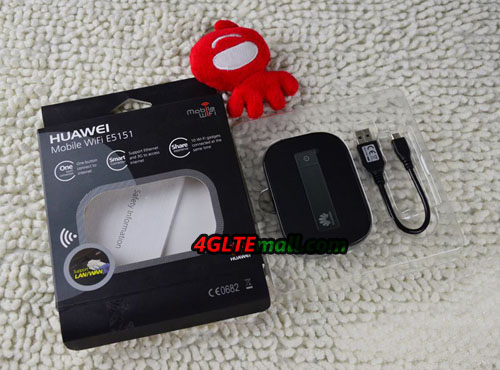
To recharge the battery, in the package, there is one USB cable to help recharge the power.

HUAWEI E5151 Package

If you like this mobile WiFi HUAWEI E5151, welcome to buy it from www.4gltemall.com .

LTE – Investments, Costs and Profits

Mobile operators have pulled out of the expensive purchase of UMTS licenses, the expensive construction of UMTS networks and the subsequent price of their teachings battle for customers.


But with LTE, users pay only a fraction of the transmission frequencies. For network construction, the price is the decisive criterion in selecting among the network equipment. And customers for data services in LTE networks will have to pay significantly more than what they have been accustomed to from UMTS networks.


UMTS: The more data, the more cheaper


The mobile plan has a problem; you need to inject more data into ever cheaper prices through their wireless networks. Since the new technology LTE is just right, the cost of production for fast data transmission in mobile communications should be lower. The cost per bit is lower for the network operators from four to ten times more than in HSDPA. This is also related to the fact that through new applied in LTE radio technologies, such as multiple-antenna method MIMO or the new modulation schemes OFDMA, with ten times more. LTE phones can be provided at a location with high speed internet than with UMTS. With LTE, so the profit margin is the mobile data tends to increase and the number of potential customers multiplied at one location.


LTE Expansion Cheaper than UMTS


The cost of the LTE expansion circulates different numbers. The bidding for the frequencies is already certain.


Expenditure incurred in the bidding for the frequencies, the cost for network deployment. The US firm Aircom, a network specialist, estimates that a mobile operator in Central Europe needs to spend about 670 million euros for the LTE network construction in the first year.


Lot of costs should come together after all, it must not only upgraded base stations to LTE or LTE base stations will be built, it must be a new IP-based core network to be created. And finally, the data lines must be upgraded from the base stations to the new core network to process the large amounts of data, because what good is fast wireless network if it only blcks the access to the core network. This looks like a high investment.


Pressure on network equipment


In order to make sense economically, the LTE expansion should cost only a fraction of what was spent on the construction of UMTS network, so the experts explain the Finnnish IT consultancy Rewheel. My solution to this dilemma: The network equipment should rethink their pricing somewhat.


New tariffs: LTE’s are not as bargain


After the business model was not a UMTS rousing success for many years, the mobile operators want LTE would not have to wait due to the investment pays.


And that probably means that they do not just invest less than in the UMTS networks, but they will charge higher prices at the retail level.


LTE is surely not only once at a bargain price.