TCL Launched TCL 10 Series Smartphones

The Chinese manufacturer TCL had launched three new smartphones at the CES at the beginning of the year: the TCL 10 Pro, the TCL 10 5G and the TCL 10L. Now some more information about the devices is known.

TCL 10 5G with Snapdragon 765G


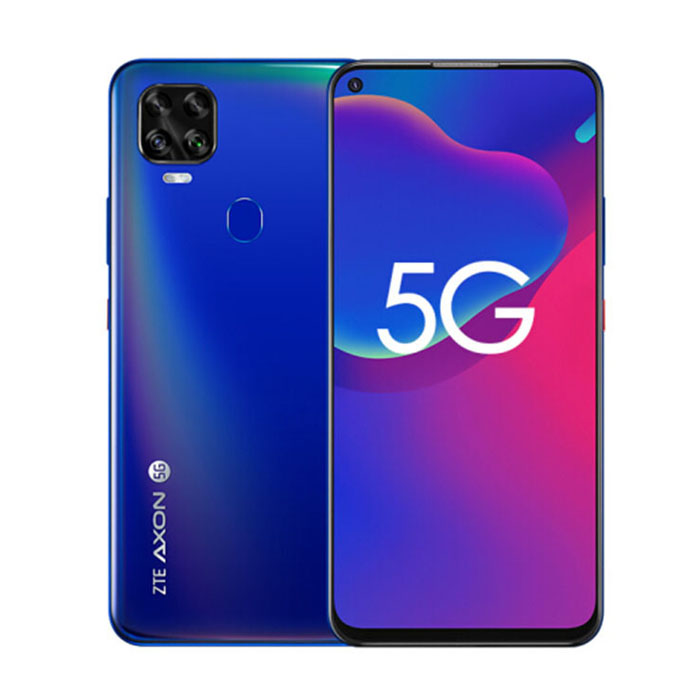
Of course we are particularly interested in the TCL 10 5G, the only 5G smartphone in the new 10 series from TCL. As SoC, TCL uses the Qualcomm Snapdragon 765G. This is clocked at up to 2.3 gigahertz and is known to have a Snapdragon X52 5G modem directly on board. There is 6 GB of RAM, plus 128 GB of internal UFS 2.1-based flash memory.


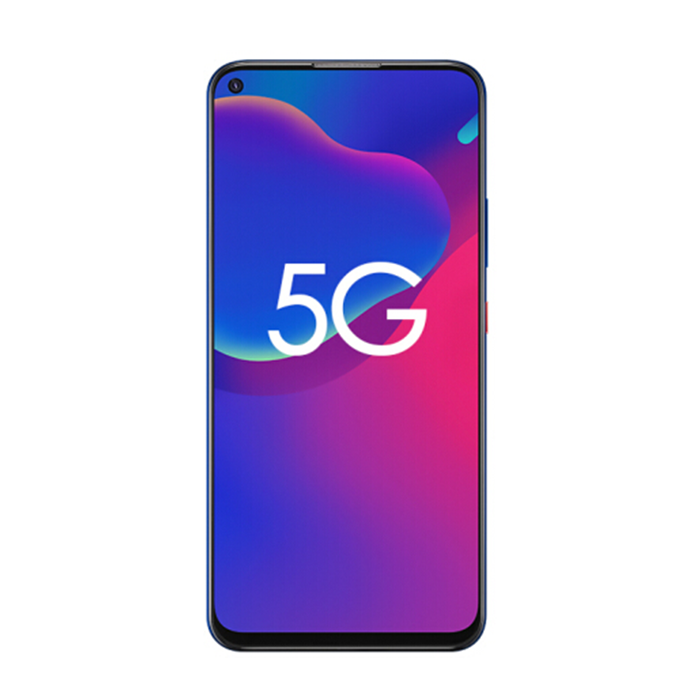
In the front of the TCL 10 5G phone, there is a 6.53 inch LCD panel with 2,340 x 1,080 pixels. A selfie cam with a resolution of 16 megapixels sits in a corner in a corner. TCL has four lenses on the back: a 64-megapixel camera as the main sensor, a 16-megapixel ultra-wide-angle camera, a 5-megapixel macro camera and a 2-megapixel camera for depth effects. There is also a 4,500 mAh battery with Quick Charge 3.0, Bluetooth 5.0 and WLAN-ac. A fingerprint sensor and a headphone jack are not missing either. A modified version of Android 10 is used as the operating system. The price is unknown yet but we suppose it will be more than 600USD.


Two more LTE smartphones


In addition to the 5G smartphone, two other models belong to the 10 series from TCL. The TCL 10 Pro will cost 500USD without a contract and has installed the Qualcomm Snapdragon 675 without 5G support. There are also 6 GB of RAM and 128 GB of memory, a 6.47-inch AMOLED display and a 4,500 mAh battery. The camera equipment in the front and back is similar.

In terms of price, the cheapest alternative is the TCL 10L. Here, too, there is no 5G and equipment that is slimmed down appropriately for the price range. These include the Qualcomm Snapdragon 665, a 6.53-inch LC display with FHD +, a triple camera with a 48-megapixel main camera and a 4,000 mAh battery. All three devices are expected to be available in the course of the second quarter of 2020.


OnePlus 8 and 8 Pro 5G Phone Officially Launched

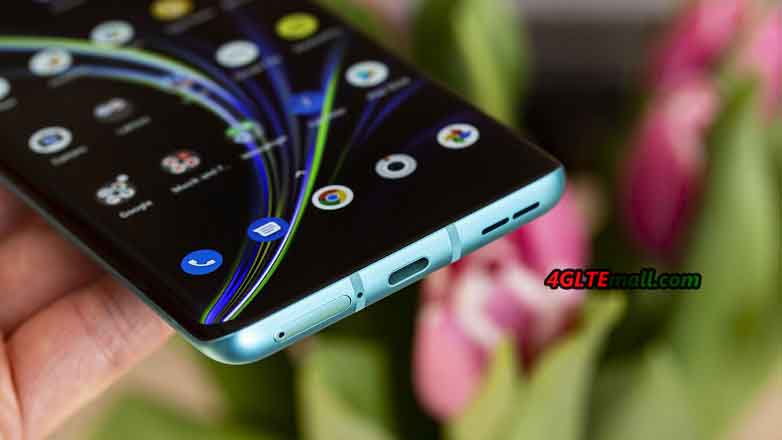
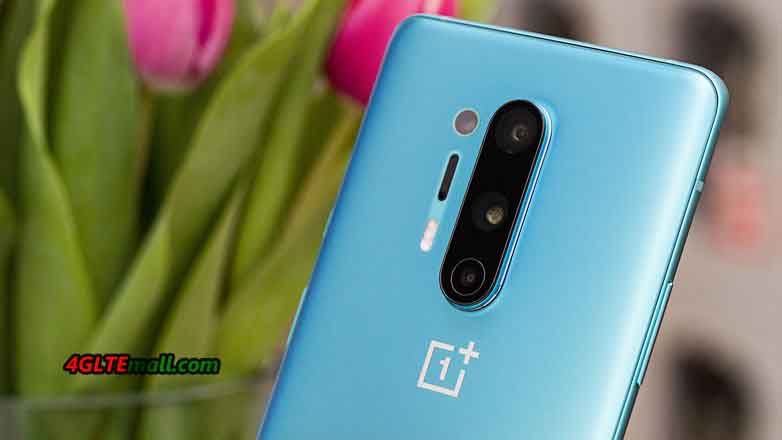
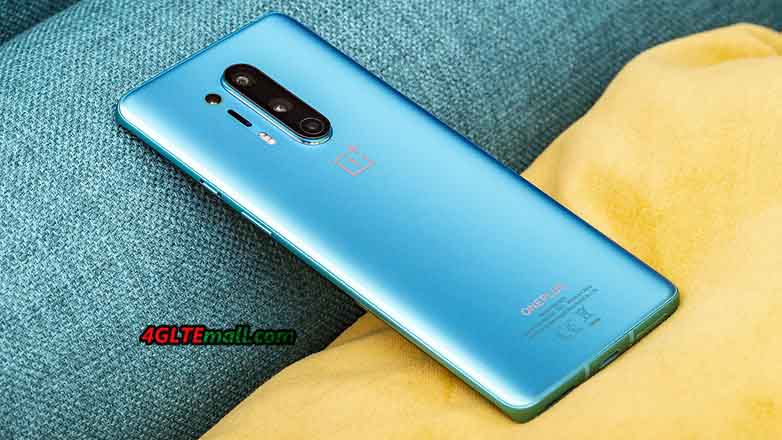
Yesterday, OnePlus launched two new flagship 5G smartphones, the OnePlus 8 and OnePlus 8 Pro. Like other cell phone manufacuturers, OnePlus also launches two models, one basic model and the other Pro version.

On the new models for 2020, OnePlus wants to finally remove the criticisms and there are many current standard configurations for flagship models such as wireless charging and an IP certification, which has also been given to the Pro model. However, the prices of OnePlus 8 and 8 PRO have now reached the very top and costs up to 1000 USD.

But before we get to the prices and the date for the market launch, there is an overview of the specifications for you again. Most of the specs for One+ 8 and 8 pro have been known for weeks, but not everyone has followed the rumor mill.

OnePlus 8 Specifications:

  • 55 inch Fluid AMOLED display with FHD+ and 90 Hz
  • Snapdragon 865 for 5G modem
  • 8 or 12 GB of RAM
  • 128 or 256 GB UFS 3.0 storage
  • Main camera: 48 MP (Sony IMX586)
  • Ultra wide camera: 16 MP
  • Macro camera: 2 MP
  • Front camera: 16 MP
  • Battery: 4300 mAh
  • Charging: 30 watts with cable
  • Size: 160.2 x 72.9 x 8.0 mm
  • Weight: 180 g

OnePlus 8 Pro Specifications:

  • 78 inch Fluid AMOLED display with QHD + and 120 Hz
  • Snapdragon 865 for 5G modem
  • 8 or 12 GB of RAM
  • 128 or 256 GB UFS 3.0 storage
  • Main camera: 48 MP (Sony IMX689)
  • Ultra wide camera: 48 MP
  • Telephoto camera: 8 MP
  • Color filter: 5 MP
  • Front camera: 16 MP
  • Battery: 4510 mAh
  • Charging: 30 watts with cable and wireless
  • IP68 certification
  • Size: 165.3 x 74.35 x 8.5 mm
  • Weight: 199 g


OnePlus 8 and 8 Pro Prices

The OnePlus 8 starts at 800USD with 8/128 GB in the colors Onyx Black and Glacial Green. For 12/256 GB you have to put 8700USD on the table, there are Glacial Green and Interstellar Glow (but comes a little later).

The OnePlus 8 Pro starts at 900 USD with 8/128 GB in Onyx Black, if you want 12/256 GB and one color, you have to put 1000USD on the table, here you get Glacial Green and Ultramarine Blue. Market launch (apart from Interstellar Glow) is April 21st, more details are available on the OnePlus website.

In addition to its own online shop, the new OnePlus 5G phone models will be available from others online stores. Not every partner will have every version available.

Battle of Foldable Phone: Huawei Mate Xs VS Samsung Galaxy Fold

2019 was the year when the first foldable phone was announced. Samsung launched the first model with the Galaxy Fold, and now there is a new foldable phone Samsung Galaxy Z Flip available now. Huawei announced the Mate X in early 2019, but now Mate X was discontinued and only the second generation and optimized Huawei Mate Xs is available for sale. The Motorola Razr also joins the product range to compete. If you plan to get the foldable phones, you’d better prepare 3000USD or more on the table. The foldable phones are at high price range now.

Since the Huawei Mate Xs and Samsung Galaxy Fold are the the top two models, we will compare the two foldable phones to see which is better on design and performance. Hope this will give some advice to the potential buyers.


Huawei Mate Xs vs. Samsung Galaxy Fold: Specifications

Samsung Galaxy Fold Huawei Mate X
Display size, resolution 4.6-inch Super AMOLED; 7.3-inch QXGA+ Dynamic AMOLED 6.6-inch (2,480×1,148 pixels); 6.38-inch (2,480×892); 8-inch OLED (2,480×2,200)
Mobile software Android 9.0 with Samsung One UI No Android on the Chinese model
Camera 12-megapixel main, 16-megapixel ultra wide-angle, 12-megapixel telephoto 40-megapixel main, 16-megapixel ultra-wide, 8-megapixel telephoto
Front-facing camera Two 10-megapixel, 8-megapixel 3D depth Same as above
Processor Octa-core Qualcomm Snapdragon 855 Kirin 980 processor
Storage 512GB 512GB
RAM 12GB 8GB
Expandable storage No No
Battery 4,380 mAh 4,500 mAh
Fingerprint sensor Power button Power button
Connector USB-C USB-C
Special features Foldable display, wireless charging, fast charging, 5G in select countries Foldable display, fast charging, 5G
Price off-contract (USD) $1,980, £1,900, converts to AU$2,800 16,999 yuan, converts to $2,400, £1,830 or AU$3,546


Huawei Mate Xs vs. Samsung Galaxy Fold: Design and Feel

The fact that Samsung grabs the display on the inside and is glass on the outside makes the Galaxy Fold appearing more valuable in the hand. In addition, the Galaxy Fold is more compact when folded and is also more comfortable to hold when opened (but both are almost the same weight). Since the display size is enough for me, we find the feel of Samsung better.

The folding mechanism on both models is good, although we have to say that it works a bit “lighter” with the Galaxy Fold. With the Huawei Mate Xs you have to exert some pressure to open and close the display. You could also operate the fold with one hand.

The workmanship is good on both devices, the keys have good pressure points and nothing wobbles. But since the Galaxy Fold is easy to use and more comfortable to hold, the point goes to Samsung


Huawei Mate Xs vs. Samsung Galaxy Fold: Display

The quality of the two displays is great in both cases. Both have built very solid OLED panels, but missing the current standard at 90 or 120 Hz. But the colors are good; they are both bright and have very good viewing angles. In that regard, I would give both a point.


But this is exactly where the difference comes: The display from Huawei Mate Xs is on the outside and that from Samsung on the inside. There you can argue whether this is a good idea with the Mate Xs, because plastic displays scratch faster, but this difference is even more noticeable.

When folded, the Huawei Mate Xs is a much too big, thick and heavy smartphone. The small external display of the Galaxy Fold is too small for almost everything.

Considering this, we will give the point to the Huawei Mate Xs, even if we never expect to put such a expensive display on the outside if we wanted to use my smartphone for many years.


Huawei Mate Xs VS Samsung Galaxy Fold: Software

Actually, we would have thought that this point goes very clearly to Samsung, since the Huawei Mate Xs comes without Google apps. But there are two things that should be mentioned here and where we have to criticize.

The Samsung Galaxy Fold has only had Android 10 this week. This is not necessarily acceptable for a model for 3000USD after this time.


The Samsung Galaxy Fold is recognized by apps as a normal smartphone. So the apps are often just stretched out. However, the Huawei Mate Xs is recognized as a tablet, which means that many apps are available when opened with a special tablet view.

For many users, if without Google apps, you can’t do many things such as Email, banking app or Google apps.

By the way, one thing must to be mentioned: The performance of the Huawei Mate Xs was really not good for some third-party apps. I compared that to the Huawei P40 Pro, which has similar hardware (Kirin 990) – no problems.


Huawei Mate Xs VS Samsung Galaxy Fold: Camera

In this category – roughly speaking – the hardware from 2019 will compete against each other. Means: A mixture of Huawei P30 Pro and Mate 30 Pro competes against the Samsung Galaxy S10. Samsung has not installed a bad camera, but it’s clear that Huawei was ahead in 2019.

In addition, with the Huawei approach, the main camera can also be conveniently used as a front camera. Samsung is only superior to Huawei in the videos, but since photos are more important to many users, this point goes to the Huawei Mate Xs.


Huawei Mate Xs VS Samsung Galaxy Fold: Price

If we consider the prices of both models, then you have to put in almost 2500 USD for a Samsung Galaxy Fold and almost 3000 USD for a Huawei Mate Xs. That’s a lot, no question at all, because the development was expensive.

You can get the Galaxy Fold every now at lower price, but it is also older. But the price difference of almost 700USD is quite large, so this point goes to Samsung.


Huawei Mate Xs VS Samsung Galaxy Fold: other features

The fingerprint sensor is located on both sides and is fast, both are available with 5G, both are not IP-certified due to the design and it was difficult for me to find a unique selling point that makes one of the models stand out. But then we found a standard feature.

The Samsung Galaxy Fold has stereo speakers on the side. So if you turn the device while watching a video, you have the sound from the left and right and honestly: It is great for media consumption.

Stereo speakers are a standard feature for smartphones that cost over 1000USD in these days. So the point goes to the fold.


Huawei Mate Xs VS Samsung Galaxy Fold: Conclusion

When opened, they are great fun reading and consuming things. As of today, you will consider one more time to buy a foldable for 2500USD or more, but if the models are now more stable, lighter and thinner and have all the features of the normal flagships, you can imagine it.

Actually, we also tried the Galaxy Z Flip, we have to say: this category (Fold and Mate Xs) from Foldables will be better because it brings more display space.

For a successor we would only wish that the outside display is bigger and Android better adapted and the notch on the inside can be replaced with a hole like the Galaxy S10, Galaxy Note10+ or Galaxy S20.

It’s a pity that Huawei will have a tough time against Samsung without the Google apps in this very special category. Otherwise it could have been an exciting duel between the two giants.

Nubia Launched Flagship RedMagic 5G Gaming Smartphone

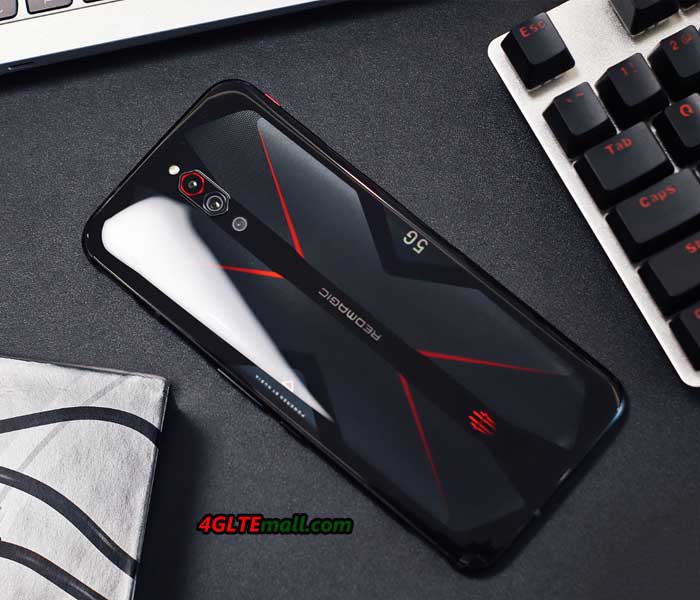
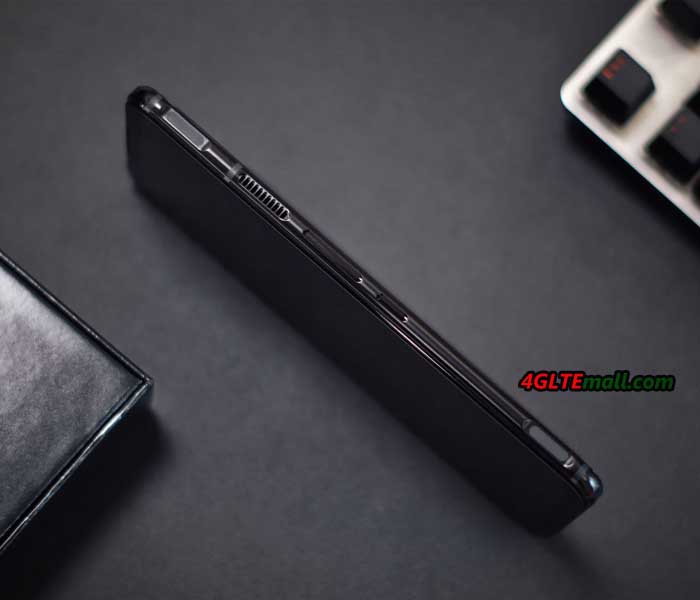
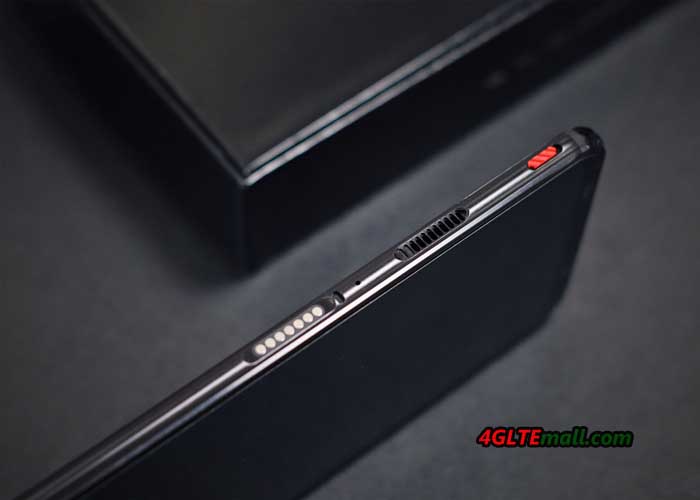
As the first 5G mobile phone from Nubia, the RedMagic 5G from the Chinese manufacturer ZTE is primarily geared towards gaming and (according to the name) supports the new 5G mobile communications standard. The Nubia’s flagship RedMagic 5G will go on sale globally starting April 21.

New gaming smartphone with Snapdragon 865

The heart of the Nubia RedMagic 5G is the new Snapdragon 865, which is cooled down by active liquid cooling for maximum performance. It is supported by an Adreno 650 GPU and a 5G modem with SA + NSA dual-mode operation. Depending on the model, there are four different combination for storage: 8GB RAM + 128GB ROM, 12GB RAM + 128GB ROM, 12GB RAM + 256GB ROM, and 16GB RAM + 256GB ROM, of course, the prices would be higher on the large capacity. A 4,500 mAh battery is responsible for the power supply, which can be quickly charged with a maximum of 55 watts.


In terms of specs, the RedMagic 5g features a 6.65-inch FHD+ AMOLED display with 144Hz refresh rate and 240Hz touch sampling rate, with a follow-up response time of 14.9ms. It also gets a sliding response time of 45ms and a click response time of 32.2ms. The phone sports the latest Snapdragon 865 chipset paired up with up to 16GB of LPDDR5 RAM. It comes with latest L-shaped cooling pipe and also gets new Active Liquid-Cooling with Turbo Fan 3.0 which is claimed to be 200 per cent cooler from previous RedMagic smartphones. The new cooling technology has also increased the airflow volume by up to 30 per cent and features multilayer thermal graphite as well. The specs seems much better than the other 5G phones from ZTE such as ZTE Axon 11 5G and Axon 10 Pro 5G.

First of all, the 5G mobile smartphone starts in China. However, it should also be available globally in April 2020. And now the Red Magic 5G phone is available in China for sale and the price is in middle range, not cheap and also not too high. Converted from the China prices, the smaller model in black and red with 8 GB RAM and 128 costs just under 600USD, the best one with 16 GB RAM and 256 GB memory is over 800USD.


The RedMagic 5G phone provides many colors for the users such as Black, Mars Red, Cyber Neon, Transparent. They all look very cool and fashion. The RedMagic 5G will be made available in EU (Austria, Belgium, Bulgaria, Croatia, Cyprus, Czech Republic, Denmark, Estonia, Finland, France, Germany, Greece, Hungary, Italy, Latvia, Lithuania, Luxembourg, Malta, Netherlands, Poland, Portugal, Romania, Slovakia, Slovenia, Spain, Sweden) and Australia, Hong Kong, Israel, Japan, Singapore, Indonesia, Taiwan, and Macao. We will keep update on this ZTE 5G cell phone.

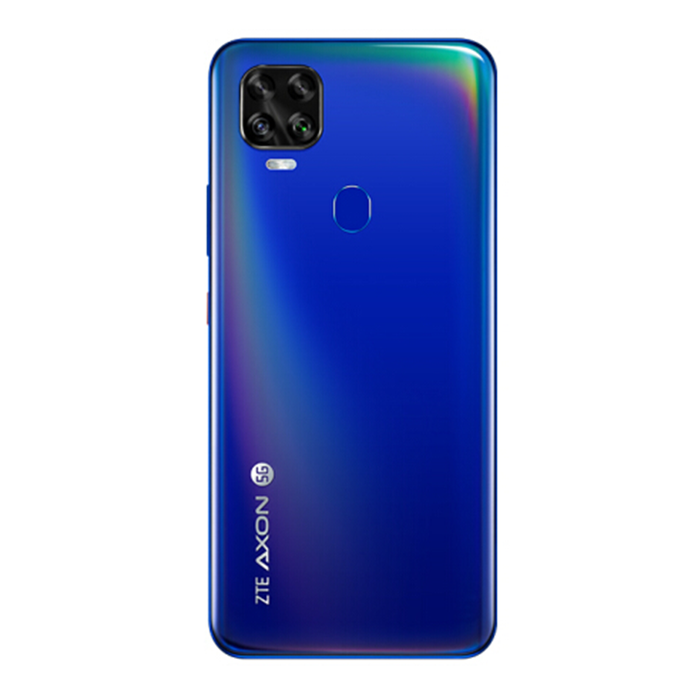
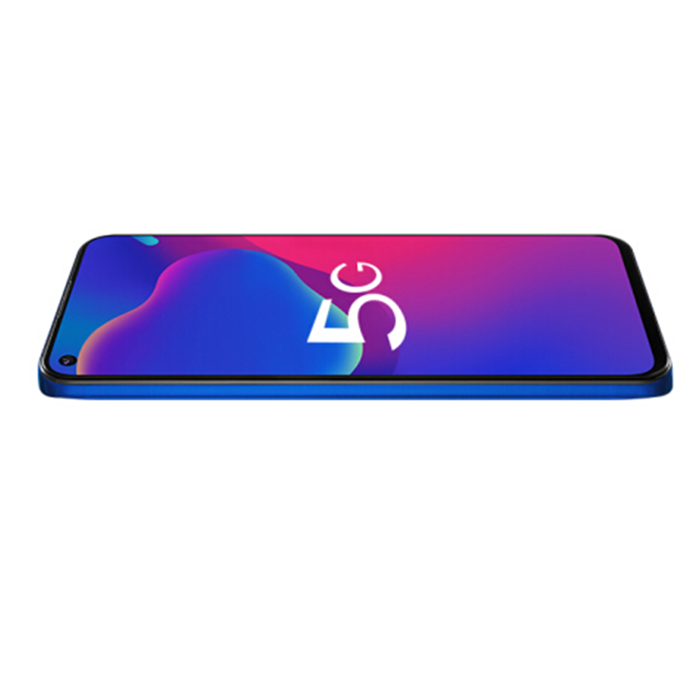
ZTE Axon 11 5G New Smartphone Presented in China

The Chinese manufacturer ZTE has presented its new 5G smartphone Axon 11 5G. Initially, the device will only be available in China. However, it is quite possible that the ZTE Axon 11 5G will also be available in other countries or areas in the foreseeable future.


Snapdragon 765G SoC chipset

Unlike the predecessor ZTE Axon 10 Pro 5G cell phone, the second generation 5G cell phone ZTE Axon 11 supports 5G dual-mode (SA and NSA), and the new 5G smartphone  also supports LTE Cat 20 and other older mobile radio standard. As SoC, the manufacturer relies on the new Qualcomm Snapdragon 765G, which has so far been used in a few devices such as Xiaomi Redmi K30 5G, Oppo Reno3 Pro 5G, OPPO Find X2 and Realme X50 5G etc… Depending on the model, 6 or 8 GB RAM and 128 or 256 GB internal memory are available.

The battery is 4,000 mAh in size and can be quickly recharged with 18 watts with new energy. Other features include Bluetooth 5.1, NFC, Hi-Res Audio with DTS: X and a fingerprint scanner in the AMOLED display. This measures 6.47 inches in 19.5: 9 format and represents a resolution of FHD + with 2,340 x 1,080 pixels. The 90 Hz display in the curved design is slightly rounded at the edges and also has a waterdrop notch in the top center, which has a selfie camera with 20 megapixel resolution and an aperture of f / 2.0.


Quad camera on the back

A quad camera setup is installed on the back of the 159.2 x 73.4 x 7.9 mm and 168 g ZTE Axon 11 5G. Its four lenses work with 64 megapixels (wide angle with f / 1.89 aperture), 8 megapixels (ultra wide angle with f / 2.2 aperture), 2 megapixels (depth sensor with f / 2.4 aperture) and 2 megapixels (macro with f / 2.4 aperture) .


The ZTE Axon 11 5G with its equipment belongs to the upper middle class. As told before, the ZTE 5G phone will initially only be launched in China. However, it could be bought from online stores. The price is not expensive for the version with 6 and 128 GB. The larger version with 8 GB RAM and 256 GB storage will cost more but not yet available now. This ZTE 5G phone is a budget one if you want to change 4G phone to 5G.


Here now, the new ZTE Axon 11 SE 5G is available with MediaTek MT6873 Dimensity 800 5G Chipset and cheaper price. We will compare the ZTE Axon 11 and Axon 11 SE 5G in future.


Samsung Introduced New 5G Cell Phone – Galaxy A51 and Galaxy A71

To compete with the Chinese mobile phone manufacturers in middle range smartphone, Samsung introduced two new 5G smartphones to the market: Galaxy A51 5G and Galaxy A71 5G. The two new devices differ primarily by 5G, but not only in this way from the LTE versions. We had introduced the mid-range 5G cell phone from Samsung Galaxy A90, which is a powerful competitor to other 5G phones from Huawei, OPPO, VIVO and Xiaomi. Now the two new Samsung 5G phones brings more opportunity to occupy market share for Samsung worldwide.


Samsung Galaxy A51 5G

The Samsung Galaxy A51 5G is said to cost just under $500, according to Samsung, which is a mid -range 5G smartphone for the money. An octa-core processor with a rate of up to 2.2 GHz works inside the phone. It is supported by either 6 or 8 GB RAM and 128 GB internal storage. If required, this can be expanded by up to 1 TB using a microSD memory card. The power supply is provided by a 4,500 mAh battery, which is slightly larger than the 4G Galaxy A51. It can be charged with a maximum of 15 watts via USB Type-C.

The front camera sits in a central hole in the 6.5-inch display with a resolution of 1,080 x 2,400 pixels. It has a resolution of 32 megapixels. Samsung uses a quad camera on the back. The main sensor has a resolution of 48 megapixels. There is also a wide-angle camera with 12 megapixels and two sensors for macro shooting and depth information, each with 5 megapxels.


Samsung Galaxy A71 5G

The differences between the Samsung Galaxy A51 5G and the Galaxy A71 5G are not too big. The display is somewhat larger at 6.7 inches, but has the same resolution. The CPU and RAM as well as the internal memory are identical. The battery is also the same size, but can be charged even faster with 25 watts. In addition, the camera setup on the back of the device is slightly better. Here the main sensor has a resolution of 64 megapixels, while all other sensors have identical specifications. The price is a little higher around $ 599.

Here now the Samsung Galaxy A71 5G is available for sale in the USA and will be available in China in April. When will the Galaxy A51 5G be available is unknown yet.


Huawei P40 Pro 5G SmartPhone Test

Before we get started, we should tell you can still install Google apps on the device, but that’s not really safe. But Huawei will have to go without Google in the long run anyway. Today we will have a test of this new Huawei 5G smartphone: Huawei P40 Pro.

Huawei P40 Pro Specifications:

  • Manufacturer:Huawei
  • Model name:P40 Pro
  • Price: 1199USD
  • Available:from April 8, 2020
  • Size:2 x 72.6 x 8.95 mm
  • Weight including battery:209 g
  • Operating system:Android 10
  • Battery:4200 mAh
  • Display:58 ″ OLED display (FHD +, 90 Hz)
  • Camera:Quad camera (50 + 40 + 12 MP + ToF)
  • Storage:256 GB
  • CPU:Kirin 990 with 5G
  • RAM:8 GB


These are not all specifications of the Huawei P40 Pro. On the Huawei official website, you can get more information about the Android smartphone.


Huawei P40 Pro design and feel

At the beginning of 2020, we was afraid that all flagship phones would get bigger, but Huawei hardly changed anything with the P40 Pro. It feels similar to the Huawei P30 Pro. That doesn’t mean it’s a particularly light and compact smartphone, but we find it a lot more comfortable than the latest new Samsung Galaxy S20 Ultra.

The processing is of course clear again and the design is now a bit “rounder” because the glass on the back and front has also been bent at the top and bottom. Incidentally, the display was not bent there. But we have to say that the difference compared to the P30 Pro is not big and it feels very similar. We tested the P40 Pro in silver color, which is one of the most beautiful colors on the market. The camera hump is now a bit bigger, which unfortunately has a small disadvantage. The camera hump is not quite as wide, but just as high, thick and sharp-edged as the Samsung Galaxy S20 Ultra. That could have been solved a little more comfortably for my taste.

Huawei P40 Pro Display

The display of Huawei P40 Pro made a very good impression in the first impression and we were also completely satisfied in the test. It doesn’t quite come close to the current Samsung panel with 120 Hz, but it’s not that far away either. FHD+ doesn’t bother too much, by the way, it is criticized in this price range.

The front camera is very good, but the hole is too wide. There is a front camera and an infrared sensor designed to optimize unlocking in poor light. Face unlock works great too, but it’s still a 2D scanner and not a 3D scanner. If you are already installing such a wide hole, then please use a camera that enables a 3D scan of the face.

But apart from that, we was very satisfied with the display, it delivers good colors and viewing angles, is pleasantly fast at 90 Hz and there is a thin bezel. It’s not the best OLED display on the market, but it’s good enough for a flagship in this price range, and luckily not bent as much as the Mate 30 Pro.

Huawei P40 Pro Camera

The highlight of the P series is the camera and that will also be the case in 2020. Huawei has improved the video quality and it still does not come close to Apple and Samsung, but it is no longer a weakness (like last year). In addition, there is finally 4K with 60 fps. The quality should be enough for most.


However, Huawei has put the focus back on the photos and there is now a new sensor with 50 megapixels. This sensor is damn good and takes extremely sharp pictures, even in poor lighting conditions without night mode.

The difference to the P30 Pro is not serious (which speaks for the P30 pro), but the P40 Pro has made another leap. The pictures with 5x zoom are also very passable.

Too bad that the 10x optical zoom is only available in the Huawei P40 Pro Plus, that would have been a unique selling point. The 10x hybrid zoom is also good. The 5x zoom of the Huawei P40 Pro is frankly a bit too much.


The front camera takes very good pictures, as we have already mentioned and the ultra-wide shots can also convince. With portrait photos, the Huawei P40 Pro recognizes the outlines very well thanks to the ToF sensor, but we also found in the test that the object in focus often looked a little blurred. Huawei would have to add a software update.

Huawei has installed one of the best cameras on the market and shows that Samsung cannot deliver better pictures with twice as many megapixels. We think the sensor from Huawei is clearly better.

Huawei P40 Pro Battery

The Huawei P40 Pro offers excellent battery life. The competition has now built bigger batteries in their flagships, but Huawei gets more out of the 4200 mAh than Samsung out of 5000 mAh. The P40 Pro is again a long-distance runner, despite the 90 Hz, which drain the battery a little faster.


Nothing has changed with fast charging, as in 2019 there is the option for up to 40 watts, which is easily enough. It charges wirelessly with up to 27 watts, which is also enough. The Plus model, which comes in June, offers Qi with up to 40 watts and is the current leader on the market.

Huawei has of course given the P40 Pro reverse charging again, so you can also charge other Qi models wirelessly on the back of the P40 Pro.


Huawei P40 Pro Software

Over the past few years, we have gradually become warm with EMUI and EMUI 10.1 is also a step forward.. In addition, the performance is right, because the Huawei P40 Pro is very fast, there is nothing to complain about.

But you know what is coming: The Google services are missing. No Google Play Store, no YouTube app, no Google Pay, no banking app in the AppGallery, no Android Auto, everything is missing. Some apps can be found through other stores or downloaded APK files, but to be honest it is tedious. Those who rely on Google and Co. will not be happy with the P40 Pro.


We tried to get the best out of it, but that’s not enough. You don’t just have to look for some apps somewhere on the web, you also have to check for updates and install them manually. And if there is a deal like Monument Valley 2, then you are unlucky with the Huawei P40 Pro.


This didn’t bother me so much with the Huawei Mate 30 Pro, and the Huawei Mate Xs which is a smartphone for a very small target group. With Google apps, that would have been an excellent flagship.


Huawei P40 Pro Conclusion

In summary, the Huawei P40 Pro has the best hardware on the market. It hasn’t gotten bigger, it has a great display, it has an excellent camera, and it still has a good battery life and almost everything else you would expect in an Android flagship.

However, for many users, you couldn’t use it in everyday life without Google apps. Only those who can completely do without Google apps and the selection of the Play Store can access here without hesitation.


If it weren’t for the problems with the US government, the Huawei P40 Pro would again be one of the best Android smartphones on the market. But the software is decisive in the end and if you don’t want to collect APKs and do without things like mobile payments via Google Pay, this is unfortunately wrong.


The Huawei P40 Pro with Google services would be a very clear purchase recommendation, but without it things look a bit different. Other 5G smartphones are not much worse (or sometimes better). The P40 Pro is going to have a hard time of it in 2020.

Huawei P40 Series Officially Launched

Yesterday, Huawei introduced the new P40 series to the public, but not as planned in Paris, but at a purely online event. The Lite models have already been shown; today the top models have been presented, which includes three models: Huawei P40, Huawei P40 Pro, Huawei P40 Pro+.

As the first new 5G cell phone from Huawei in 2020, Huawei P40 series phones will be the new flagship in the first half of the year. The price of the new flagship phone is not yet known. Huawei accept pre-order now till April 8. And Huawei will start shipping order from April 11. For pre-orders, there is also a Huawei Watch GT2e and Freebuds 3.
 

Anyone who has followed this new Huawei 5G phone in the last few weeks will already know the data, but if you are one of those who like to be surprised, then we have an overview with the most important specifications of the Huawei P40 series:

Huawei P40 Series Specs Comparison
P40 Pro P40 Pro+ P40
SoC HiSilicon Kirin 990 5G
2x Cortex-A76 @ 2.86 GHz
2x Cortex-A76 @ 2.36 GHz
4x Cortex-A55 @ 1.95 GHz
GPU Mali G76MP16 @ 700MHz
DRAM 8GB
Display 6.58″ OLED 6.1″ OLED
2640 x 1200 (19.8:9) 2340 x 1080
90Hz  60Hz
Size Height 158.2mm 148.9mm
Width 72.6mm 71.06mm
Depth 8.95mm 9.0mm 8.5mm
Weight 209g 226g 175g
Battery Capacity 4100mAh (Rated) 3700mAh (Rated)
4200mAh (Typical) 3800mAh (Typical)
40W SuperCharge 22.5W Charging
Wireless Charging 27W SuperCharge 40W SuperCharge
Rear Cameras
Main 50MP 1/1.28″ 2.44µm RYYB sensor 
f/1.9 OIS
 
23mm eq.
Telephoto 3x Optical
8MP
f/2.4 OIS
80mm eq.
Periscope 5x Optical 10x Optical 
Telephoto 12MP RYYB 8MP
 
  f/3.4 OIS f/4.4 OIS
     
  125mm eq. 240mm eq.
Wide 40MP 16MP
f/1.8 f/2.2
   
18mm eq. 17mm eq.
Extra ToF
Front Camera 32MP f/2.2 AF 32MP f/2.0 FF
+ IR camera + IR camera
Storage 128 / 256GB
+ proprietary “nanoSD” card
I/O USB-C
Wireless (local) 802.11ax (Wifi 6),
Bluetooth 5.1
Cellular 4G + 5G NR NSA+SA Sub-6GHz
Splash, Water, Dust Resistance IP68 IP53
(water resistant up to 1m) (no water resistance)
Dual-SIM 2x nano-SIM
Launch OS AOSP 10 w/ EMUI 10
 
without Google services
Launch Price 8+256GB: 8+512GB: 8+128GB:
999 1399 799


Huawei P40 Pro Vs Huawei P40 Pro+: Display


The Huawei P40 Pro and the Huawei P40 Pro+ have an identical 6.58-inch OLED display with FHD+ resolution with curves on all four sides of the screen. There is a big cutout at the top left corner of the screen, which houses the selfie camera and a couple of other sensors to assist face unlock. When it comes to additional parameters, both phones offer a 90Hz refresh rate and these panels are also HDR10 compliant.


Huawei P40 Pro Vs Huawei P40 Pro+: Processor


The Huawei P40 Pro and the P40 Pro+ are based on the HiSilicon Kirin 990 5G SoC, which is an octa-core processor based on 7nm fabrication. So, in terms of performance, both smartphones are likely to perform similarly in most of the tasks.


Huawei P40 Pro Vs Huawei P40 Pro+: RAM And Storage


The Huawei P40 Pro and the P40 Pro+ offers 8GB RAM with 256GB and 512GB internal storage, respectively. Both models do not have a microSD card slot.


Huawei P40 Pro Vs Huawei P40 Pro+: Primary Camera Setup


The Huawei P40 Pro has a quad-camera setup with a 50MP wide-angle lens, 40MP ultra-wide angle lens, 12MP periscopic zoom lens, and a 3D ToF sensor. The Huawei P40 Pro+ on the other hand, has a Penta-camera setup with a 50MP wide-angle lens, 40MP ultra-wide angle lens, 8MP telephoto lens, 8MP periscopic lens, and a 3D ToF sensor.


Huawei P40 Pro Vs Huawei P40 Pro+: Battery And Charging

Both smartphones do include a 4,200 mAh battery with support for 40W wired fast charging. When it comes to wireless charging, the Huawei P40 Pro supports 27W wireless charging and 27W reverse wireless charging. The Huawei P40 Pro+ is one of the fastest wireless charging smartphones that supports 40W wireless charging and 27W reverse wireless charging.

Huawei E5576 Mobile WiFi 3s Test

The Huawei Mobile WiFi 3s has recently become a very affordable mobile LTE router in European countries. The Huawei MiFi 3S, which is also marketed under the model name Huawei E5576-320, can be used with all SIM cards.

Of course, you shouldn’t expect high-end equipment at the very reasonable price. For example, there is no display on the front – this is often standard for more expensive 4G LTE hotspots. For this, the Huawei E5576 is very small and handy and can be perfectly carried in your pocket or in your backpack.


The Huawei E5576 is made entirely of plastic and available in black and white. In addition to the device itself, the scope of delivery also includes an approximately ten centimeter long USB to micro-USB cable, a 1,500 mAh battery, a quick start guide and a warranty card. There is no need for a power pack to charge the battery, but you can use any existing USB power pack.


Good first impression

The Huawei E5576 Mobile WiFi 3s hotspot makes a good first impression. The material used feels good and the button for switching on and off on the top has a good pressure point. The back can be easily removed to insert the SIM card (Mini-SIM format, 2FF) and the battery.


At first glance, it is negative that Huawei has not installed any connections for an external cellular antenna and continues to rely on the micro USB standard. USB Type C would have been appropriate here in 2020.


Unlimited SIM cards from Telekom and O2 were used for the test. Unfortunately, the performance in the LTE network via WLAN was very poor. Tested with several end devices, the speed rarely exceeded 20 Mbit/s. In the peak, about 23 Mbit/s in the downlink and about 33 Mbit/s in the uplink could be reached via WLAN.


LTE Modem In the Test

The speeds were significantly better when the Huawei E5576 was connected via USB. Well over 100 Mbit/s in the downlink and almost 50 Mbit/s in the uplink were possible. These measurement results show that the modem can deliver high speeds, but the bottleneck is to be found in the weak WLAN module. In comparison with an expensive high-end LTE hotspot such as the Huawei E5788 and Netgear Nighthawk M2, it also shows that the LTE network can do much more than the small Huawei E5576 gets out of the connection.


The minimum latency (ping) was always well below 20 milliseconds – the small Huawei E5576 hotspot is in no way inferior to much more expensive end devices.


The Huawei E5576 can be used in almost every UMTS and LTE network in Europe, since all important frequency ranges are supported. Incidentally, the modem is not capable of 2G / GSM, which, given the now very good LTE networks, is no longer tragic. The following frequency ranges are supported in detail:

  • 4G / LTE: B1, B3, B7, B8, B20, B28
  • 3G / UMTS: B1, B8


On other continents such as Asia, North America or South America, you have to be prepared for the fact that many LTE networks cannot be used or can only be used to a very limited extent. The Huawei E5576 does not support the frequency bands required for this.


WLAN in the test

The WLAN module of the Huawei E5576 Mobile WiFi 3s works exclusively in the frequency range around 2.4 GHz and can supply up to 16 devices with a WLAN connection at the same time. The WLAN name and password can of course be assigned individually.


Unfortunately, the WLAN module did not do well in the test. The connection was always stable, but as described in the LTE modem test, it was relatively slow. Often, only 73 Mbit/s gross data rate was displayed on the MacBook. The speed is sufficient for normal surfing and video streaming, but the maximum LTE speed of 150 Mbit/s cannot be reached via WLAN. The range was also quite short, there shouldn’t be more than one wall between the Huawei E5576 and the end device.


For example, the channel bandwidth can be set via the advanced WLAN settings. There is also the option of setting up an automatic standby mode for the WLAN network when no devices are connected. This helps to save energy.


It is easy to set up a second SSID (guest access). The name, the password and the desired duration for the guest access can be set individually. Huawei offers the options unlimited, 1 day and 4 hours for the duration of guest access.


The WiFi extender is a very interesting function. This means that you can use a different WiFi network than Internet access, for example in a hotel, at a campsite or on the train. This helps to save mobile data volume. There is no noticeable difference for the devices connected to the Huawei E5576, because the WLAN network of the E5576 will of course remain as usual. The WLAN extender is configured either via the web interface or via an app.


Operation and software

The Huawei E5576-320 LTE router can be operated either via the Huawei Smart Home app (for Android and iOS) or via the browser web interface. Right from the first setup, the software offers to change the WiFi password and admin password. Huawei has noted the standard WLAN password both under the battery cover and in the battery compartment.


Since there is no display for operation directly on the device, you have to rely on the corresponding LEDs on the front. These shine in different colors depending on the condition of the battery or depending on the reception and are easy to read. Green LEDs indicate good condition, yellow LEDs indicate poor reception or a weak battery.


Both the web interface and the Huawei Smart Home app offer an attractive, functional design and are easy to use. The web interface can be called up with a device connected to the router via the IP address 192.168.8.1 in the browser. If you use the app, you do not need to enter the IP address. The app is sufficient for most settings, only a few menu items can only be accessed via the web interface, such as the 3G-only mode.


The software of the Huawei mobile WiFi router can be updated via the web interface. If an update is available, the router automatically reports via the web interface.


Battery for up to 6 hours of operation


The battery has a capacity of 1,500 mAh and can be changed by the user without any problems – quite a special feature in today’s world. The operating time is specified by Huawei as about 6 hours, this value was confirmed in the test. Depending on the number of connected devices, the operating time may decrease somewhat, but if necessary you can simply buy a replacement battery and thus extend the runtime.


Charging the battery takes about an hour in the test. Operation without an inserted battery, i.e. only via USB power supply, was not possible in the test. The two LEDs flashed red.


Conclusion: good and cheap

The Huawei E5576 Mobile WiFi 3s is one of the cheapest mobile LTE routers. At the cheap price you get a reasonable performance. The well-designed software and simple operation were particularly convincing. The compact design and the removable battery are also positive.


You have to cut back on the weak WLAN performance and the comparatively slow LTE modem. You also have to do without comfort functions such as a display, connections for an external antenna or a memory card. If you don’t mind, the Huawei E5576 Mobile WiFi 3s is an LTE hotspot with a good price-performance ratio, which is suitable for normal surfing, checking e-mails and also for occasional video streaming.

Huawei 4G Router 3 Pro B535 Test

The new router Huawei 4G Router 3 Pro (Huawei B535-232) was available in European countries for a few months, which is integrated LTE Cat7 modem and allows speeds of up to 300 Mbit/s in the downlink. As we introducted before, Huawei B535 router has many predecessor such as the Huawei B618 or the Huawei B818, which can provide much faster link speeds, but they also cost a lot more expensive than Huawei B535.

Like other Huawei 4G WiFi routers, the Huawei B535 LTE router is packed in a simple cardboard box. In addition to the router with the model number B535-232, you will also find a power supply unit (output: 12V, 1A) and a stand dock. A multilingual quick start guide and a warranty card are also included.


If you already had a few LTE routers in hand, the first thing you notice about the Huawei B535 is the comparatively flat design. The body of Huawei 4G Router 3 Pro is made of gray and white plasti and visually unobtrusive. Various LEDs are located on the front, which indicate the operating status. For example, the reception strength is signaled using five bars. There are also LEDs for power, internet, WLAN and LAN.

There are two buttons for power and WPS on the top. These have a clear pressure point. All connections are on the back of the Huawei B535 4G Router 3 Pro. There are four Gigabit LAN connections, a connection for the power supply, a reset button and two SMA connections under one cover for an external cellular antenna. The Huawei B535 does not offer support for USB devices or telephone.


Huawei 4G Router 3 Pro Specifications

In theory, the modem of the Huawei B535 LTE router can reach speeds of up to 300 Mbit/s in the downlink and up to 100 Mbit/s in the uplink (LTE Cat7). Almost all frequency bands important for Europe are supported, as the following list shows. Only the band 32 (1,500 MHz) cannot be used by the router, but there are no restrictions. Huawei does not provide any information about the possible CA combinations.

  • 4G/LTE Band: B1, B3, B7, B8, B20, B28
  • 3G / UMTS: B1, B8


2G GSM network is not supported. In view of the now very good LTE network expansion, this is surely not be a good problem for most users.


In terms of LTE speeds, the Huawei B535 was able to convince in the test. Although the device was tested in the test with unlimited SIM cards from Vodafone, it was far from the theoretical maximum, but with well over 150 Mbit/s in the downlink and up to 70 Mbit/s in the uplink, you can do a good life. We also take a comparison test with the Netgear Nighthawk M2 Router and it shows that the network theoretically enables even higher speeds.


The latency was usually well below 30 milliseconds, and the peak was even less than 20 milliseconds. The reception and transmission power was very good in the test (LTE B3, B7, B20).

The Huawei B535 4G Router 3 Pro also offers the option of connecting an external cellular antenna. The effect of a 4G LTE outdoor antenna was not tested separately in the test. If the external antenna is not automatically recognized, you can manually switch to the external antenna in the web interface.


Fast dual band WiFi

So that the maximum LTE speed also reaches the connected end devices, a fast WLAN module is of course required. The Huawei B535 supports WLAN ac at 2.4 GHz with up to 300 Mbit/s and at 5 GHz with up to 867 Mbit/s. In the test, the 867 Mbit/s could also be reached up to 5 meters by line of sight.

As soon as a wall came between the router and the end device, the data rate dropped noticeably. Fast surfing and video streaming was also about 10 meters away from the router and was still possible without problems after two walls. The Wi-Fi range of the Huawei B535 was convincing in the test!


The Huawei B535 can simultaneously supply a maximum of 64 end devices with a WLAN connection. The WLAN name can be set separately for 2.4 GHz and 5 GHz, so as the password. There is also the option of setting up a guest WLAN. The guest WLAN can either run indefinitely or be automatically switched off after one or four hours.

The Huawei B535 does not have a WLAN extender function, i.e. the use of an existing WLAN as Internet access. There is also no WLAN timer.


Gigabit LAN and WAN function

The four RJ45 Gigabit Ethernet LAN connections on the back allow the connection of devices such as computers, televisions or games consoles via cable. The connections worked smoothly in the test.


If desired, the LAN 4 connection can also be used as a WAN connection. This means that the internal cellular modem is switched off and the Internet connection is processed via an existing LAN connection. Of course, this is particularly useful if you only occasionally use the Huawei B535 as an LTE router. For the rest of the time, the device then functions as a normal WLAN access point.


Software and operation

To set up and configure the Huawei B535 4G Router 3 Pro, you can either use the Huawei Smart Home app (available for Android and iOS) or the browser web interface. Both the app and the web interface have a modern, functional and clearly structured design and are easy to use.


In addition to the usual settings for WLAN and network, which were mentioned in the test, there are also some more special functions. These include, for example, the VPN function, the bridge mode and the dynamic DNS function. There is also the option of filtering IP addresses or domains.


In addition to an SMS function, there is also a statistics function with which the data volume used and online time can be checked. There is also an easy-to-use parental control function, which can limit the usage time (separated by days and times) for individual devices, for example.


Unfortunately, neither the app nor the web interface offer the option of displaying detailed information about the Internet connection, such as the frequency band used, the antenna technology used or the CA status. There are also no such settings, for example to set the router to a specific frequency band. The LTE router models from AVM, for example the FRITZ! Box 6820 LTE offers significantly better equipment in this area. After all, there is the possibility to use “only 3G” or “only 4G”. The Huawei B535 does not support GSM / 2G anyway. 


Test conclusion: good performance at a low price

The Huawei B535-232 4G Router 3 Pro left a very good impression in the test. The design of hardware and software is simple and functional, operation via app and web interface is simple and well thought out. In places, however, more information and setting options would be desirable.


The connection speeds via LTE and WLAN are good, and the many RJ45 Ethernet LAN connections are commendable. You have to do without a telephone system and a USB connection, but Huawei has installed connections for an external 4G LTE antenna. If you can live with the few functions described, the Huawei B535 is a very good LTE router at a fair price.