You have no items in your shopping cart.
Subscribe to RSS Feed
5G Devices
What is 5G?
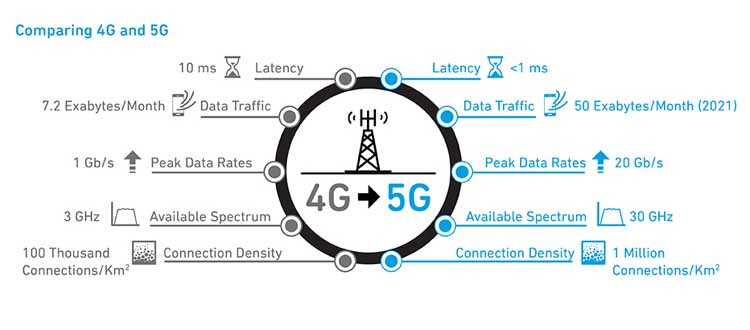
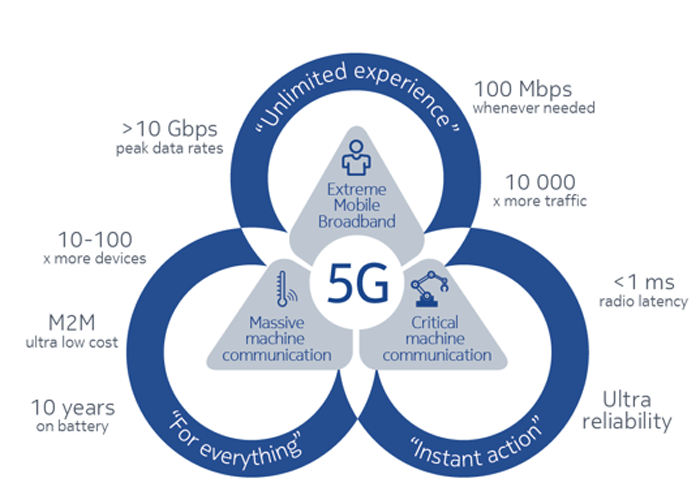
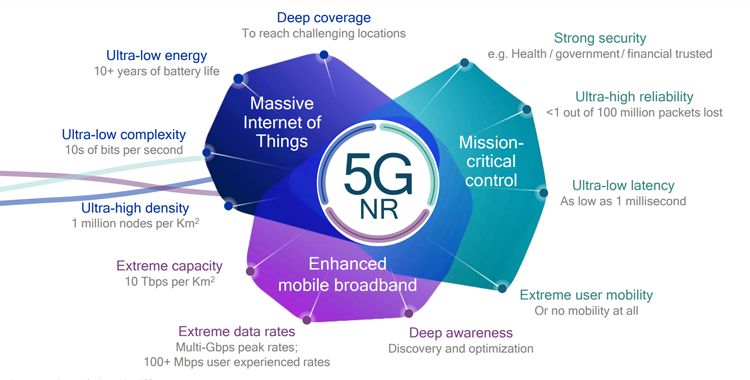
5G (fifth-generation wireless) is the latest iteration of cellular technology, and the upcoming evolution of wireless 4G LTE, which is mostly used today for wireless mobile networks. 5G is engineered to greatly increase the speed and responsiveness of wireless networks. It offers incredibly fast wireless communication that can be used to transmit all sorts of data at rates as high as 20 Gbps by some estimates -- exceeding wireline network speeds -- as well as offer latency of 1 ms or lower for uses that require real-time feedback. 5G networks offer more reliable connections on smartphones and other devices than ever before. The networks will help power a huge rise in the Internet of Things technology, providing the infrastructure needed to carry huge amounts of data, allowing for a smarter and more connected world.
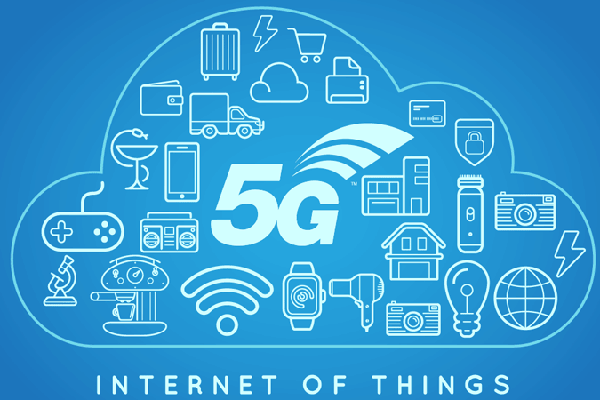
Apart from fast mobile networks, 5G will also be used to deliver internet to your home. Its speed is also suited for upcoming technologies, such as providing a continuous stream of data required for many self-driving-car systems. With development well underway, 5G networks are expected to launch across the world by 2020, working alongside existing 3G and 4G technology to provide speedier connections that stay online no matter where you are.
What will we benefit from 5G?
- > Faster download and upload speeds
- > Smoother streaming of online content
- > Higher-quality voice and video calls
- > More reliable mobile connections
- > Greater number of connected IoT devices
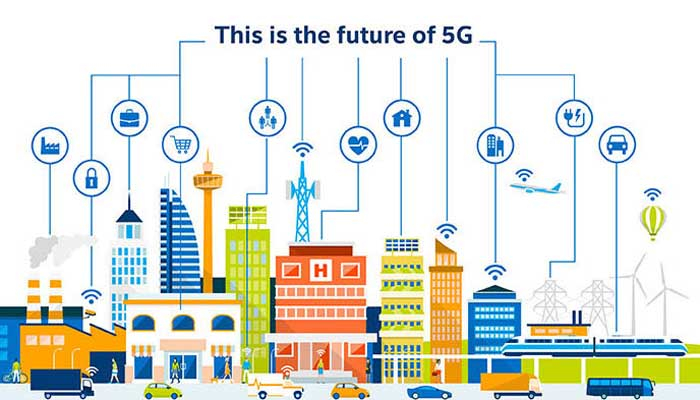
- > An expansion of advanced technologies - including self-driving cars and smart cities
How fast could the 5G reach?
It’s still not exactly known how much faster 5G will be than 4G, as much of the technology is still under development. Most estimates expect the average speed of 5G networks to reach 10Gb/s, and some even think transfer rates could reach a whopping 800Gb/s. This would mean that users could download a full-length HD quality film in a matter of seconds and that downloading and installing software upgrades would be completed much faster than today.
How does 5G Work?
Wireless networks are composed of cell sites divided into sectors that send data through radio waves. Fourth-generation (4G) Long-Term Evolution (LTE) wireless technology provides the foundation for 5G. Unlike 4G, which requires large, high-power cell towers to radiate signals over longer distances, 5G wireless signals will be transmitted via large numbers of small cell stations located in places like light poles or building roofs. The use of multiple small cells is necessary because the millimeter wave spectrum -- the band of spectrum between 30 GHz and 300 GHz that 5G relies on to generate high speeds -- can only travel over short distances and is subject to interference from weather and physical obstacles, like buildings.
Previous generations of wireless technology have used lower-frequency bands of spectrum. To offset millimeter wave challenges relating to distance and interference, the wireless industry is also considering the use of lower-frequency spectrum for 5G networks so network operators could use the spectrum they already own to build out their new networks. Lower-frequency spectrum reaches greater distances but has lower speed and capacity than millimeter wave, however.
5G Frequency Bands
On 21st December 2017, in Lisbon, the 3GPP TSG RAN Plenary Meeting successfully approved first implementable 5G NR specification. The completion of the first 5G NR standard enables the full-scale development of 5G NR for large-scale trials and commercial deployments as early as in 2019. This first specification was completed as part of 3GPP Release 15.
As per 3GPP release 15, the frequency bands for 5G NR have been designated and TS 38.104 section 5.2 provides the list of bands in which 5G NR can operate. The specification defines the frequency bands as FR1 and FR2.
|
Band |
Frequency |
Type |
|
FR1 |
450 to 6000 MHz |
Sub-6 GHz |
|
FR2 |
24250 to 52600 MHz |
mm-Wave |
FR1 and FR2 are the basic frequency band classifications for 5G-NR. These can be further classified into three bands:
- Frequency Division Duplex Bands (FDD)
- Time Division Duplex Bands (TDD)
- Supplementary Bands: Supplementary Downlink Bands (SDL) & Supplementary Uplink Bands (SUL)
FR1 FDD (Frequency Division Duplex) Frequency Bands for 5G-New Radio
|
5G NR Band |
Uplink Frequency |
Downlink Frequency |
Bandwidth |
|
n1 |
1920 -1989 MHz |
2110 - 2170 MHz |
60 MHz |
|
n2 |
1850 - 1910 MHz |
1930 - 1990 MHz |
60 MHz |
|
n3 |
1710 - 1785 MHz |
1805 - 1880 MHz |
75 MHz |
|
n5 |
824 - 849 MHz |
869 - 894 MHz |
25 MHz |
|
n7 |
2500 - 2670 MHz |
2620 - 2690 MHz |
70 MHz |
|
n8 |
880 - 915 MHz |
925 - 960 MHz |
35 MHz |
|
n20 |
832 - 862 MHz |
791 - 821 MHz |
30 MHz |
|
n28 |
703 - 748 MHz |
758 - 803 MHz |
45 MHz |
|
n66 |
1710 - 1780 MHz |
2110 - 2200 MHz |
90 MHz |
|
n70 |
1695 - 1710 MHz |
1995 - 2020 MHz |
15/25 MHz |
|
n71 |
663 - 698 MHz |
617 - 652 MHz |
35 MHz |
|
n74 |
1427 - 1470 MHz |
1475 - 1518 MHz |
43 MHz |
FR1 TDD (Time Division Duplex) Frequency Bands for 5G-New Radio
|
5G NR Band |
Uplink Frequency |
Downlink Frequency |
Bandwidth |
|
n38 |
2570 - 2620 MHz |
2570 - 2620 MHz |
50 MHz |
|
n41 |
2469 - 2690 MHz |
2496 - 2690 MHz |
194 MHz |
|
n50 |
1431 - 1517 MHz |
1432 - 1517 MHz |
85 MHz |
|
n51 |
1427 - 1432 MHz |
1427 - 1432 MHz |
5 MHz |
|
n77 |
3300 - 4200 MHz |
3300 - 4200 MHz |
900 MHz |
|
n78 |
3300 - 3800 MHz |
3300 - 3800 MHz |
500 MHz |
|
n79 |
4400 - 5000 MHz |
4400 - 5000 MHz |
600 MHz |
FR1 Supplementary Downlink Bands (SDL) & Supplementary Uplink Bands (SUL) for 5G-New Radio
|
5G NR Band |
Uplink Frequency |
Downlink Frequency |
Bandwidth |
Type |
|
n75 |
- |
1432 - 1517 MHz |
85 MHz |
SDL |
|
n76 |
- |
1427 - 1432 MHz |
5 MHz |
SDL |
|
n80 |
1710 - 1785 MHz |
- |
75 MHz |
SUL |
|
n81 |
880 - 915 MHz |
- |
35 MHz |
SUL |
|
n82 |
832 - 862 MHz |
- |
30 MHz |
SUL |
|
n83 |
703 - 748 MHz |
- |
45 MHz |
SUL |
|
n84 |
1920 - 1980 MHz |
- |
60 MHz |
SUL |
5G NR Frequency Bands in FR2
|
5G NR Band |
Band Alias |
Uplink Band |
Downlink Band |
Bandwidth |
Type |
|
n257 |
28 GHz |
26.5 - 29.5 GHz |
26.5 - 29.5 GHz |
3 GHz |
TDD |
|
n258 |
26 GHz |
24.250 - 27.5 GHz |
24.250 - 27.5 GHz |
3.250 GHz |
TDD |
|
n260 |
39 GHz |
37 - 40 GHz |
37 - 40 GHz |
3 GHz |
TDD |
5G Applications
5G’s speed and reduced latency have the potential to transform entire industries.
Cars
Connected cars are a key growth driver. Futurists predict that the self-driving vehicles of the future will exchange cloud management info, sensor data, and multimedia content with one another over low-latency networks. According to ABI Research, 67 million automotive 5G vehicle subscriptions will be active, three million of which will be low latency connections mainly deployed in autonomous cars.
IoT
According to Asha Keddy, general manager of mobile standards for advance tech at Intel, 5G will be the first network designed with the Internet of Things (IoT) in mind. “These next-generation networks and standards will need to solve a more complex challenge of combining communications and computing together,” Keddy told Quartz in an interview ahead of the 2017 Mobile World Congress. “With 5G, we’ll see computing capabilities getting fused with communications everywhere, so trillions of things like wearable devices don’t have to worry about computing power because the network can do any processing needed.” Eventually, everything from wearables to internet-connected things such as washing machines, smart meters, traffic cameras, and even trees with tiny sensors could be connected.
Virtual reality and augmented reality
5G could bring about advances in virtual reality and streaming video. Sprint recently demonstrated streaming wireless VR at the Copa America soccer tournament, and Huawei showed a demo of 360-degree video streamed live from a 5G network.
Cloud-powered apps
Remote storage and web apps stand to benefit from 5G. “The cloud becomes an infinite extension of your phone’s storage,” El-Kadi said. “You never have to worry about running out of photo space.”
In addition to additional phone storage, you may see a significant difference in mobile hardware design overall. With 5G many of the computing tasks completed on your device can be moved to the network. Since the devices will not require the same computing capabilities, we may see so-called “dummy phones” with minimal hardware using the network to complete tasks. The transfer of power from the device to the network also means that your cell phone may have greater longevity as it will not necessarily require incremental hardware improvements to keep pace.
-

Fibocom 5G EVB-M2-S Development Board
Fibocom 5G EVB-M2 Development Board Learn More$349.00 -
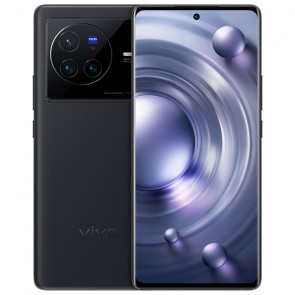
VIVO X80 5G
* 6.78 inches, 1080 x 2400 pixels, Android 12/Origin OS Ocean
* Chipset: MediaTek Dimensity 9000 (4 nm)
* Dual SIM(Nano-sim), 128GB/256GB 8GB RAM, 256GB/512GB 12GB RAM
* Triple(50MP + 12MP + 12MP) main camera/Single (32MP) front camera
* Non-removable Li-Po 4500 mAh battery
Learn More -
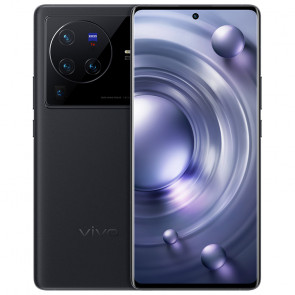
VIVO X80 Pro
* 6.78 inches, 1440 x 3200 pixels, Android 12/Origin OS Ocean
* Chipset: Qualcomm SM8450 Snapdragon 8 Gen 1 (4 nm)
* Dual SIM(Nano-sim), 256GB 8GB RAM, 256GB/512GB 12GB RAM
* Quad(50MP + 8MP + 12MP + 48MP) main camera/Single (32MP) front camera
* Non-removable Li-Po 4700 mAh battery
* Fast charging 80W + Fast wireless charging 50W
Learn More$1,039.00 -
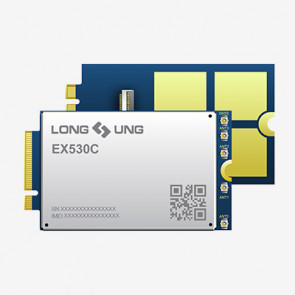
LongSung EX530C 5G NR Sub-6 Module
* Form factor: M.2 package
* 5G Dual-mode: SA/NSA
* Peak speeds: DL 2.8Gbps(DL)/900Mbps(UL)
* GNSS: GPS, GLONASS, BeiDou, Galileo and QZSS
Learn More -
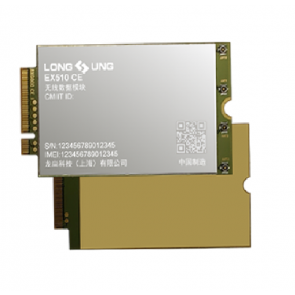
LongSung EX510CE 5G NR Module
* Form factor: M.2 package
* 5G Peak speeds: 900Mbps(UL), 2Gbps(DL)
* GNSS: GPS/GLONASS/BeiDou/Galileo/QZSS
* 5G Main antenna interface
Learn More -
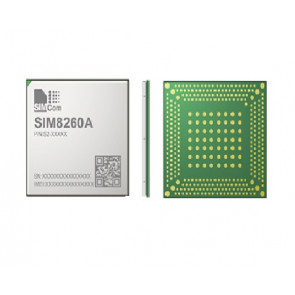
SIMCOM SIM8260A 5G Sub-6G LGA Module
* Form Factor: LGA Package
* 5G Dual-mode: SA/NSA
* GNSS: GPS/Gallileo/QZSS/GLONASS/Beidou
* 5G Peak Speeds: 3.4Gbps(DL)/1Gbps(UL)
* Firmware Upgrade: USB
Learn More -
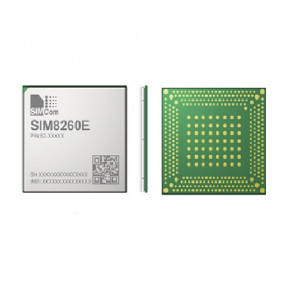
SIMCOM SIM8260E 5G Sub-6G LGA Module
* Form Factor: LGA
* Target market: Europe and APAC
* 5G Dual-mode: SA/NSA
* GNSS: GPS/Gallileo/QZSS/GLONASS/Beidou
* 5G Peak Speeds: 3.4Gbps(DL)/1Gbps(UL)
* Firmware Upgrade: USB
Learn More$399.00 -
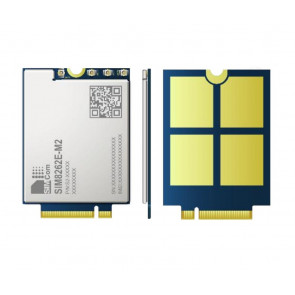
SIMCOM SIM8262E-M2 5G Sub-6G M.2 Module
* Form Factor: M.2
* Target market: Europe and APAC
* 5G Dual-mode: SA/NSA
* GNSS: GPS/Gallileo/QZSS/GLONASS/Beidou
* 5G Peak Speeds: 3.4Gbps(DL)/1Gbps(UL)
* Firmware Upgrade: USB
Learn More -
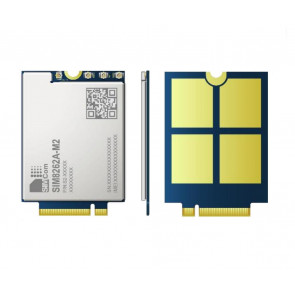
SIMCOM SIM8262A-M2 5G Sub-6G M.2 Module
* Form Factor: M.2
* 5G Dual-mode: SA/NSA
* GNSS: GPS/Gallileo/QZSS/GLONASS/Beidou
* 5G Peak Speeds: 3.4Gbps(DL)/1Gbps(UL)
* Firmware Upgrade: USB
Learn More -
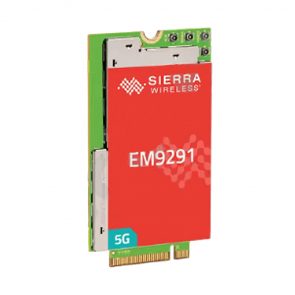
Sierra Wireless EM9291 5G NR Sub-6 M.2 Module
* 5G Dual-mode: SA/NSA
* Target region: Global
* 5G Speeds: DL to 4.9Gbps, UL to 660Mbps
* GNSS: Galileo, Glonass, GPS, Beidou
Learn More -
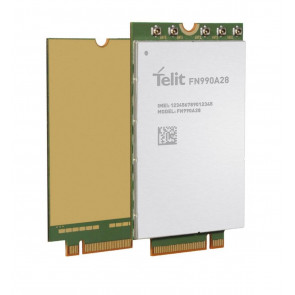
Telit FN990A28 5G sub-6 M.2 Module
* 5G sub-6 FDD and TDD, 5G SA and NSA dual-mode operations
* 5G core network Opt. 3a/3x and Opt. 2
* Target Market: North America, EMEA, APAC
* Chipset: Snapdragon X62 5G modem
* 5G data rates: DL up to 3.4 Gbps/UL to 0.55 Gbps
Learn More -
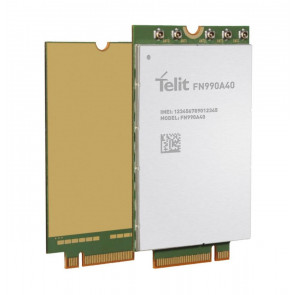
Telit FN990A40 5G sub-6 M.2 Module
* 5G sub-6 FDD and TDD, 5G SA and NSA dual-mode operations
* 5G core network Opt. 3a/3x and Opt. 2
* Target Market: North America, EMEA, APAC
* Chipset: Snapdragon X65 5G modem
* 5G data rates: DL up to 4.9 Gbps/UL to 0.55 Gbps
Learn More -
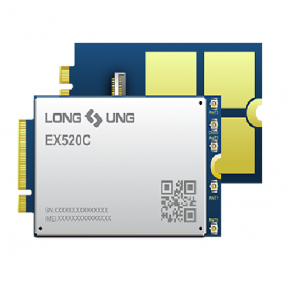
LongSung EX520C 5G Sub-6G M.2 Module
* Chipset: Qualcomm 315 5G IoT modem
* Form Factor: M.2
* 5G Speeds DL to 1.5Gbps, UL to 375Mbps
Learn More -
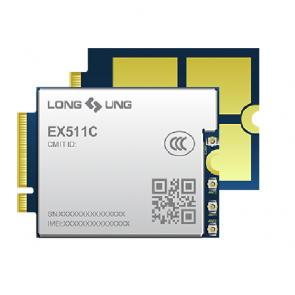
LongSung EX511C 5G Sub6 M.2 Module
* Chipset: Qualcomm 315 5G IoT modem
* Form Factor: M.2
* 5G Speeds DL to 2.4Gbps, UL to 700Mbps
Learn More -
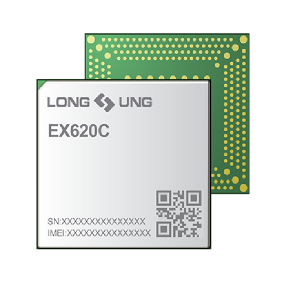
LongSung EX620C 5G Sub6 M.2 Module
* Chipset: Qualcomm 315 5G IoT modem
* Form Factor: M.2
* 5G Speeds DL to 1.5Gbps, UL to 375Mbps
Learn More -
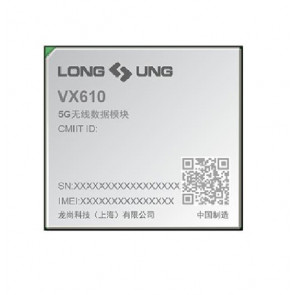
LongSung VX610 5G NR C-V2X Module
* Compliant with 3GPP Rel 15
* Form factor: LGA package
* 5G Speed: DL to 2.4Gbps, UL to 900Mbps
Learn More -
-
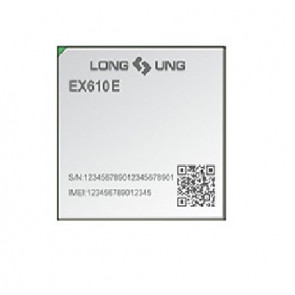
LongSung EX610E 5G NR LGA Module
* Chipset: Qualcomm Snapdragon X55 Modem
* Form factor/package: LGA
* GNSS (GPS,GLONASS and BeiDou)
* Control via AT commands
* 5G Speed: DL 4 Gbps/UL 300Mbps
Learn More -

Longsung EX510E 5G NR Module
* Form factor: M.2 package
* 5G Peak speeds: 900Mbps(UL), 2Gbps(DL)
* GNSS: GPS/GLONASS/BeiDou/Galileo/QZSS
* 5G Main antenna interface
Learn More -
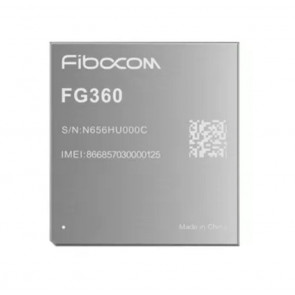
Fibocom FG360-JP 5G NR Module
* Platform: MT T750
* Support 5G SA/NSA dula-mode
* Form Factor: LGA
* GNSS: GPS/GLONASS/Beidou/Galileo/QZSS
* DL 4.67Gbps / UL 1.25Gbps
Learn More