Quectel Launches New-Generation AI Computing Smart Module SH603FC

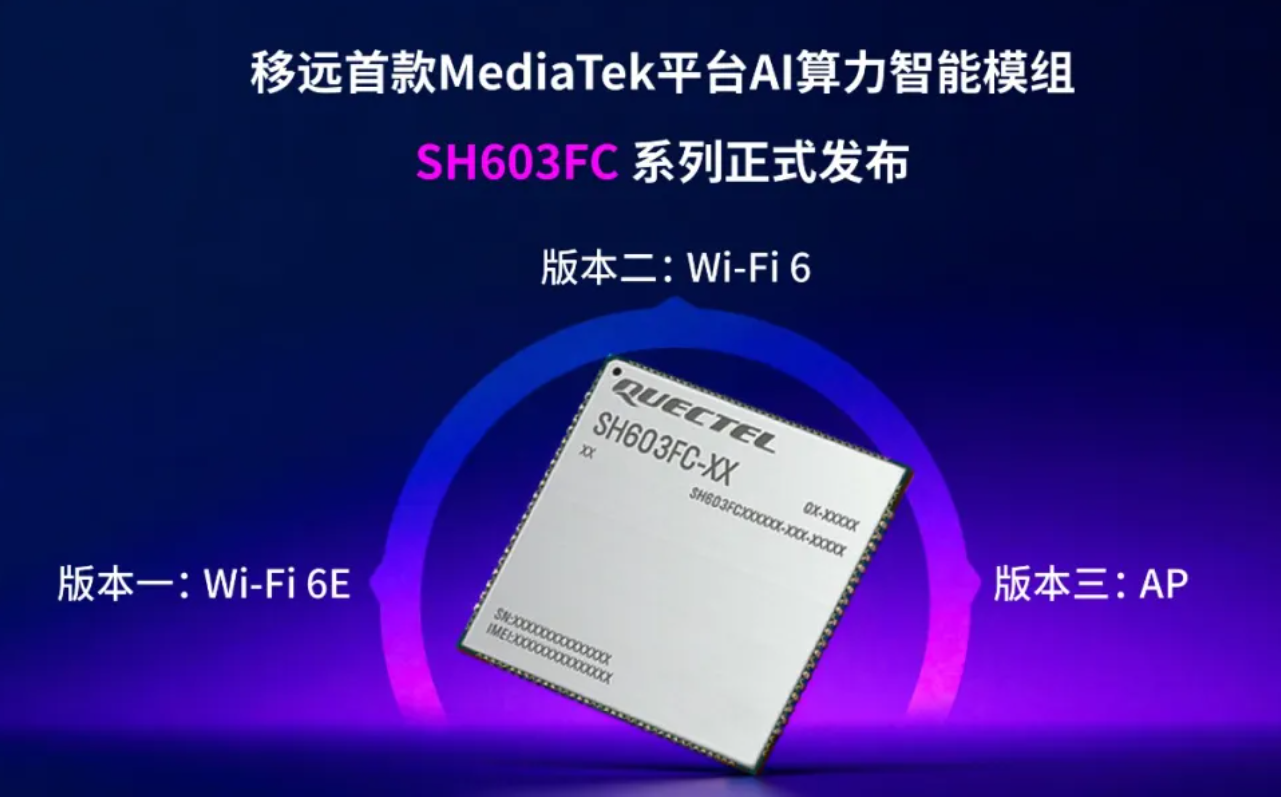
On March 11, during embedded world 2026, Quectel announced the official launch of its new-generation SH603FC series, an AI computing smart module based on MediaTek’s G520 chip platform.

As Quectel’s first high-performance module to feature this platform, the SH603FC series offers three variants: Wi-Fi 6, Wi-Fi 6E, and AP. It is designed to create an integrated intelligent hardware foundation for diverse scenarios such as industrial applications, robotics, smart retail, in-vehicle aftermarket entertainment devices, and edge computing, empowering various industries to achieve digital transformation and intelligent upgrades.
Robust Performance: Building the Cornerstone of Universal Intelligence

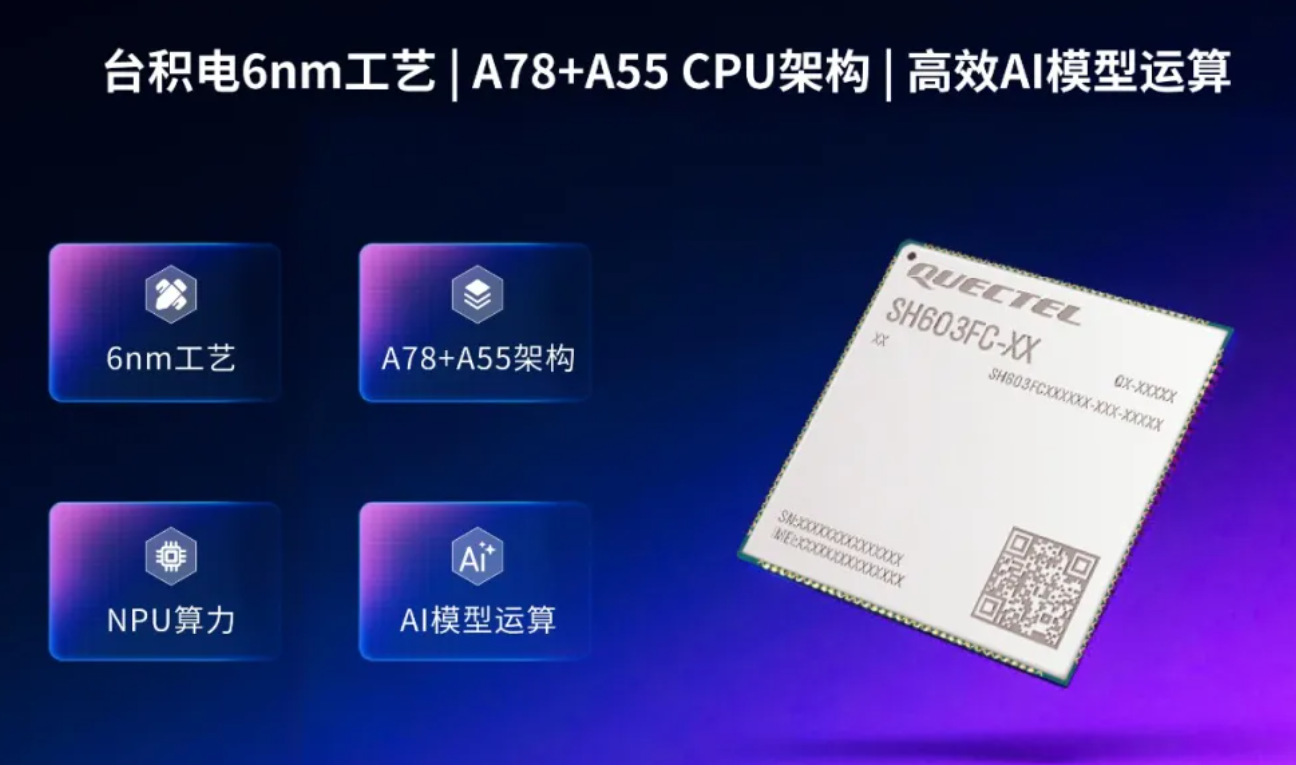
Quectel SH603FC series incorporates a CPU architecture featuring A78 + A55 cores, manufactured using TSMC’s 6nm process. It integrates a high-performance AI processing unit, enabling efficient on-device execution of complex AI model operations like facial recognition, product detection, and behavior analysis. This essentially equips terminal devices with a “smart brain,” facilitating a leap from passive response to proactive thinking.

This capability for “proactive thinking” is reshaping operational processes across industries:

  • On industrial production lines, real-time defect detection can immediately identify faulty products, significantly improving yield rates and efficiency.
  • For delivery robots, intelligent environmental perception allows for rapid identification of obstacles and path changes, enabling smoother and safer autonomous operation.
  • In smart stores, local analysis of foot traffic and customer behavior not only reduces reliance on cloud bandwidth but also ensures the privacy and security of commercial data from the source.
Dual-Screen Display: Unleashing Unlimited High-Definition Interaction

The Quectel AI module is not only equipped with a “smart brain” capable of handling complex AI computations but also possesses “sharp eyes” for capturing high-definition visuals. Its multimedia processing capabilities are particularly impressive, with the dual-screen display function precisely addressing the “one-device, multiple-screens” demands in sectors like commercial displays, in-vehicle aftermarket entertainment, and self-service kiosks. Through interface multiplexing solutions such as MIPI, eDP, and DP, the series supports dual-screen display at resolutions up to 2560×1600 at 60fps. This not only reduces hardware BOM costs but also expands the dimensions of interaction.

The flexible “one-chip, dual-screen” architecture elevates device interaction experiences to a new level.

  • On a vending machine, the main screen can loop 4K product advertisements, while the secondary screen displays real-time transaction QR codes and inventory information, achieving efficient synergy between advertising and transactions.
  • For smart payment terminals, the staff screen handles checkout operations, while the customer screen clearly shows the purchase details and promotional offers, enhancing transaction transparency and the consumer experience.
  • In in-vehicle aftermarket systems, the central control screen provides the driver with real-time information like navigation and vehicle status, while a screen for the passenger or a roof-mounted display can be used freely for entertainment, balancing driving safety with passenger experience.
Versatile Adaptability: Excelling in Diverse Application Environments

Leveraging its robust comprehensive performance and rich interface resources (such as PCIe, USB, RGMII, etc.), the SH603FC series has become a core driver for intelligent upgrades across multiple fields, injecting powerful momentum into the digital transformation of various industries.

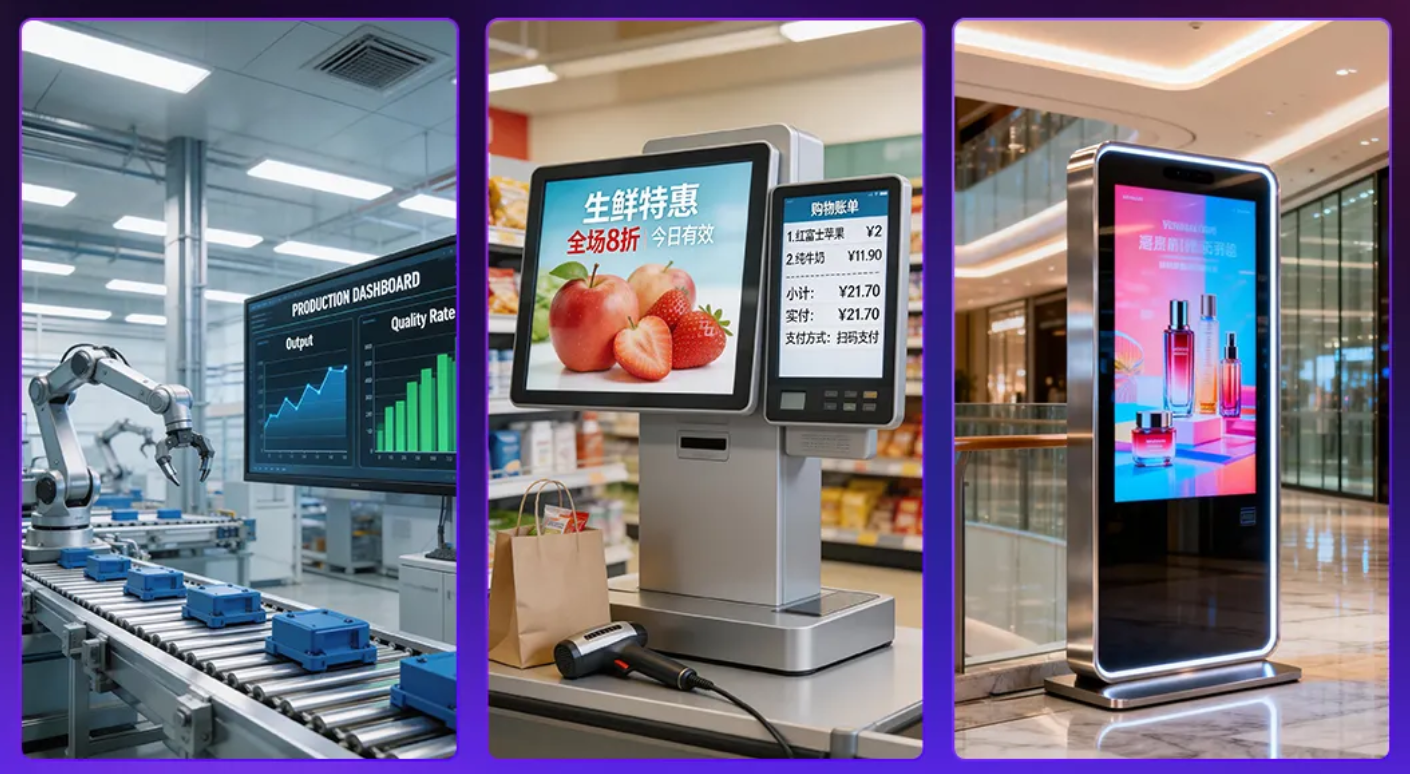
  • In the industrial sector, it supports a wide operating temperature range from -35°C to +75°C, providing robust AI computing power and stable operation for industrial tablets and control equipment, facilitating real-time production data collection and analysis, and advancing the implementation of Industry 4.0.
  • In the smart retail sector, it empowers smart vending machines and self-checkout systems with intelligent payment processing and real-time inventory monitoring, making store operations more efficient and services more attentive.
  • In the commercial display sector, its high-definition display capabilities make content dissemination on advertising players and large-screen terminals more engaging, effectively enhancing brand presentation and communication efficiency.

Furthermore, the module features a compact LGA+LCC form factor and fully supports multiple operating systems, including Android 15, Yocto, and Ubuntu. It can be flexibly adapted to various devices such as robots, in-vehicle aftermarket entertainment systems, smart intercom recorders, and smart home appliances. It provides a one-stop hardware solution to meet the intelligent upgrade needs of different industries and scenarios.

Currently, samples for the SH603FC series are available for testing. Customers are welcome to inquire and collaborate to unlock the boundless possibilities of edge intelligence together.
Quectel Edge Computing Module Runs DeepSeek Model

Recently, the domestic large model DeepSeek has gained global popularity due to its core advantages of “open-source, efficient inference, and edge-friendly” capabilities. Quectel Communication, based on its edge computing module SG885G, has successfully implemented the stable operation of the DeepSeek model and completed targeted fine-tuning.

Currently, the model is undergoing in-depth testing and optimization on multiple smart terminals. With its outstanding engineering capabilities, Quectel will accelerate the large-scale application and popularization of edge-side AI technology across various industries.

DeepSeek: A Pioneer in AI Model Innovation

DeepSeek’s global success stems from its breakthrough innovations in model architecture, distillation technology, and reinforcement learning.

The full version of the DeepSeek-V3 model adopts an innovative MoE (Mixture of Experts) architecture with 671 billion parameters, capable of processing 60 tokens per second. It excels in handling complex tasks like long document analysis and multimodal reasoning. Each layer includes 256 routing experts and 1 shared expert, with only 8 experts activated per token, significantly improving learning efficiency and flexibility, reducing training and inference costs, and accelerating token generation.

To address the shortcomings of small inference models’ Self-play learning, DeepSeek-R1 uses efficient distillation technology to transfer the inference capabilities of large models to smaller, more efficient versions. This breakthrough allows the smaller version to maintain excellent performance while significantly reducing model size and computational resource requirements, making it an ideal choice for edge-side deployment.

Additionally, the experimental DeepSeek-R1-Zero version demonstrated that large models can possess powerful inference abilities through reinforcement learning (RL) alone, without the need for supervised fine-tuning, opening up new possibilities for AI model training.

DeepSeek’s Smaller Version: An Ideal Choice for Edge Deployment

The DeepSeek-R1 version focuses on reinforcement learning technology, offering strong inference capabilities and excellent cost-performance. The series of small-size distilled models based on this version, with parameter ranges from 1.5B to 70B, provide developers with high-performance, low-cost large model deployment and development solutions, which will strongly drive the commercialization of edge-side AI.

The simplified small models inherit powerful AI capabilities from their large counterparts. Despite a reduction in parameters, the performance remains outstanding. With significantly reduced computational load, memory, and resource consumption, these models are particularly suitable for edge devices with limited resources. Additionally, inference speed is greatly improved to meet the real-time requirements of edge devices. Furthermore, the smaller models have a more compact form and stronger adaptability, making them easier to integrate and run on various industry terminals and edge computing devices. Despite model compression, distillation technology allows the small models to maintain high precision, ensuring task performance remains unaffected.

Quectel: Accelerating Edge AI Deployment with Leading Engineering Capabilities

While many manufacturers are still exploring how to support the DeepSeek model, Quectel has already made breakthroughs. Its edge computing module SG885G, based on Qualcomm’s QCS8550 platform, has successfully achieved the stable operation of the DeepSeek-R1 distilled small model. Test data shows that its token generation speed exceeds 40 tokens per second, and with continuous optimization, the speed will improve further, bringing more powerful AI capabilities to smart terminal devices.

Moreover, Quectel has closely collaborated with industry partners to conduct in-depth testing and optimization for applications in robotics, smart cabins, and smart industries, providing users with a smoother AI experience.

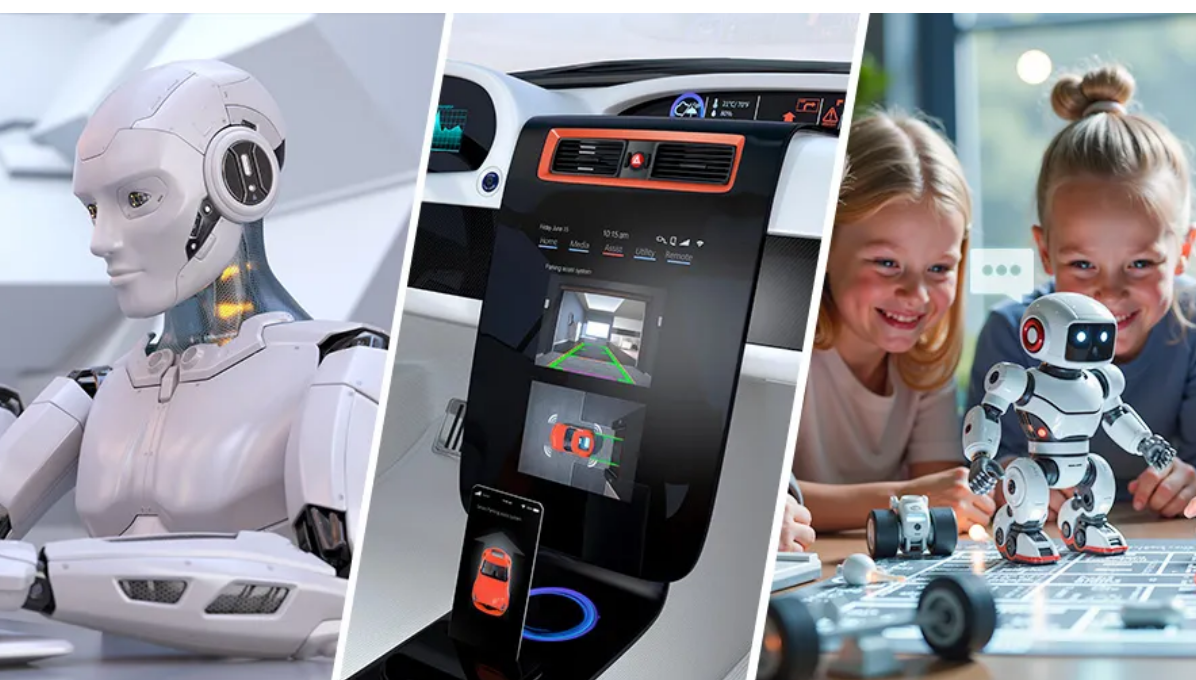
Quectel’s edge computing modules and solutions, equipped with the DeepSeek model, are not only applicable to consumer and industrial robotics but also have widespread applications in smart cabins, machine vision, personalized virtual assistants, tablets, elderly care, smart homes, AI toys, and wearable devices. These diverse scenarios benefit from powerful AI empowerment, such as more natural voice interactions, more accurate image recognition, and more personalized service experiences.

Furthermore, after successfully achieving the edge-side operation of the DeepSeek model, Quectel has also completed targeted fine-tuning of the model and applied it to its own large-model solutions, offering more precise and efficient edge-side AI services to clients. This achievement not only highlights Quectel’s technical strength in the field of edge-side AI but also reflects its leading engineering capabilities, which will strongly drive the rapid development and deployment of AIoT applications.

Looking towards the wide range of vertical industries that urgently require AI capabilities, Quectel will continue to invest resources to promote more high, mid, and entry-level edge computing modules, as well as smart cabins, 5G, LTE modules, and solutions, to fully integrate advanced models like DeepSeek and large cloud models. This will help IoT devices achieve intelligent upgrades and usher in a new era of interconnected devices.