HMD Global Presents New Nokia 8 Android Smartphone

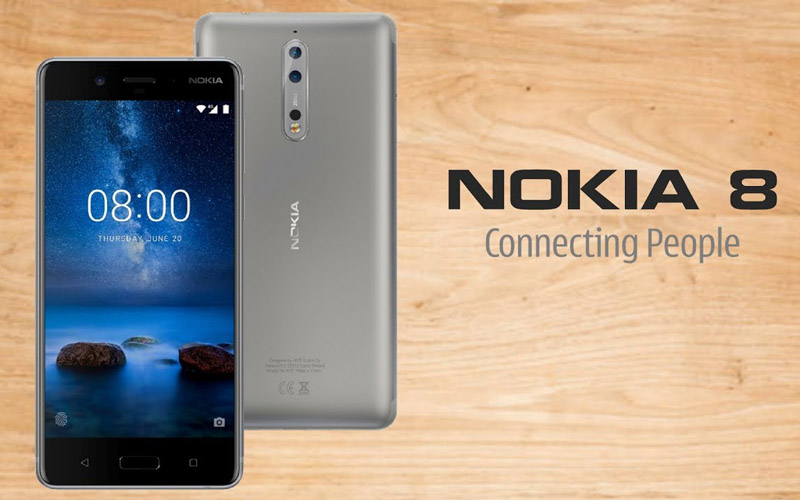
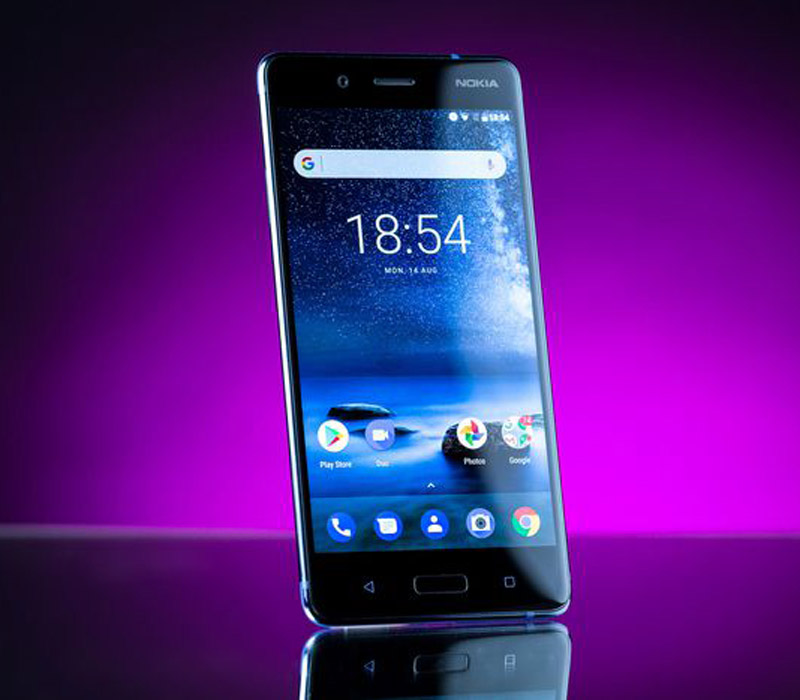
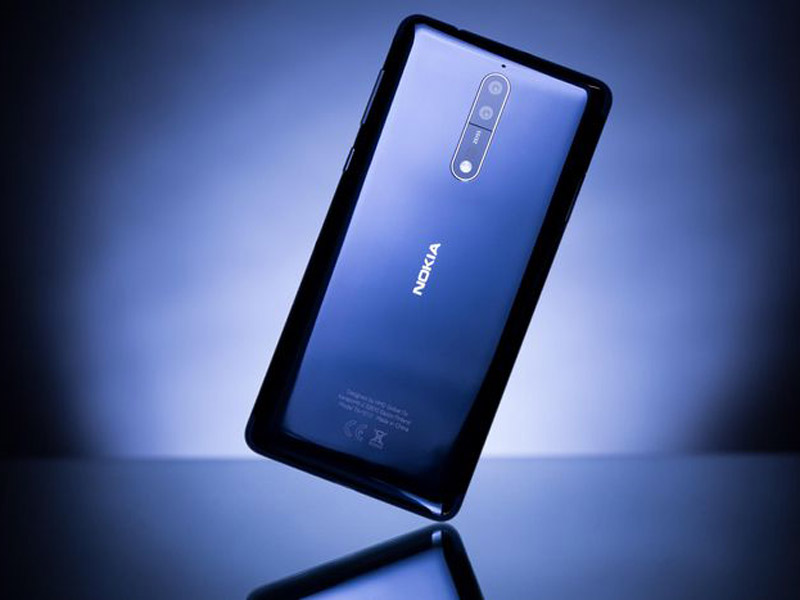
HMD Global, the company behind the smartphone brand Nokia, has finally presented the first and long-awaited high-end model: the Nokia 8. Like Nokia Top models from the past years, the Nokia 8 comes with camera technology from Carl Zeiss, So that high expectations can be placed on image quality. The Nokia 8 has integrated the current Qualcomm chipset (type Snapdragon 835) and achieves speeds of up to 450 Mbps over the LTE network thanks to LTE Cat9 with 3CA.


Monoblock design and lots of performance


The Nokia 8 comes in a “monoblock design” with capacitive buttons according to the HMD Global and has been designed in such a way that the device not only looks good and is well in the hand, but also dissipates heat optimally. The display is 5.3 inches in size and has a very high resolution of 2560 x 1440 pixels (WQHD). With 700nts, it should also be very bright. The integrated battery is 3090mAh strong and not changeable by the user. It has the Qualcomm QuickCharge 3.0 quick-release feature.


The integrated memory is 64 GB in size and can be extended by up to 256 GB via MicroSD memory card. The memory is 4 GB. With the wireless interfaces, the Nokia 8 is very up-to-date, including support of Bluetooth 5.0 and WLAN 802.11ac. The USB Type C interface is especially fast thanks to USB 3.0 and 5Gbps support. Unlike some other high-end smartphones, a 3.5mm headphone jack is also on board.


Zeiss camera


The Nokia 8 is equipped with a dual camera system with Zeiss optics on the back. Both sensors have a resolution of 13 megapixels, the primary sensor takes up color and is equipped with an optical image stabilization, the secondary sensor takes pictures monochrome. The aperture is f2.0. There is an infrared distance meter as well as a dual-tone LED flash. The camera on the front comes with almost the same data (13 megapixels, f2.0), but has no optical image stabilization. The Nokia 8 has a special feature integrated; here the image of the front and the rear camera is simultaneously recorded. The feature can even be used for streaming networks such as Facebook and YouTube.


Software: “Pure Android”


HMD Global is working as an operating system to use a current and almost unchanged version of Android. Pre-installed Android 7.1.1, the manufacturer promises monthly security updates. Through the pure Android, the device is supposed to offer a better user experience than comparable high-end models from other manufacturers. This could be an important purchase point for some users, as many other manufacturers such as Samsung and Huawei often criticize the overloaded and advertising apps blocked user interface. Disadvantage of “Pure Android” might be that certain functions are not present through the pre-installed user interface. But it is always an option for Android.


Availability


The Nokia 8 is to be offered from September 2017 in the colors Polished Blue, Polished Copper, Tempered Blue. In addition to a single SIM version, a dual SIM version of the Nokia 8 is also available, but it can be assumed that HMD Global will market the dual SIM version only via the free trade and not through providers and network operators.


Samsung Galaxy Note 8 LTE Cat16 Smartphone Released

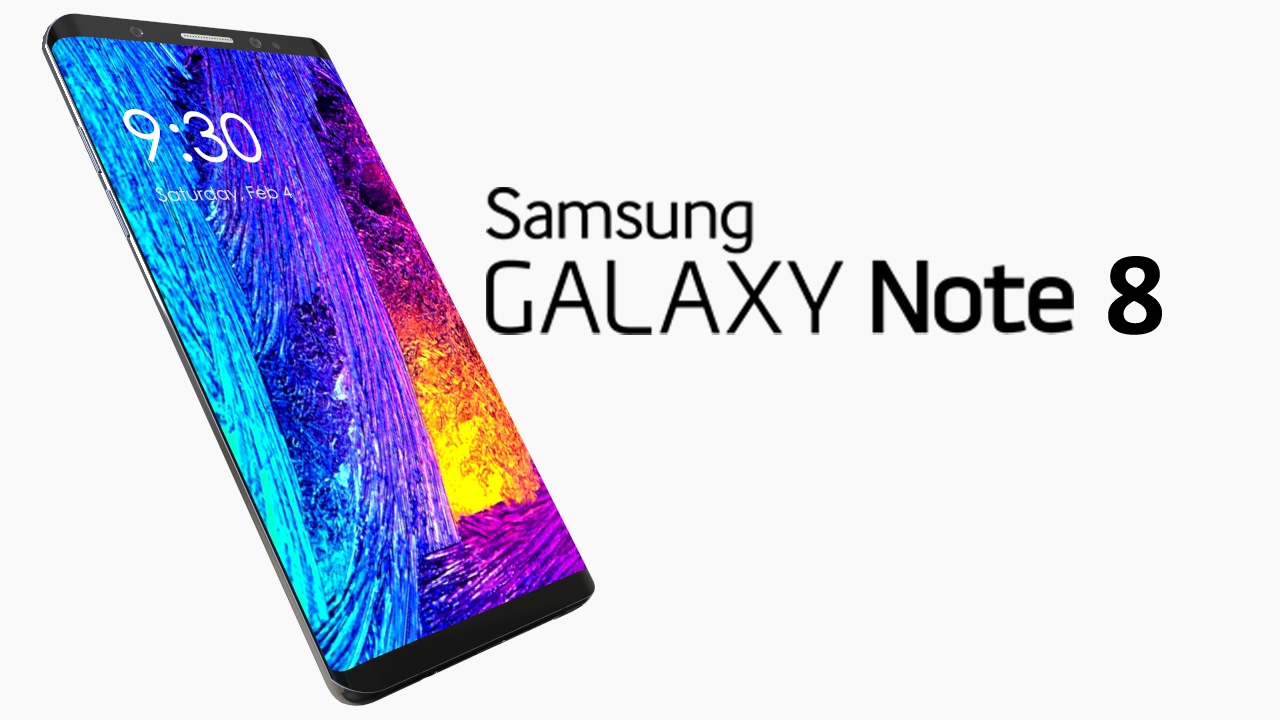
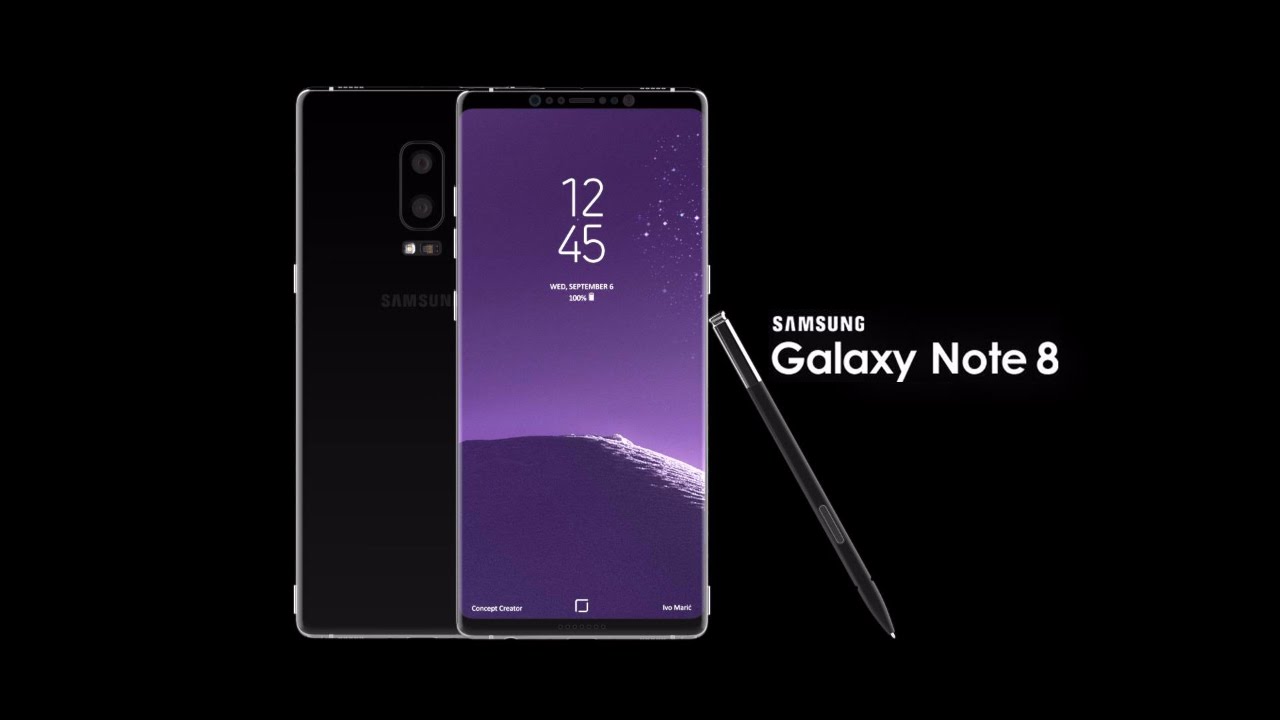
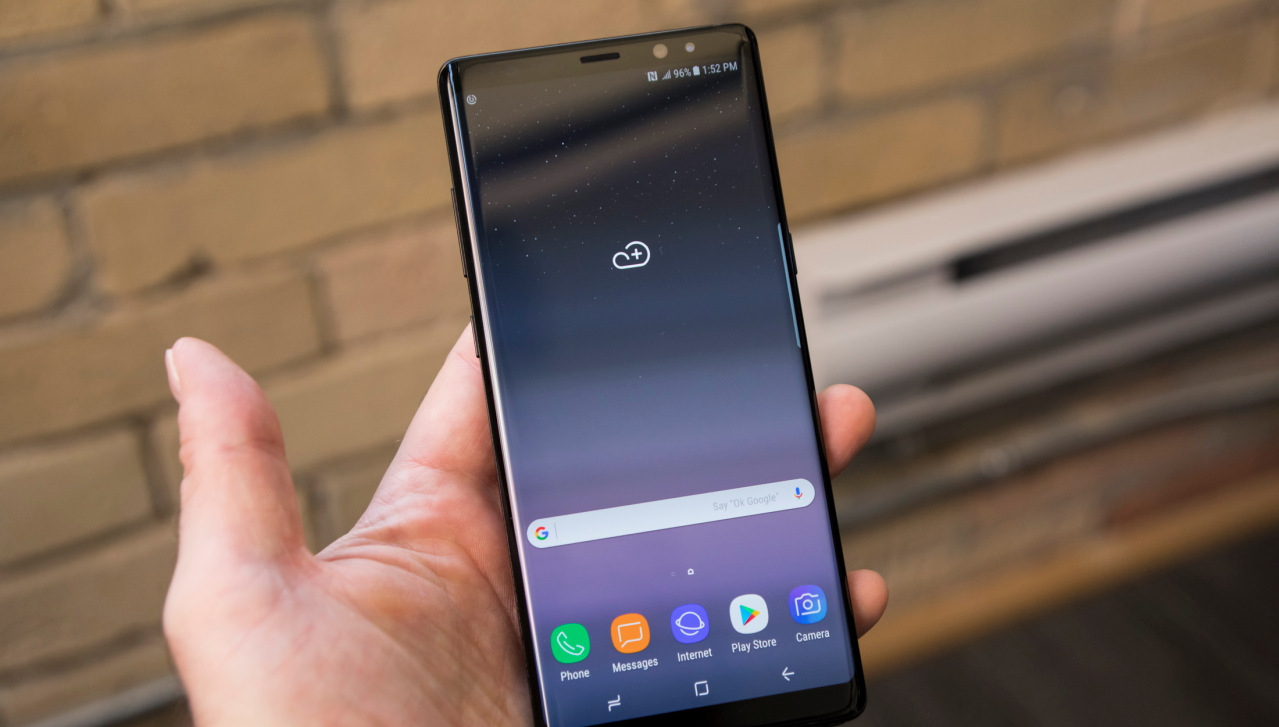
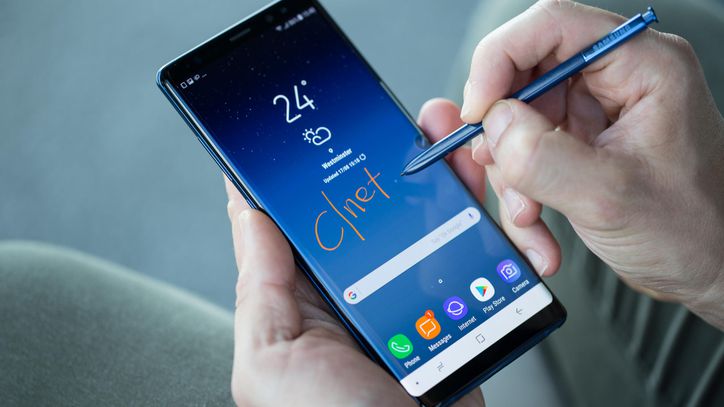
Samsung has introduced the Galaxy Note 8 in New York few days ago. The smartphone is equipped with a modern LTE Cat16 modem and allows speeds of up to 1 Gbit/s in appropriately equipped mobile networks. In addition to the standard version, a dual SIM version is also officially available in some areas, which is in the note series for the first time. The other technology includes a 6.3 inch display, a dual camera and 64GB internal memory.


Case with Infinity Display

The Galaxy Note 8 looks similar to the Galaxy S8 Plus, it is only slightly more angular than the sister model. The display is 6.3 inches in size, has an aspect ratio of 18.5: 9 and is rounded off to the sides, which is already known from the Galaxy S8. The resolution is 2960 x 1440 pixels (QHD+). Since the edges on the sides as well as the top and bottom were kept as narrow as possible, Samsung applies the display as “Infinity Display”. An important difference to the Galaxy S series is, of course, the S-Pen input pen, which is simply part of the Samsung Galaxy Note series.


The case of the Samsung Galaxy Note 8 is dust and water proof according to IP68. With 162.5 x 74.8 x 8.6 mm, the Galaxy Note 8 is quite large, but still makes a slim figure compared to other devices from the 6-inch category. The weight is 195 grams.


Dual camera system

A further novelty compared to its predecessor Galaxy Note 7 and the Galaxy S8 is the dual camera. The Note 8 has two camera sensors each with 12 megapixel resolution, one with wide-angle lens and one with a kind of tele-lens, so that like the Apple iPhone 7 Plus, a certain zoom can be achieved. The aperture of the wide-angle lens is f1.7, the telephoto lens has a diaphragm of f2.4. It is worth mentioning that both sensors have optical image stabilization (OIS).


Fast processor with Android 7.1.1

As a chipset, a Samsung Exynos 8895 is used in the European version of the Samsung Galaxy Note 8, the memory is 6 GB. About 51 GB of the internal 64 GB memory ex factory for the user are available, a memory extension via MicroSD memory card is naturally possible.


In addition to Gigabit LTE of the category 16, of course, all other current radio technologies are on board, just as one expects it from an expensive high-end smartphone. The Galaxy Note 8 supports WLAN 802.11ac with MU-MIMO antenna technology, it can support VoLTE (voice over LTE) and WLAN calls and it supports Bluetooth 5.0. Android 7.1.1 is used as the operating system.

The battery of the Galaxy Note 8 is 3.300 mAh and can be charged both via USB Type C cable as well as wireless. A quick-charge mechanism is supported for both cordless charging and normal charging.


Dual-SIM Available

The Samsung Galaxy Note 8 comes in September. While only a single SIM variant will be available in the free trade for network operators, a dual SIM version can be pre-ordered in the Samsung Online Shop. Currently, the price of Samsung Galaxy Note 8 is at high side. If you can wait a few months, you will be able to benefit from a significant drop in prices.

Huawei B618 Status Icons

Using the status icons, you can discern the operating status of the Huawei B618 4G Router.

The following table describes the icons displayed in the upper right corner of the Huawei B618 4G Router user interface.

Item Status
SIM/USIM/UIM card : The SIM/USIM/UIM card is faulty; PIN/PUK is not verified.NOTE:

·         Contact your service provider to check whether a SIM/USIM/UIM card is required.

·         The SIM/USIM/UIM card is provided by your service provider. To find out more about the card, contact your service provider.

Internet : Uploading data

: Downloading data

: Uploading and downloading data simultaneously

 : A dial-up connection has been set up, but no data is being transmitted.

WLAN : WLAN enabled.

: 5G WLAN enabled

: The indoor 5G WLAN is enabled.

: WLAN disabled.

Signal : These icons indicate the signal strength from weak to strong.
SMS  : New messages.

: Your local inbox is full.

Ethernet : The Mobile Broadband is connecting to an Ethernet network.

: An Ethernet connection is detected.

Update : Update available.


Check more details about Huawei B618 4G Router here: https://www.4gltemall.com/huawei-b618-lte-cat11-router.html
Huawei B618 Connection Settings

Connection

To use the Huawei B618 to access the Internet, you must create a network profile or set the default network profile and operator’s network.

  • Creating a Network Profile
    If you are using theHuawei B618 Router for the first time, you must create a network profile to access the Internet.
  • Setting the Default Network Profile
    After you set the default profile, theHuawei B618 Router accesses the Internet via the default operator’s network.
  • Setting the Operator’s Network
    After configuring the settings, theHuawei B618 Router can quickly find networks.
  • Accessing the Internet Using the Cellular Data Network
    Use the following method to connect theHuawei B618 Router to the Internet.
  • Accessing the Internet Using an Ethernet Connection
    Configure Ethernet connection settings the first time theHuawei B618 Router connects to the Internet using an Ethernet connection.
  • Connecting Clients to theHuawei B618 Router over a WLAN
    After WLAN is enabled on the Huawei B618 Router, clients can connect to the Huawei B618 Router and access the Internet using it.
  • Viewing the Clients Connected
    Check the number of clients connected to theHuawei B618 Router and their details.
  • Adding a Client to the Blacklist
    On theHuawei B618 Router‘s web management page, you can add unwanted clients connected to the Huawei B618 Router to the blacklist to better secure the Wi-Fi network.


——————————————————————————————————————– 


Creating a Network Profile

If you are using the Huawei B618 Router for the first time, you must create a network profile to access the Internet.

Procedure

  1. Choose SettingsDial-up > Profile Management .
  2. Click New Profile.
  3. Set the profile-associated parameters.

 NOTE:

  • The value of Profile namecan contain a maximum of 20 characters, including the following: 0-9, a-z, A-Z, blank space, and ! # $ ( ) * – . / = @ [ ] ^ _ { } ~ | , ; \ % + ?
  • Contact your service provider for detailed parameter settings.
  1. Click Save.


Setting the Default Network Profile

After you set the default profile, the Huawei B618 Router accesses the Internet via the default operator’s network.

Procedure

  1. Choose SettingsDial-up > Profile Management .
  2. From the Profile namedrop-down list, select a network profile.
  3. Click Apply.


Setting the Operator’s Network

After configuring the settings, the Huawei B618 Router can quickly find networks.

  • Selecting the Operator’s Network Type
    Select your operator’s network type to find and log in to the network quickly.
  • Searching for and Registering with a Network
    The Huawei B618 Routersupports both automatic and manual network registration.


Selecting the Operator’s Network Type

Select your operator’s network type to find and log in to the network quickly.

Context

For details about your network type, contact your operator.

Procedure

  1. Choose SettingsDial-up > Network Settings.
  2. From Preferred mode, select a mode.
  3. Click Apply.


Searching for and Registering with a Network

The Huawei B618 Router supports both automatic and manual network registration.

Procedure

  1. Choose SettingsDial-up > Network Settings.
  2. From Mode, select a mode.
    • Auto: The Huawei B618 Routersearches for an available network and registers with the network automatically.
    • Manual: You need to search for an available network and register with it manually.
  3. Register with a network.
    • In Automode, click Apply.
    • In Manualmode, select one of the networks found and click OK.


Accessing the Internet Using the Cellular Data Network

Use the following method to connect the Huawei B618 Router to the Internet.

Procedure

  1. Choose SettingsDial-up > Connect .
  2. Click On.
  3. Connect to the Internet.

 NOTE:

  • By default, Huawei B618 Routerconnect to the Internet automatically.
  • You can enable or disable the data roaming function.


Accessing the Internet Using an Ethernet Connection

Configure Ethernet connection settings the first time the Huawei B618 Router connects to the Internet using an Ethernet connection.

Procedure

  1. Using a network cable, connect the Huawei B618 Routerto a router’s WAN port or the Ethernet port on a wall.
  2. Set Ethernet parameters according to Setting Up the Ethernet Connection Mode.


Setting Up the Ethernet Connection Mode

This section describes how to set up the Ethernet connection mode and parameters.

Procedure

  1. Choose SettingsEthernet > Ethernet Settings.
  2. Set the Huawei B618 Router‘s connection parameters according to the following table.
Application Scenario Configuration Method
The Huawei B618 Router selects the best network access mode based on the network environment. a.       Select Auto from the Connection mode drop-down list.

b.       Set Point-to-Point Protocol over Ethernet (PPPoE) and dynamic IP parameters. For details, see PPPoE Dial-up Settings and Dynamic IP Settings.

Access the Internet using a PPPoE dial-up connection or a dynamic IP address. c.       Select PPPoE + Dynamic IP from the Connection mode drop-down list.

d.       Set Point-to-Point Protocol over Ethernet (PPPoE) and dynamic IP parameters. For details, see PPPoE Dial-up Settings and Dynamic IP Settings.

You have the user name and password provided by your network service provider for the PPPoE dial-up connection. e.       Select PPPoE from the Connection mode drop-down list.

f.        Enter the user name and password provided by your network service provider.

g.       Set the MTU.

The computer IP address is automatically assigned by the network service provider. h.       Select Dynamic IP from the Connection mode drop-down list.

i.         Select the Set DNS server manually check box, Enter Primary DNS server and Secondary DNS server.

NOTE:

This step is optional. By default, the Huawei B618 Router automatically obtains the Domain Name Server (DNS) address.

j.         Set the MTU.

You have the network parameters, such as a fixed IP address, subnet mask, gateway IP address, and domain name server (DNS) address, provided by your network service provider. k.       Select Static IP from the Connection mode drop-down list.

l.         Enter the IP address, subnet mask, gateway address, DNS address (optional), provided by your network service provider.

m.     Set the MTU.

The client is connected with a network cable, but no Ethernet connection is available. Select LAN only from the Connection mode drop-down list.

NOTE:

You can also unplug the network cable and access the Internet using the cellular data network.

  1. Click Apply.


Connecting Clients to the Mobile Broadband over a WLAN

After WLAN is enabled on the Huawei B618 Router, clients can connect to the Huawei B618 Router and access the Internet using it.

Prerequisite

The Huawei B618 Router is connected to the Internet.

Procedure

  1. Choose SettingsWLAN > WLAN Basic Settings .
  2. View the default value of SSID.

 NOTE:

  1. Enter SSIDon clients.

After connecting to the Huawei B618 Router, clients can access the Internet using the Huawei B618 Router.


Changing the SSID

This section describes how to change the service set identifier (SSID).

Procedure

  1. Choose SettingsWLAN > WLAN Basic Settings .
  2. From the SSID list, choose the SSID you want to change, and click Edit.
  3. In SSID, enter the SSID.
  4. Click Apply.


Setting the WLAN Key

To improve the security of the wireless local area network (WLAN), set a security key for the WLAN.

Procedure

  1. Choose SettingsWLAN > WLAN Basic Settings .
  2. From the SSID list, choose the SSID you want to change, and click Edit.
  3. Select Security mode.
    • None(open): No encryption. No security key is required when clients access the WLAN.

 NOTE:

For daily use, it is recommended that you set a security key, to improve the security performance of a WLAN.

  • WEP: This stands for Wired Equivalent Privacy.
  • WPA2-PSK: This is the second version of WPA-PSK and is more secure than WPA-PSK.
  • WPA/WPA2-PSK: Both WPA-PSKand WPA2-PSK encryption modes are supported. Clients can access the WLAN in WPA-PSK or WPA2-PSK
  1. Enter a security key.

 NOTE:

Select Show password to view the security key that you have entered.

  1. Click Apply.

Setting a WPA Security Key for the WLAN

  1. From Security mode, select WPA2-PSK.
  2. In WLAN key, enter the security key. For example, 12345678.
  3. Click Apply.


Enabling or Disabling the SSID Broadcast

If the service set identifier (SSID) broadcast function is enabled, the Huawei B618 Router broadcasts the SSID of the wireless local area network (WLAN) facilitating clients’ access to the WLAN. The disadvantage is that unauthorized clients can also access the WLAN. If the SSID broadcast is disabled, the Huawei B618 Router does not broadcast the SSID of the WLAN. So the SSID must be entered manually and correctly from a client before the client accesses the WLAN. This improves the security of the WLAN.

Procedure

  1. Choose SettingsWLAN > WLAN Basic Settings .
  2. From the SSID list, choose the SSID you want to change, and click Edit.
  3. Set SSID broadcast.
    • Enable: to enable the SSID broadcast.
    • Disable: to disable the SSID broadcast.
  4. Click Apply.

 NOTE:

During the process of setting up the WLAN, you can set the SSID broadcast to Enable to facilitate the access from clients. After the WLAN is set up, set the SSID broadcast to Disable to improve the security of the WLAN.


Viewing the Clients Connected

Check the number of clients connected to the Huawei B618 Router and their details.

Procedure

  1. Choose SettingsSecurity > Device Management.
  2. Under Connected WLAN clients, view the clients connected to the Huawei B618 Router.


Adding a Client to the Blacklist

On the Huawei B618 Router‘s web management page, you can add unwanted clients connected to the Huawei B618 Router to the blacklist to better secure the Wi-Fi network.

Procedure

  1. Choose SettingsSecurity > Device Management.
  2. Under Connected WLAN clients, check the information about clients connected to the Huawei B618.
  3. Find the client you want to add to the blacklist, and click Block to display the Confirm dialog box.
  4. Click OK.

 NOTE:

  • Under Blacklist, view all clients on the blacklist.
  • To remove a client from the blacklist, click Delete under Blacklist.


Check more details about Huawei B618 4G Router here: https://www.4gltemall.com/huawei-b618-lte-cat11-router.html
Huawei B618 Setting up a VPN Connection

A virtual private network (VPN) is a private network set up across a public network. A VPN adopts security technologies such as encryption and identity verification to guarantee the privacy and security of your data communications. For example, if you need to access your company’s intranet, you can set up a VPN connection with your company’s VPN server. This will allow you to access the intranet resources of your company without actually going to the office, but is as secure and convenient as using the intranet in the office.

Procedure

  1. Choose SettingsVPN.
  2. Select and enable an access type.
  3. Set the VPN parameters.
L2TP VPN client The Layer 2 Tunneling Protocol (L2TP) is a virtual tunneling protocol usually used in virtual private networks. If the VPN server uses the L2TP, you can set the L2TP function of Huawei B618 Router to set up a connection between the VPN server and your computer.

The LNS address, tunneling password, PPP user name, and PPP password for the configuration are provided by your VPN server supplier.

·         Host Name: Enter the customized Huawei B618 Router name. The VPN server uses the identification name to identify the connected host.

·         Handshake interval (s): After a VPN connection is set up, Huawei B618 Router will regularly send status reports to the VPN server based on time intervals. If the VPN server hasn’t received any status reports for a long time, the VPN will be disconnected.

PPTP VPN client The Point-to-Point Tunneling Protocol (PPTP) is a new enhanced security protocol developed based on the PPP. The PPTP supports multi-protocol virtual private networks and is able to enhance security through Password Authentication Protocol (PAP) and Extensible Authentication Protocol (EAP). Remote users can dial up to access the ISP and securely access their company’s network through the Internet.

The dial-up server address, user name, and password for the configuration are provided by your VPN server supplier.

  1. Click Apply.


Check more details about Huawei B618 4G Router here: https://www.4gltemall.com/huawei-b618-lte-cat11-router.html
Huawei B618 Sharing Files Using the DLNA Function

Sharing Files Using the DLNA Function

After the DLNA is enabled, you can access the media files shared from a mobile storage device (such as an SD card) that is connected to the Huawei B618 4G Router over another device that supports the DLNA.

Procedure

  1. Choose MoreSharing > DLNA.
  2. Select Enable to enable the DLNA function.
  3. Click Select. In the displayed Select Folder dialog box, specify the file sharing path.
  4. Click OK to close the dialog box.
  5. Click Apply.

 NOTE:

If you want to share all files in the mobile storage device, set the Directory to All.


Check more details about Huawei B618 4G Router here: https://www.4gltemall.com/huawei-b618-lte-cat11-router.html
Huawei B618 Ethernet Settings

Setting Up the Ethernet Connection Mode

This section describes how to set up the Ethernet connection mode and parameters.

Procedure

  1. Choose SettingsEthernet > Ethernet Settings.
  2. Set the Huawei B618 4G Router‘s connection parameters according to the following table.
Application Scenario Configuration Method
The Huawei B618 selects the best network access mode based on the network environment. a.       Select Auto from the Connection mode drop-down list.

b.      Set Point-to-Point Protocol over Ethernet (PPPoE) and dynamic IP parameters. For details, see PPPoE Dial-up Settings and Dynamic IP Settings.

Access the Internet using a PPPoE dial-up connection or a dynamic IP address. c.       Select PPPoE + Dynamic IP from the Connection mode drop-down list.

d.      Set Point-to-Point Protocol over Ethernet (PPPoE) and dynamic IP parameters. For details, see PPPoE Dial-up Settings and Dynamic IP Settings.

You have the user name and password provided by your network service provider for the PPPoE dial-up connection. e.       Select PPPoE from the Connection mode drop-down list.

f.       Enter the user name and password provided by your network service provider.

g.      Set the MTU.

The computer IP address is automatically assigned by the network service provider. h.      Select Dynamic IP from the Connection mode drop-down list.

i.        Select the Set DNS server manually check box, Enter Primary DNS server and Secondary DNS server.

NOTE:

This step is optional. By default, the Mobile Broadband automatically obtains the Domain Name Server (DNS) address.

j.        Set the MTU.

You have the network parameters, such as a fixed IP address, subnet mask, gateway IP address, and domain name server (DNS) address, provided by your network service provider. k.      Select Static IP from the Connection mode drop-down list.

l.        Enter the IP address, subnet mask, gateway address, DNS address (optional), provided by your network service provider.

m.    Set the MTU.

The client is connected with a network cable, but no Ethernet connection is available. Select LAN only from the Connection mode drop-down list.

NOTE:

You can also unplug the network cable and access the Internet using the cellular data network.

  1. Click Apply.


———————————————————-


Viewing Ethernet Connection Information

This section describes how to view Ethernet connection information.

Procedure

  1. Choose SettingsEthernet > Ethernet Status.
  2. View Ethernet connection information.


———————————————————-


MAC Address Clone

Using the Media Access Control (MAC) address clone function, multiple clients can concurrently connect to the Huawei B618 LTE CPE to access the Internet.

Procedure

  1. Choose SettingsEthernet > MAC Clone.
  2. Click Cloneto set the MAC address of the Huawei B618 LTE CPE Ethernet port to that of your computer, or enter the MAC address to be cloned in the MAC address field.
  3. Click Apply.

 NOTE:

Click Reset to restore the MAC address of the Ethernet port to its default value.


Check more details about Huawei B618 4G Router here: https://www.4gltemall.com/huawei-b618-lte-cat11-router.html
Huawei B618 WLAN Settings

Huawei B618 WLAN Settings

  • Enabling or Disabling WLAN
    This section describes how to enable or disable Huawei B618 Router‘s WLAN.

Procedure

  1. Choose SettingsWLAN > WLAN Basic Settings .
  2. From WLAN module,select:
    • Enable: Enable WLAN
    • Disable: Disable WLAN


  • Setting the SSID of the WLAN
    The service set identifier (SSID) is a name that identifies a wireless local area network (WLAN). A wireless client (for example, a computer) can communicate with the Huawei B618 properly only when they are using the same SSID. To ensure the WLAN security, do not use the default SSID. You can define an SSID as required.
  • Changing the SSID
    This section describes how to change the service set identifier (SSID).

Procedure

  • Choose Settings > WLAN > WLAN Basic Settings .
  • From the SSID list, choose the SSID you want to change, and click Edit.
  • In SSID, enter the SSID.
  • Click Apply.


  • Enabling or Disabling the SSID Broadcast
    If the service set identifier (SSID) broadcast function is enabled, the Huawei B618 broadcasts the SSID of the wireless local area network (WLAN) facilitating clients’ access to the WLAN. The disadvantage is that unauthorized clients can also access the WLAN. If the SSID broadcast is disabled, the Huawei B618 does not broadcast the SSID of the WLAN. So the SSID must be entered manually and correctly from a client before the client accesses the WLAN. This improves the security of the WLAN.

Procedure

  1. Choose SettingsWLAN > WLAN Basic Settings .
  2. From the SSID list, choose the SSID you want to change, and click Edit.
  3. Set SSID broadcast.
    • Enable: to enable the SSID broadcast.
    • Disable: to disable the SSID broadcast.
  4. Click Apply.

 NOTE:

During the process of setting up the WLAN, you can set the SSID broadcast to Enable to facilitate the access from clients. After the WLAN is set up, set the SSID broadcast to Disable to improve the security of the WLAN.


  • Setting the WLAN Key
    To improve the security of the wireless local area network (WLAN), set a security key for the WLAN.

Procedure

  1. Choose SettingsWLAN > WLAN Basic Settings .
  2. From the SSID list, choose the SSID you want to change, and click Edit.
  3. Select Security mode.
    • None(open): No encryption. No security key is required when clients access the WLAN.

 NOTE:

For daily use, it is recommended that you set a security key, to improve the security performance of a WLAN.

  • WEP: This stands for Wired Equivalent Privacy.
  • WPA2-PSK: This is the second version of WPA-PSK and is more secure than WPA-PSK.
  • WPA/WPA2-PSK: Both WPA-PSK and WPA2-PSK encryption modes are supported. Clients can access the WLAN in WPA-PSK or WPA2-PSK
  1. Enter a security key.

 NOTE:

Select Show password to view the security key that you have entered.

  1. Click Apply.

Setting a WPA Security Key for the WLAN

  1. From Security mode, select WPA2-PSK.
  2. In WLAN key, enter the security key. For example, 12345678.
  3. Click Apply.


  • Selecting a Channel
    This section describes how to select a channel.

Procedure

  1. Choose SettingsWLAN > WLAN Advanced Settings.
  2. Select a channel from the Channel drop-down list box.
  3. Click Apply.

 NOTE:

If you do not know which channel to select, select Auto. The Huawei B618 4G Router will then automatically select a channel.


  • WPS
  • The Wi-Fi Protected Setup (WPS) is a standard used to set up wireless connections in an easy and secure way. Traditionally speaking, to set up a wireless connection, you have to set a WLAN name (SSID) and key for the Huawei B618, and enter the key on the client. WPS automatically configures an SSID and key for the Huawei B618 4G Router and client. You can conveniently and securely connect your client to the WLAN without having to remember the SSID and key.

Connecting a Client to the Mobile Broadband Through PIN

In Personal Information Number (PIN) mode, you can securely connect a client to the Huawei B618 4G Router ‘s WLAN by simply entering the client’s PIN on the Huawei B618 4G Router ‘s web management page. You can then access the Internet through the Huawei B618 4G Router.

Procedure

  1. Set the client’s WPS connection method to PIN, and record the PIN displayed on the client.

 NOTE:

For details about operations on the client, see the client’s user guide.

  1. On the Huawei B618‘s web management page, choose SettingsWLAN > WPS Settings .

 NOTE:

By default, WPS is set to On. If WPS is set to Off, WPS connection mode cannot be set.

  1. Choose Enter device PIN.
  2. Enter the client’s PIN in the PINtext box.
  3. Click Connect.


  • Connecting a Client to the Mobile Broadband Through PBC

In Push Button Configuration (PBC) mode, you can connect a client to the Huawei B618‘s WLAN simply by pushing the WPS button. You can then access the Internet through the Huawei B618.

Procedure

  1. On the Mobile Broadband‘s web management page, choose SettingsWLAN > WPS Settings .

 NOTE:

By default, WPS is set to On. If WPS is set to Off, the WPS connection mode cannot be set.

  1. From the Working band drop-down list, select the working frequency band.
  2. Choose PBC.
  3. Press the WPS button on the client.
  4. Click Connecton the Huawei B618‘s web management page.

 NOTE:

  • For details about operations on the client, see the client’s user guide.
  • Click Connecton the Huawei B618‘s web management page within 2 minutes after you press the WPS button on the client.


  • Connecting a Client to the Mobile Broadband Through AP PIN

In AP Personal Information Number (PIN) mode, you can securely connect a client to the Huawei B618‘s WLAN by simply entering the Huawei B618‘s PIN on the client. You can then access the Internet through the Huawei B618.

Procedure

  1. On the Huawei B618‘s web management page, choose SettingsWLAN > WPS Settings .

 NOTE:

By default, WPS is set to On. If WPS is set to Off, the WPS connection mode cannot be set.

  1. Obtain the Huawei B618‘s PIN using either of the following methods:
    • Click Generate PIN to obtain the randomly generated PIN.
    • Click Reset PINto obtain the initial PIN.
  2. Set the client’s WPS connection mode to AP PIN, and enter the Huawei B618‘s PIN on the client.

 NOTE:

For details about operations on the client, see the client’s user guide.


  • Setting WLAN MAC Filtering

You can control and manage the clients that access the wireless local area network (WLAN) to improve the security performance of the WLAN.

Procedure

  1. Choose SettingsWLAN > WLAN MAC Filter .
  2. From WLAN MAC Filter, select a Media Access Control (MAC) filtering mode.
    • Disable: to disable the function of filtering MAC addresses.
    • Allow: If the MAC address of a client is listed in MAC Address, the client is allowed to connect to the Huawei B618 over the WLAN.
    • Deny: If the MAC address of a client is listed in MAC Address, the client is prohibited from connecting to the Huawei B618 over the WLAN.
  3. In MAC Address, enter the MAC addresses of the clients to be controlled.
  4. Click Apply.
  • Allowing Specified Clients to Access the WLAN
  1. Click SettingsSecurity > Device Management . From the MAC Address column under Connected WLAN clients, find the MAC addresses of clients whose access to the WLAN is allowed. For example, 40:4D:8E:6D:80:7D.
  2. Choose SettingsWLAN > WLAN MAC Filter . From WLAN MAC Filter, select Allow.
  3. In MAC Address, enter 40:4D:8E:6D:80:7D.
  4. Click Apply.


  • Specifying the WLAN Bandwidth

The wireless local area network (WLAN) bandwidth is the transmission frequency bandwidth of the Huawei B618. A greater transmission frequency bandwidth indicates a faster data transmission speed and lower penetrability.

Procedure

  1. Choose SettingsWLAN > WLAN Advanced Settings .
  2. Select the desired WLAN bandwidth from the Wi-Fi bandwidth drop-down list box.
  3. Click Apply.


Check more details about Huawei B618 4G Router here: https://www.4gltemall.com/huawei-b618-lte-cat11-router.html
 

Huawei B618 Time Service Settings

Time Service Settings

Network time synchronization function will be activated or deactivated by enabling or disabling SNTP.

  • Enabling SNTP
    Enabling Simple Network Time Protocol (SNTP) and synchronizing the Huawei B618 Router time allows you to maintain the same time as the server.


Enabling SNTP

Enabling Simple Network Time Protocol (SNTP) and synchronizing the Huawei B618 Router time allows you to maintain the same time as the server.

Procedure

  1. Choose SettingsSystem > Time Service Settings.
  2. Select the SNTP check box.
  3. Select Primary NTP server, which is the preferred server for time synchronization.
  4. Select Secondary NTP server, which is the backup server for time synchronization.
  5. Select Local time zone.
  6. Click Apply.


Check more details about Huawei B618 4G Router here: https://www.4gltemall.com/huawei-b618-lte-cat11-router.html