On March 2nd, during the Mobile World Congress Barcelona 2026 (MWC Barcelona 2026), Quectel, in partnership with MediaTek, proudly launched a next-generation smart CPE solution. This innovative solution combines 5G-Advanced and Wi-Fi 8 technologies, powered by the MediaTek T930 platform.
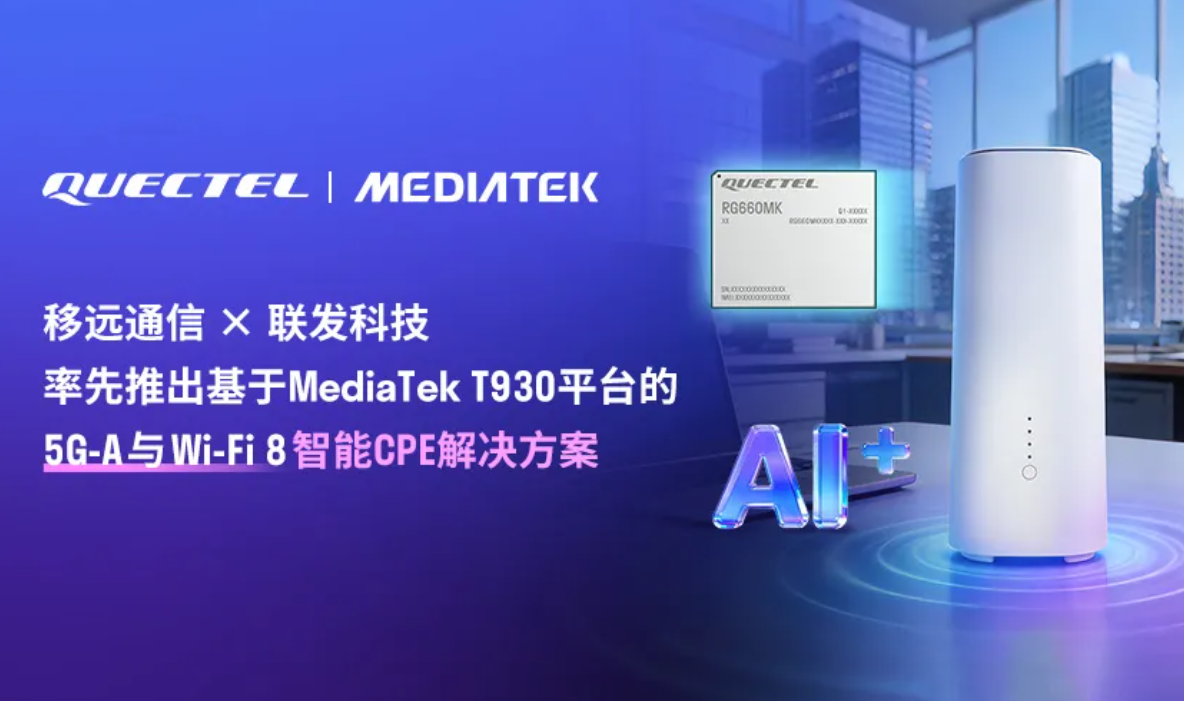
The solution deeply integrates the high-performance 5G-A connectivity of the MediaTek T930 platform, the intelligent reliability of the Wi-Fi 8 solution, AI-enhanced capabilities, and Quectel’s profound expertise in the global Fixed Wireless Access (FWA) market. Transcending the mere concept of “high speed,” this solution aims to provide a holistic CPE solution for both home and enterprise users, delivering super performance, exceptional stability, and AI-driven intelligent management. It is designed to catalyze transformative leaps in scenarios such as broadband access, mobile office, enterprise networking, and industrial internet. During the exhibition, the prototype based on this solution made its public debut at the Quectel booth (5A19), becoming a focal point of the show.
Technical Core: Deep Collaboration of 5G-A, Wi-Fi 8, and AI – More Than Just Speed
The solution is built upon Quectel RG660MK series module, leveraging MediaTek’s advanced 4nm process T930 5G platform. It integrates a 3GPP R18-compliant 5G-A modem, a quad-core CPU, a dedicated network processing unit, and achieves chip-level deep collaboration with Wi-Fi 8 technology, delivering a revolutionary intelligent connectivity experience for users.
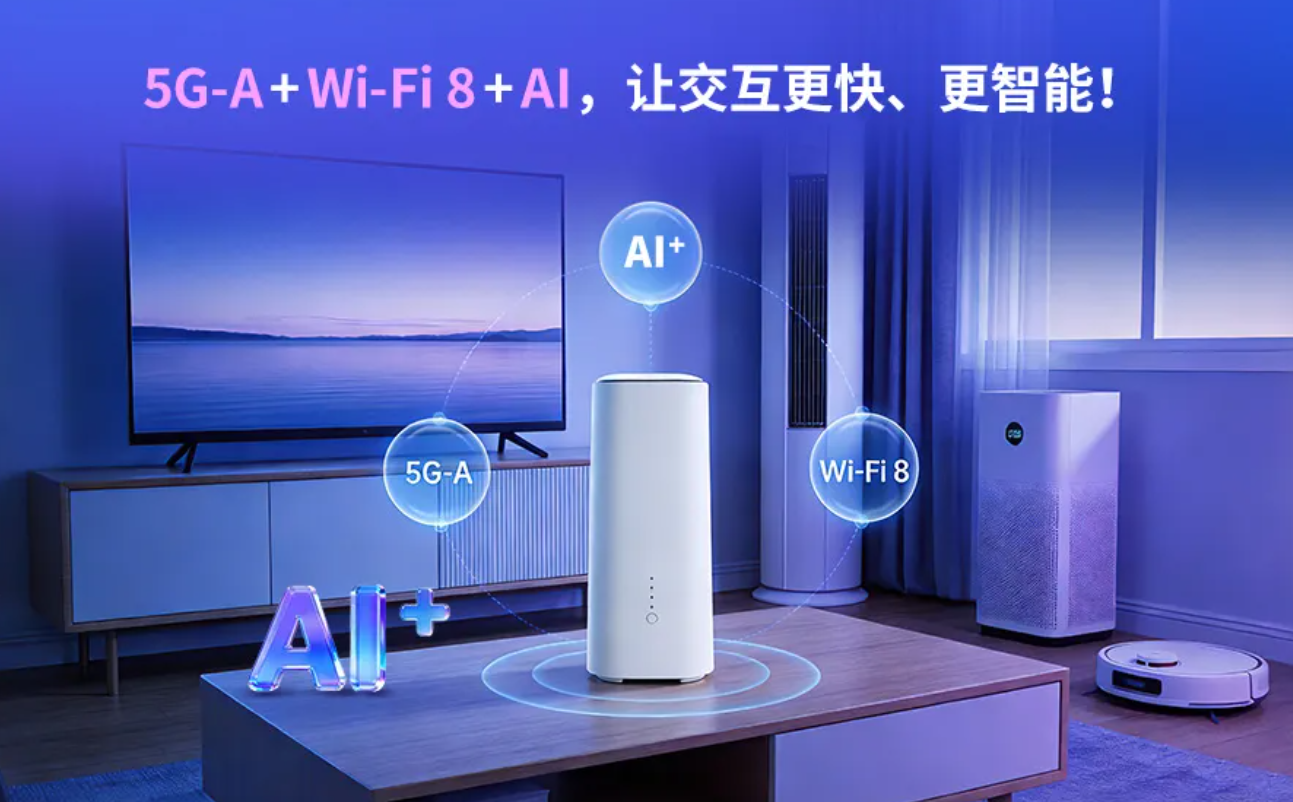
Wide Area Coverage, Stable Signal
Support for 8Rx reception technology increases spectral efficiency at the cell edge by 40%, thereby extending 5G signal coverage by 40% and significantly improving the number of users that can access the cell. Whether in home corners, large enterprise buildings, or areas with weak signals, stable and high-speed 5G connectivity is ensured.
Tri-Band Uplink, More Efficient Connection
Support for 3Tx (5L) uplink technology adds a third transmitting antenna, boosting signal strength and uplink transmission efficiency. This not only effectively enhances network coverage and stability for multiple users online simultaneously but is also particularly suitable for high-bandwidth, low-latency application scenarios, empowering smart homes and enterprise innovation.
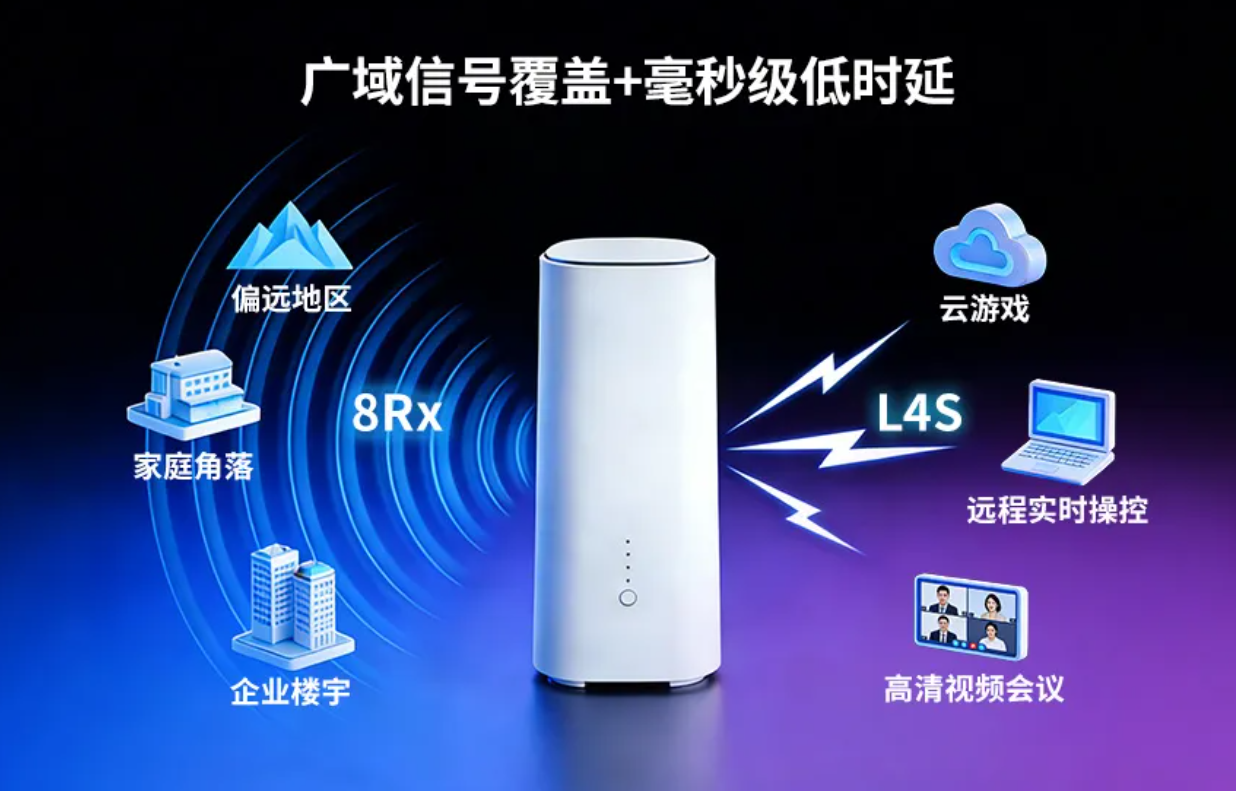
Ultra-Low Latency, Smoother Interaction
The solution incorporates MediaTek’s L4S (Low Latency, Low Loss, Scalable Throughput) software feature. While ensuring high throughput, it can reduce critical network latency to 1/20th of traditional solutions. This provides a foundational network capability for latency-sensitive applications like cloud gaming, remote real-time control, and high-definition video conferencing, enabling online interactions to feel as smooth as face-to-face communication.
Local Networking, Intelligent Interference Immunity
Through Wi-Fi 8’s Coordinated Spatial Reuse (Co-SR) and Coordinated Beamforming (Co-BF) technologies, the solution enables intelligent coordination and scheduling among multiple access points. In device-dense environments like smart homes, shopping malls, hotels, and offices, it significantly reduces co-channel interference, boosting overall transmission efficiency by over 25%. Even with hundreds of devices connected simultaneously, each terminal operates smoothly, easily resolving issues like lag and disconnections in multi-device networking.
Dynamic Optimization, Handling Congestion with Ease
Leveraging Wi-Fi 8’s Dynamic Spectrum Management technology, the solution can intelligently allocate channel resources during network congestion, significantly alleviating traffic jams in high-load scenarios. This boosts device throughput in complex environments by up to 80%, ensuring the network remains robust even when multiple users are simultaneously engaged in 4K streaming, large file downloads, and video calls.
More Open AI Scalability
By flexibly integrating a dedicated NPU processor, the solution equips the 5G CPE device with powerful edge AI computing and intelligent interaction capabilities. This enables autonomous scheduling and optimization of network resources, localized intelligent voice interaction, and dynamic distribution of tasks across the end, edge, and cloud, evolving the network from “passive connection” to “active service.”